
Bonavero Discussion Group: Storytelling in Strategic Business and Human Rights Litigation
Speaker(s):
Series:
Associated with:
Notes & Changes
This event will take place in-person at the Gilly Leventis Meeting Room, and online. To join online, please register via Zoom.
 Add to calendar
This session will explore the role of storytelling in strategic business and human rights litigation and the power of narrative in shaping legal outcomes and public understanding. Inspired by David Kinley’s new book In a Rain of Dust: Death, Deceit, and the Lawyer Who Busted Big Asbestos (see also book review by Dr Ekaterina Aristova), which recounts the fight for justice by thousands of South African victims of asbestos exposure against a multinational mining corporation that denied responsibility, the discussion will consider how narratives are constructed in complex transnational litigation and how they influence courts, policymakers, and society. Storytelling in strategic litigation involves framing legal, factual, and emotional elements into a compelling narrative that can translate complex legal arguments into relatable human experiences. By focusing on protagonists, conflict, and stakes, such narratives can build empathy, shape legal reasoning, and contribute to broader social and policy change.
Speakers

Professor David Kinley holds the Chair of Human Rights Law at the University of Sydney Law School. He is also an Academic Expert member of Doughty Street Chambers, London; a founding member of Australian Lawyers for Human Rights; and a board member of Cisarua, an Afghan refugee-led education centre located in Indonesia. Born and raised in Northern Ireland, he studied at Sheffield and Cambridge universities before moving to Australia in 1990. He writes widely across international human rights, law, politics, philosophy, and economics, including recent books on the human rights implications of global finance, suing corporations that kill, the paradoxical relationship between freedom and responsibility, and the extraordinary repercussions of Britain’s accidental apology for the Irish Famine.

Dr Ekaterina Aristova is an academic and lawyer specialising in business and human rights, climate change, and strategic litigation. She is a Senior Lecturer in Private Law at Surrey Law School. Between 2019 and 2025, she was a Research Fellow at the Bonavero Institute of Human Rights at the University of Oxford. Since 2024, she has served as an Academic Fellow at Middle Temple in London. Ekaterina is the author of Tort Litigation against Transnational Corporations in the English Courts: The Challenge of Jurisdiction (OUP, 2024) and co-editor of several volumes, including Civil Remedies and Human Rights in Flux (Hart Publishing, 2022), Civil Liability for Human Rights Violations: A Handbook for Practitioners (BIHR, 2022), and The Cambridge Handbook on Litigating Business and Human Rights Violations: Themes, Perspectives, and Prospects (CUP, 2026). Before entering academia, Ekaterina practised corporate law and completed her training contract at White & Case’s Moscow office.
Joss Saunders
Chair
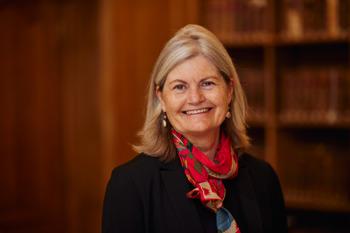
Kate O'Regan was the inaugural Director of the Bonavero Institute of Human Rights (2016-2025) and a former judge of the South African Constitutional Court (1994 – 2009) and now an Emeritus Fellow of the Bonavero Institute, Mansfield College and the Faculty of Law.
In the mid-1980s she practiced as a lawyer in Johannesburg in a variety of fields, but especially labour law and land law, representing many of the emerging trade unions and their members, as well as communities threatened with eviction under apartheid land laws. In 1990, she joined the Faculty of Law at UCT where she taught a range of courses including race, gender and the law, labour law, civil procedure and evidence. Since her fifteen-year term at the South African Constitutional Court ended in 2009, she has amongst other things served as an ad hoc judge of the Supreme Court of Namibia (from 2010 - 2016), Chairperson of the Khayelitsha Commission of Inquiry into allegations of police inefficiency and a breakdown in trust between the police and the community of Khayelitsha (2012 – 2014), and as a member of the boards or advisory bodies of many NGOs working in the fields of democracy, the rule of law, human rights and equality.


