
Bonavero Network Series: Christianity and Islam in the global twentieth century
Speaker(s):
Associated with:
 Add to calendar
Join the Law and Democracy Network for a conversation with Udi Greenberg and Faisal Devji on their new books, exploring how Christianity and Islam were transformed by the political, intellectual, and global upheavals of the twentieth century. Ranging across empire, nationalism, and secularism, the discussion offers fresh perspectives on religion’s role in shaping the modern world.
Book links:
Faisal Devji - Waning Crescent: The Rise and Fall of Global Islam (Yale University Press, 2025)
Speakers
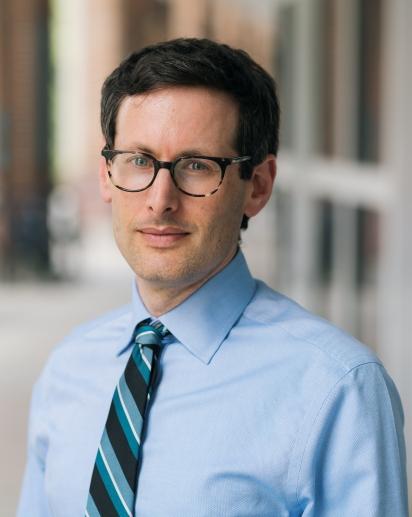
Professor Udi Greenberg
Udi Greenberg studies and teaches modern European history. His scholarship and teaching focus especially on the history of ideas, politics, and gender and sexuality. His work has been supported, among others, by the ACLS, Mellon Foundation, the Volkswagen Foundation, and the DAAD.
His first book, The Weimar Century: German Émigrés and the Ideological Foundations of the Cold War (Princeton University Press, 2015), traces the intellectual, institutional, and political journey of five influential political theorists from their education in Weimar Germany to their participation in the formation of the Cold War. It argues that both Germany's postwar democratization, and the German-American alliance, were deeply shaped by these émigrés' attempts to revive intellectual, religious, and political projects first developed in Weimar Germany. In 2016, it was awarded the Council of European Studies' Book Prize (for best first book in European studies 2014-2015). It also appeared in German, Korean, and Hebrew translations.
His second book, The End of the Schism: Catholics, Protestants, and the Remaking of Christian Life in Europe, 1880s-1970s (Harvard University Press, 2025) focuses on the intersection of religion, politics, gender, and imperialism. It explores how a series of changes in Catholics and Protestants' thinking about economics, sexuality, race, and global politics (from the rise of Nazism to the Cold War and decolonization in Asia and Africa) brought about the end of the prolonged religious animosities between the two confessions, and the consequences this had for European governance.
He's currently working on two projects. The first is a co-authored book with Giuliana Chamedes (UW-Madison), which is tentatively called Decolonization and the Remaking of Europe (under advance contract with Princeton Univesity Press). Through a series of thematic chapters, this book charts how the collapse of Europe's empires, and the migration that followed, helped altered European approaches to varied issues like policing, welfare, labor, sexuality, envoirnmentalism, and religion. The second explores the recalibration of state authority in the 1960s and 1970s. It explores how European states loosened and retooled their control over public health, sexual conduct, education, and military service.
His articles (mostly related to these book projects) have appeared in the American Historical Review, Journal of Modern History, Journal of the History of Ideas, Journal of the American Academy of Religion, Contemporary European History, and Journal of Contemproary History, among others. He has also published several essays on politics, religion, and history in The Nation, The New Republic, Dissent, Aeon, Boston Review, L.A. Review of Books, n+1 and elsewhere (links to a few recent examples are available below).
Together with Elizabeth Foster (Tufts University) he is the co-editor of the essay collection Decolonization and the Remaking of Christianity (UPenn Press, 2023). He is also editorial board member of Modern Intellectual History, and was editorial board member of the Journal of Modern History (2020-2023).
At Dartmouth, he teaches a wide variety of classes on modern European and international history. In 2016, he was elected by the senior class as Dartmouth's best professor, and was awarded the Jerome Goldstein Award, Dartmouth's top teaching prize.
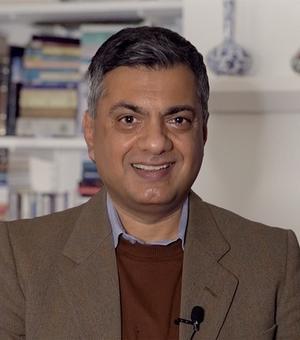
Professor Faisal Devji
Beit Professor of Global and Imperial History, Balliol College
I completed my PhD in Intellectual History at the University of Chicago in 1994. I was then elected Junior Fellow at the Harvard Society of Fellows, after which I went on to run the graduate program at the Institute of Ismaili Studies in London, which included schools in Tajikistan and Iran. Returning to regular academic life in 2003, I taught for two years at Yale as a visiting lecturer and another four at The New School for Social Research in New York as Associate Professor, arriving in Oxford as Reader in Modern South Asian History in 2009.
Research Interests
I am interested in the intellectual history and political thought of modern South Asia as well as in the emergence of Islam as a global category. In my research I have focussed on the cultural and philosophical meanings of violence as much as the emergence of non-violence as a political project. I am also very interested in the different ways in which the idea of humanity achieves political realty, particularly as the simultaneous subject and object of globalisation. My recent work deals with efforts to think beyond the nation-state and the inheritance of anarchism in the post-colonial world.


