
Bonavero Network Series: Human Rights and Humanitarian Law in the Time of War
Speaker(s):
Associated with:
 Add to calendar
We are back in the age of conventional warfare with Russia’s invasion of Ukraine, the catastrophe of Gaza, and the US-Israel war with Iran. Do human rights and humanitarian law matter at all?
Join us for a critical discussion of the timeliest of all questions.
Speaker: Samuel Moyn
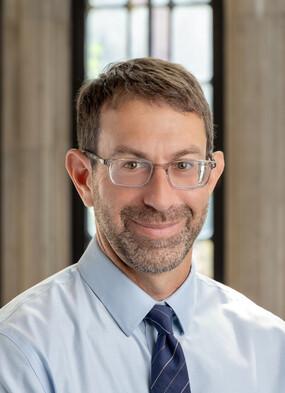
Samuel Moyn is the Kent Professor of Law and History at Yale University, where he also serves as head of Grace Hopper College.
His forthcoming book is Gerontocracy in America: How the Old Hoard Power and Wealth — and What to Do About It, scheduled to appear from Farrar, Straus and Giroux in June 2026.
Trained in modern European intellectual history, he works on political and legal thought in modern times and on constitutional and international law in historical and current perspective. His most recent book is Liberalism against Itself: Cold War Intellectuals and the Making of Our Times (Yale University Press, 2023), based on the Carlyle Lectures in the History of Political Thought at the University of Oxford. He spent a decade writing some books about the history of international law and human rights, The Last Utopia: Human Rights in History (Harvard University Press, 2010); Christian Human Rights (Penn Press, 2015), based on Mellon Distinguished Lectures at the University of Pennsylvania in fall 2014; Not Enough: Human Rights in an Unequal World (Harvard, 2018); and Humane: How the United States Abandoned Peace and Reinvented War, (Farrar, Straus & Giroux, 2021), which came out in a paperback edition in 2022 with Picador in the United States and Verso in the United Kingdom.
Currently, he is working on (different) projects constitutionalism and democracy, legal theory, and the Vietnam war. Moyn is a fellow of the Quincy Institute for Responsible Statecraft, Over the years he has written in venues such as the Atlantic, Boston Review, the Chronicle of Higher Education, Commonwealth, Dissent, the Guardian, the London Review of Books, The Nation, The New Republic,the New York Times, the Wall Street Journal, and the Washington Post.
Speaker: Stewart Motha
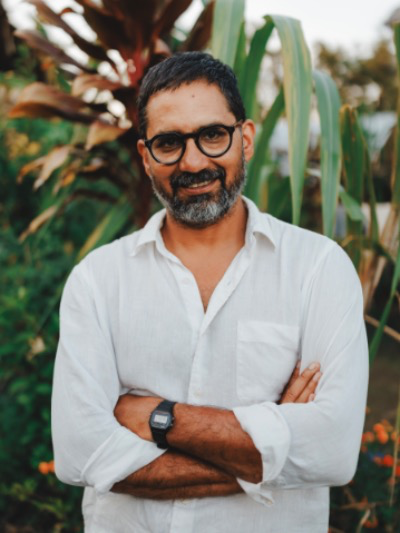
Stewart’s current research examines law's relationship with 'nature'. This includes a critical exploration of how 'nature' is conceptualised in climate litigation and national and international environmental law; and the philosophical underpinning of the distinction between 'matter' and norms. The research is linked to questions of climate justice and legal responses to ecological crises.
Stewart has also published widely on issues of postcolonial justice; law, memory, and violence; and theories of sovereignty. This research has been articulated through discourses of law, philosophy, and aesthetics.
Stewart was Executive Dean of Birkbeck Law School, 2016-22; and Managing Editor of Law & Critique, 2015-2020.
In 2023, Stewart held the John Hinkley Visiting Professorship at Johns Hopkins University, Baltimore. He has also held visiting fellowships at Sydney Law School, Melbourne Law School, and the Stellenbosch Institute for Advanced Study (STIAS).
Prior to joining Birkbeck in 2012, Stewart taught at Kent Law School. He has also taught Law in Australia, and was an Associate to the Hon. Justice Margaret Beazley - Judge of the Federal Court of Australia; Case Manager of the Native Title Unit, Aboriginal Legal Rights Movement Inc., South Australia; and a Consultant to the Foundation for Aboriginal and Islander Research Action.
Stewart's most recent book, Archiving Sovereignty: Law, History, Violence (Michigan University Press) was published in 2018.
In 2020, he launched a podcast series called COUNTERSIGN. Stewart and guests discuss books, films, and other materials from across disciplines to consider new perspectives on law, difference, and being in common.
Stewart lectures on Foundations of Property; Law, History, and Political Violence; Law, Nature, and Planetary Justice


