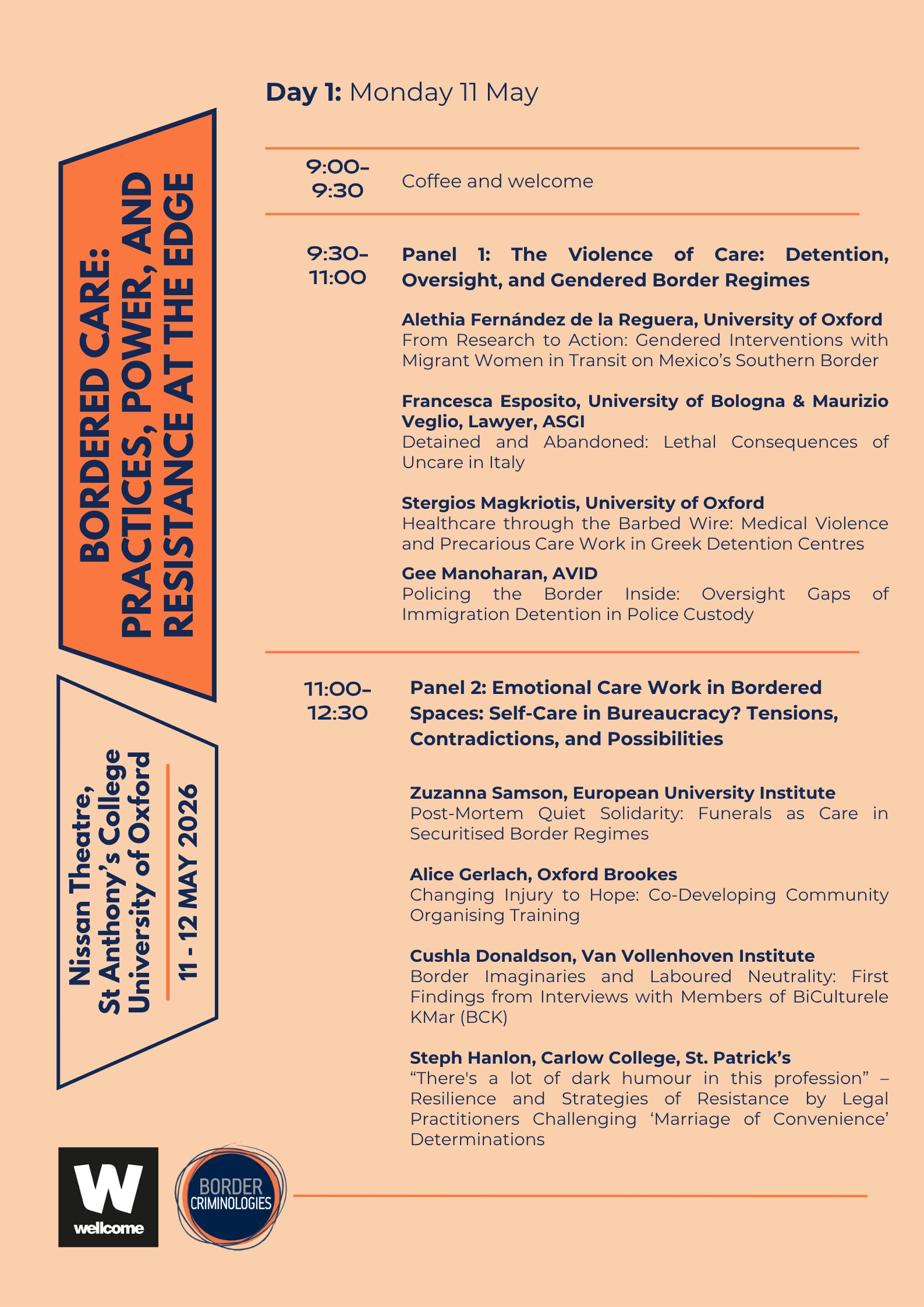
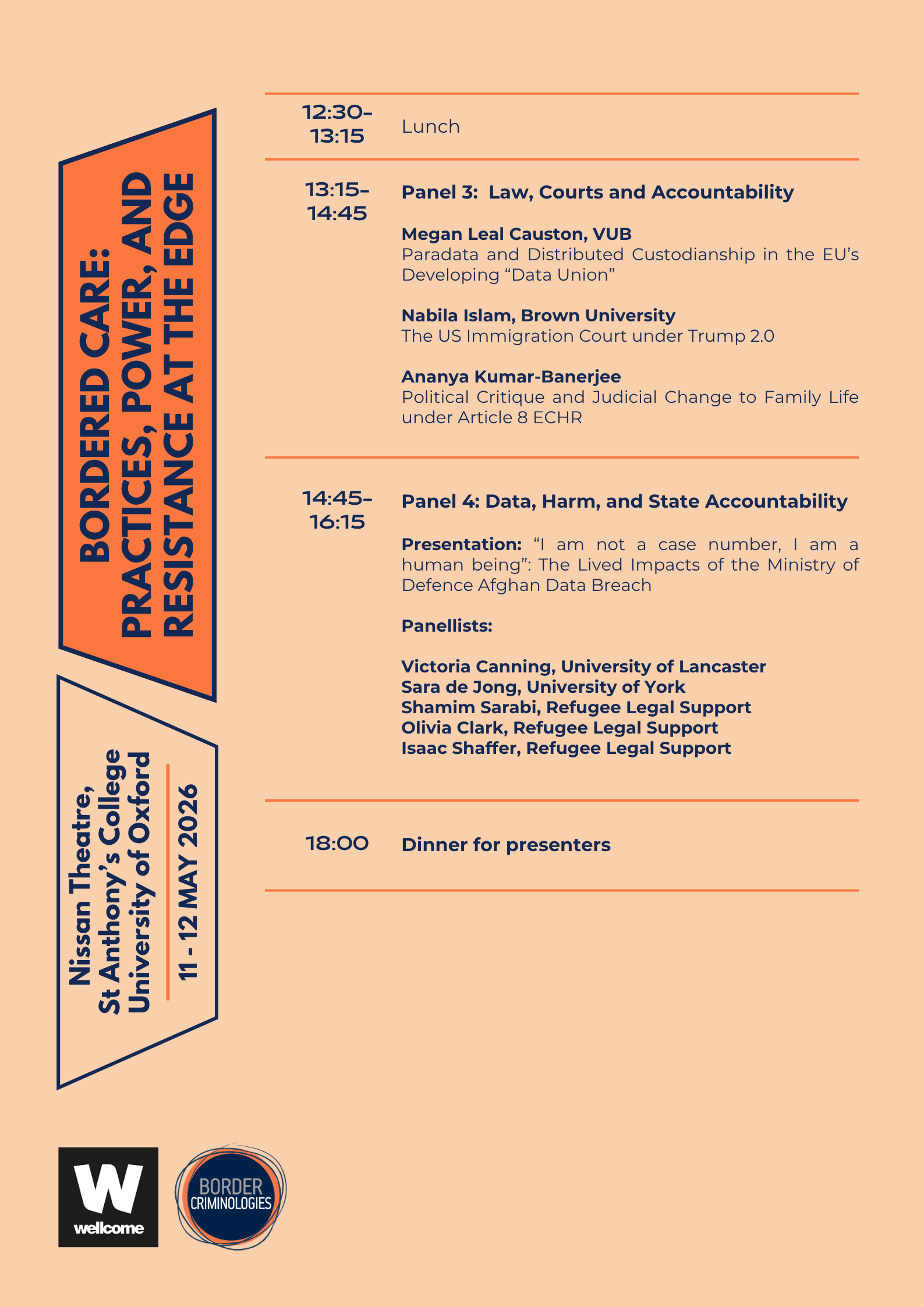
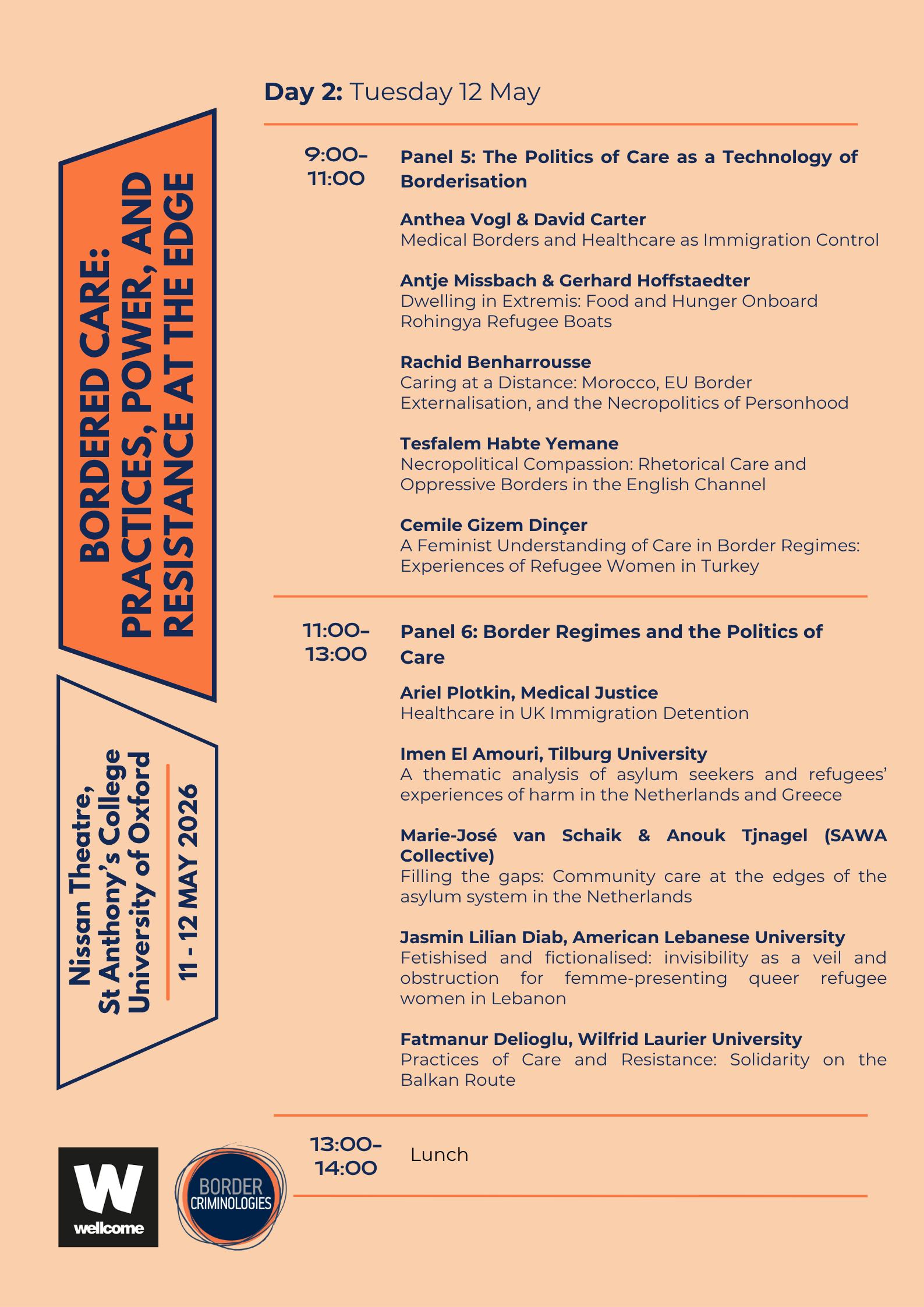
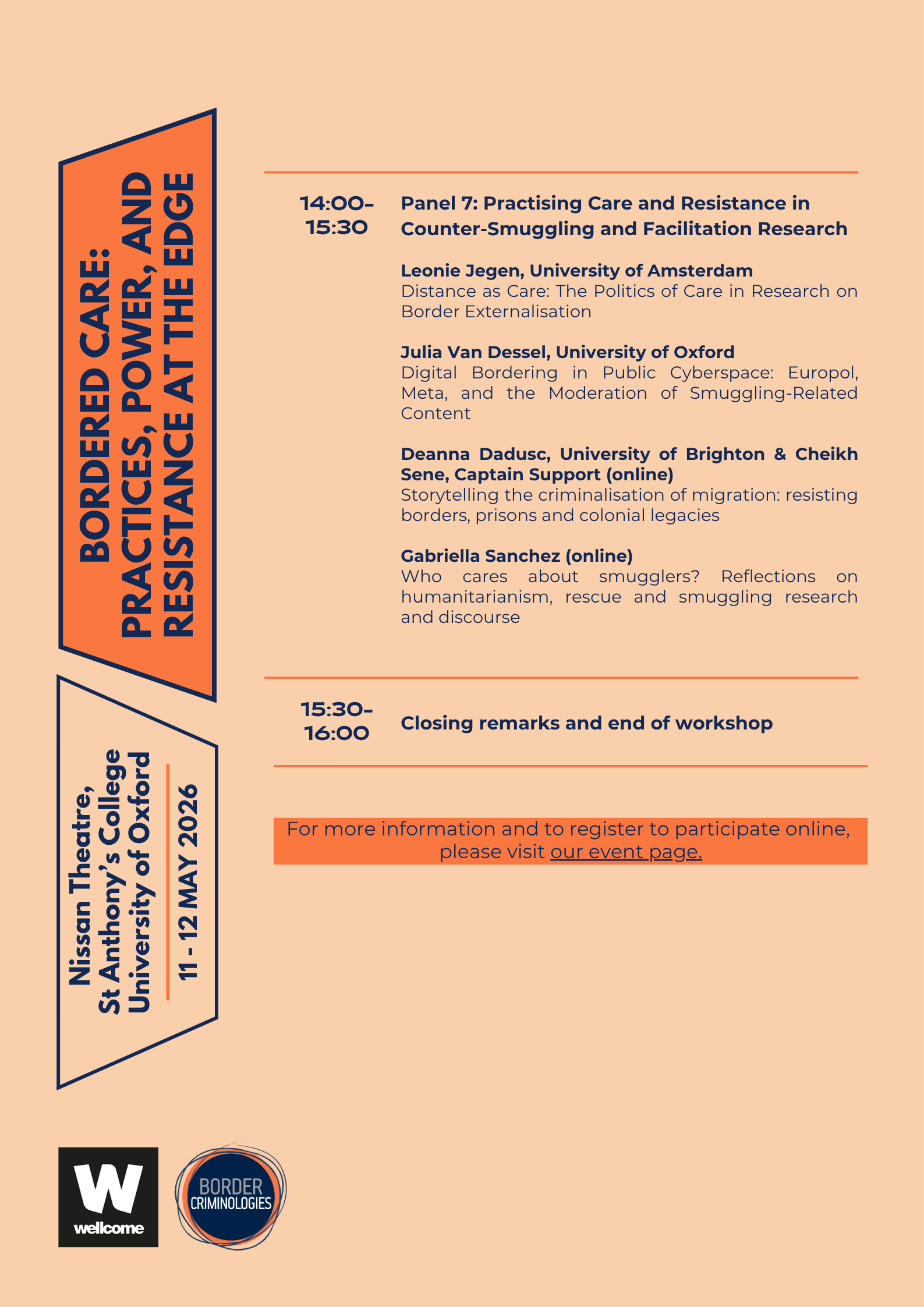
Bordered Care: Practices, Power, and Resistance at the Edge
Series:
Associated with:
 Add to calendar
Abstract
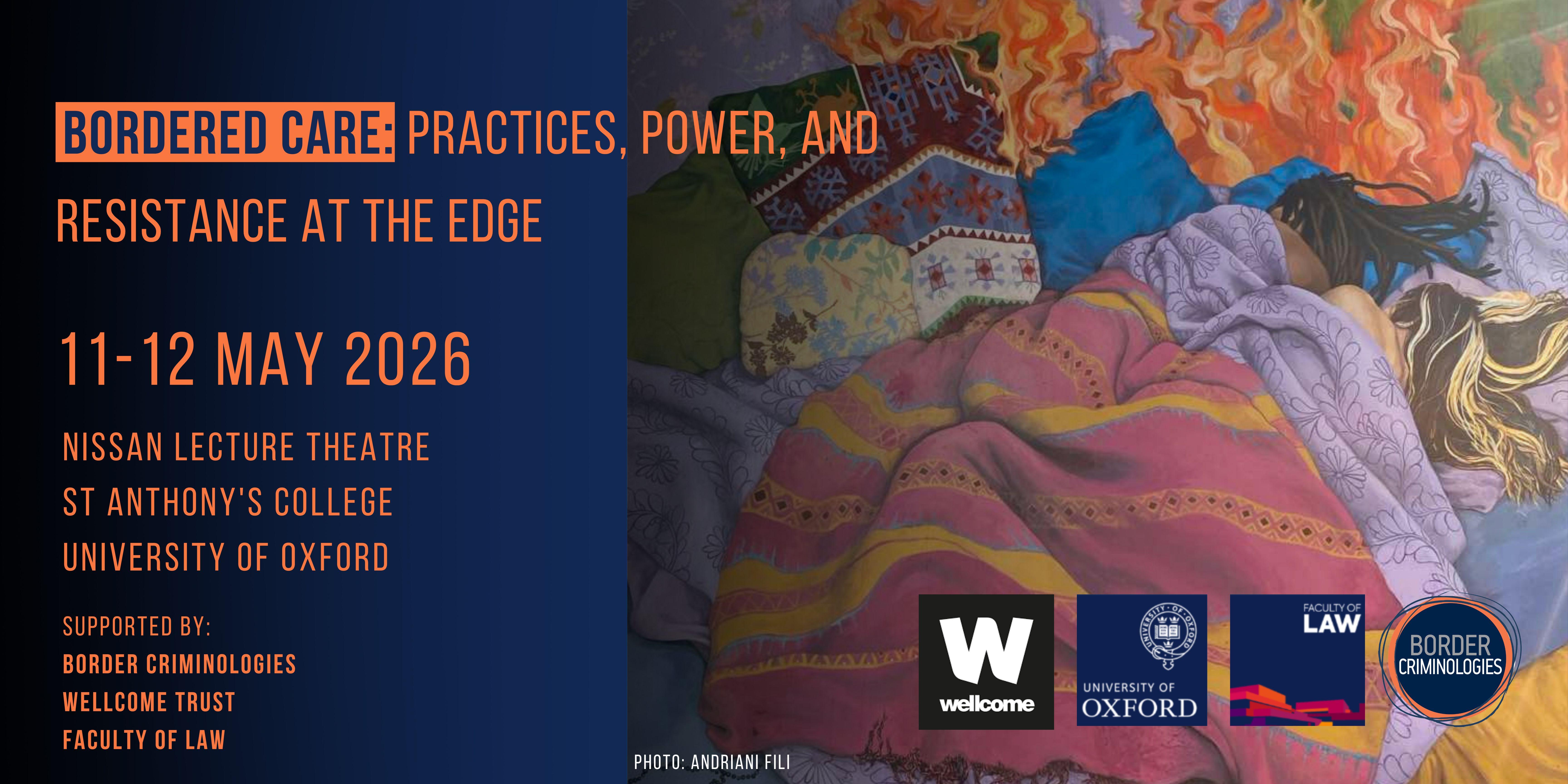
This workshop is a two-day academic event focusing on care and its intersections with governance, state practices, and exclusion at borderlands. While the politics of health and healthcare have often been treated as secondary to questions of security, detention, and deportation, this workshop brings care to the centre of critical border scholarship. We ask: what does it mean to speak of “care” in spaces of exclusion, control, and punishment? What forms of care can emerge in the act of documentation? How is care mobilised, denied, or weaponised in border regimes, and how might practices of care—both institutional and informal—reconfigure our understandings of state responsibility, ethics, and resistance?
By foregrounding care, we aim to explore how care intersects with, for example:
- Institutional care and neglect in detention, asylum reception, and post-removal settings (mental healthcare, chronic illness, medical infrastructures)
- Policing, surveillance, and embodied care: how care is mediated (or undermined) through bordering technologies, biometric systems, and policing of bodies
- Litigation, law, and accountability: legal claims to care, obligations of state and non-state actors, and the role of courts and human rights frameworks
- Gendered, racialised, and exploitative care regimes: how care labour (paid, unpaid, informal) is racialised, gendered, and entwined with structures of violence, including exploitation of migrants
- Emotional economies and affect: the emotional labour of caregivers, the ethics and fragility of researcher care in border settings, and the affective registers of care and harm
- Community and activist care: mutual aid, solidarity networks, peer care, and alternative imaginaries (how care can be reclaiming, reparative, counter-hegemonic)
Through this orientation, Bordered Care seeks to push critical inquiry: when does care replicate harm? How do state and non-state actors use the language of care to justify control? What does refusal or withdrawal of care reveal about exclusion and death at the border? And what might more just, less extractive modes of care look like in border contexts?
By foregrounding care as both an analytical lens and a lived practice, this workshop seeks to sharpen interdisciplinary dialogue contributing to new collective imaginaries of care and justice at the border.
This workshop is funded by the Wellcome Trust and the Law Faculty.