Deprovincialising Jurisprudence: Ideas of Law in Global Political Thought
Associated with:
Notes & Changes
Please note this is a closed event. If you are interested in attending, you must email Salmoli Choudhuri <salmoli.choudhuri@history.ox.ac.uk>
 Add to calendar
The conference seeks to reappraise the conventional separation between legal and political thought--an assumption that underlies several intellectual traditions. It further aims to theorise the relationship between law and politics beyond mainstream Western frameworks, while engaging closely with them. We adopt a deliberately eclectic approach and cover a wide range of theoretical and methodological perspectives.
Conference Schedule
9:00 AM to 9:20 AM: Registration and coffee
9:20 AM: Opening remarks
9:30 AM to 11:00 AM: Panel 1 - Fraternity and Belonging
Vincent Lloyd (Villanova): Intersectionality versus Decoloniality
Shruti Kapila (Cambridge): Civil War, Indian Constitution, and the Founding of Indian Democracy
Farrah Ahmed (Melbourne): Secularism as Fraternity
Chair: Moiz Tundawala (Oxford/JGLS Delhi)
11:00 AM to 11:30 AM: Coffee break
11:30 AM to 1:15 PM: Panel 2 - Freedom and Resistance
Hans Lindahl (Tilburg/QMUL): Phenomenology and the Politics of A/Legality
Salmoli Choudhuri (Oxford/NLS Bengaluru): Freedom and Authority in Tagore’s Santiniketan Ashram
Sunil Purushottam (Fairfield): The Asokan Revolution, the Republic of India, and the Search for the Ancient Constitution
Rochana Bajpai (SOAS): Constitution-making and Hegemony: Mobilization, Voice, Reasoning
Chair: Amar Sohal (Oxford/KCL)
1:15 PM to 2:15 PM: Lunch (served at venue)
2:15 PM to 3:45 PM: Panel 3 - Sovereignty and Law
Robert Yelle (LMU Munich): What is Sovereignty, in Relation to Law?: A Comparative Historical Approach
Faisal Devji (Oxford): Sovereignty and Law in Muslim Political Thought
Moiz Tundawala (Oxford/JGLS): Against Federation: Ambedkar, Caste, and the Constitution of Sovereignty
Chair: Signe Larsen (Warwick/Copenhagen)
3:45 PM to 4:15 PM: Coffee break
4:15 PM to 6 PM: Panel 4 - Minority and Non-sovereignty
Mathew John (BMU Delhi): Gandhi and the Indian Constitutional Imagination: Religious Difference and the Colonial Grammar of the People
Amar Sohal (Oxford/KCL): Tilak and the Problem of Minority
Signe Larsen (Warwick/Copenhagen): Post-Imperial Unions: Constitutional Experiments beyond Empire and Nation-States
Stewart Motha (Birkbeck(: A New Planetary Nomos
Chair: Salmoli Choudhuri (Oxford/NLS).
6 PM to 6:30 PM: Closing discussion
6:30 PM to 7:15 PM: Drinks and nibbles (at the venue)
7:30 PM : Dinner at Rewley House, Oxford
Speakers
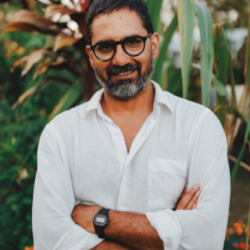
I research and teach about the philosophy of religion, religion and politics, and race. I was previously a faculty member at Syracuse University and Georgia State University. My CV is here. My e-mail address is vincent.lloyd[at]villanova.edu.
Joshua Dubler and I wrote a book about religion and mass incarceration - Break Every Yoke: Religion, Justice, and the Abolition of Prisons - exploring the way that shifting understandings of justice and law (in politics, religious communities, and inside prisons) authorized exponential prison growth in the United States. We tell stories that are intended to make possible alliances between secular prison abolitionists and social justice-minded religious communities.
My book Black Dignity: The Struggle Against Domination was published by Yale University Press in 2022. This book examines the moral vocabulary of Black Lives Matter, with chapters organized by hashtags: Black Rage, Black Love, Black Family, Black Futures, and Black Magic. I have tried out some of the ideas in essays:
The End of the World: Reflections from Black Activism
The Work of Mourning and the Privilege of Black Death
Human Dignity is Black Dignity
I have been part of the editorial team of the journal Political Theology since 2012 (academic journal). I serve as Staff Director of the Political Theology Network (public-facing website). I also co-edit the book series Transforming Political Theologies, published by Routledge, with Judith Gruber and David True.
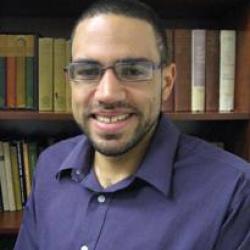
I was born, educated and made in India. I graduated from Panjab University Chandigarh with top honours followed by a Master's in Modern History at JNU, Delhi and received my doctorate from SOAS, London University. My professional life has been international and prior to Cambridge, I held a research position at the University of Oxford and was Assistant Professor, in conjunction with a University Chair for Career Development, at Tufts University, Mass., USA.
I work on Modern and Contemporary India (c.1770 to the present) and Global Political Thought. Predating recent calls to ‘decolonise’ the curriculum by more than a decade, my academic life has been defined by centring the importance of India for the remaking of global political languages.
My new book focuses on twentieth century political thought and theory and the Indian rewriting of modern political languages notably sovereignty, democracy, violence and republicanism. Highlighted as a ‘featured book’ of the year by its publisher Violent Fraternity: Indian Political Thought in the Global Age (Princeton University Press, 2021 and Penguin Random House India, 2021) has received praise as a ‘ground-breaking’ book that is tipped to ‘globalise’ the field of political thought. https://press.princeton.edu/books/hardcover/9780691195223/violent-fraternity-in-the-indian-age
New research work focuses on Indian democracy and its constitution, conservatism and global anti-imperialism. I also have a long standing interest in the history of the modern subject, psychoanalysis and psychiatry in colonial India and the present day. I also research and write on the history of modern science and race, gender and political violence.
As Co-Director of the Global Humanities Initiative at the School of Arts and Humanities, I work with seven universities across the global south in partnership with Cambridge for the creation of new curriculum and new institutional capabilities.
I consider my political commentary and opinion as an extension of my work on India and global politics and I do so including for the the Financial Times, Prospect Magazine, BBC (radio and television), Al Jazeera, Monocle Radio, Times Radio, and Bloomberg TV and across Indian newspapers, magazines and television and write a fortnightly column for the The Print India.
Finally and beyond the university, I co-convened (2014-18) a closed-door seminar at the House of Lords, UK Parliament that put Indian leaders and key voices in dialogue with their British counterparts. I also occasionally advise and consult with the Foreign and Commonwealth Office and Indian institutions including most recently, the National Commission for Women the highest policy body for women in India.
My other pursuits include the training to be a psychoanalyst.
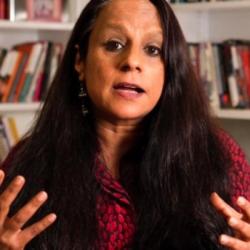
Farrah Ahmed is a Professor at Melbourne Law School. Her research spans legal theory, constitutional law, administrative law and family law.
Her work including on judicial review, citizenship, secularism, religious freedom and social rights, has been published in the Modern Law Review, the Oxford Journal of Legal Studies, the Cambridge Law Journal and the International Journal of Constitutional Law. Her book Religious Freedom under the Personal Law System was published by Oxford University Press.
Farrah is a co-founding General Editor of the Indian Law Review. She has served as Associate Dean for Research at Melbourne Law School. She also serves as Associate Director (India) of the Asian Law Centre.
Farrah was a Laurance S. Rockefeller Visiting Faculty Fellow at Princeton University (2022-23). She has held visiting appointments at the National University of Singapore, the University of Cambridge, University College London, the University of Oxford and the University of Toronto.
Since 2019, Farrah has served on an Advisory Committee of the Australian Law Reform Commission and has served as the Attorney-General's nominee to select tribunal members. She works collaboratively with a range of public interest practitioners and organisations.
Before joining Melbourne Law School in 2012, Farrah was a Lecturer in law at the Queen's College, University of Oxford. Her educational history includes an LLB from the University of Delhi, and a Bachelor of Civil Law, an MPhil in law and DPhil in law from the University of Oxford.

Hans Lindahl holds the chair of legal philosophy at Tilburg University, the Netherlands, and a chair of global law at the Law Department of Queen Mary University of London. He obtained law and philosophy degrees at the Universidad Javeriana, in Bogotá, Colombia, before taking a doctorate at the Higher Institute of Philosophy of the University of Louvain (Belgium) in 1994. His primary areas of research are legal and political philosophy. Lindahl has published numerous articles in these fields. His monograph, Fault Lines of Globalization: Legal Order and the Politics of A-Legality, was published with Oxford University Press in 2013 (Italian and Spanish translations; a Japanese translation forthcoming in 2024). A follow-up monograph, Authority and the Globalisation of Inclusion and Exclusion, has been published with Cambridge University Press in 2018 (Portuguese translation; a Spanish forthcoming in 2023). His current research explores how the challenges raised by the Anthropocene demand reconsidering key features of the ways in which modern legal and political philosophy have conceptualized legal order. This project draws on and radicalizes his earlier research on issues germane to globalization processes, such as the concept of legal order in a global setting; a politics of boundary-setting alternative to both cosmopolitanism and communitarianism; transformations of legal authority and political representation. In dealing with these topics Lindahl draws on (post-)phenomenology and theories of collective action of analytical provenance, while also seeking to do justice to the nitty-gritty of positive law.
For more information please visit his personal website: www.hanslindahl.org.
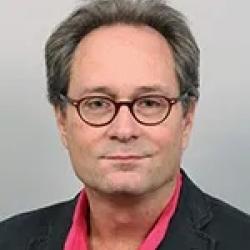
Salmoli Choudhuri is an intellectual historian of legal and political concepts that have played a foundational role in shaping modern and contemporary India and informing global thought. After completing her PhD at the University of Cambridge in 2023, she joined the National Law School Bengaluru as an Assistant Professor. She is currently at Oxford as a Koch History Fellow. In addition to developing her doctoral thesis on Tagore and freedom into a monograph, she has begun a new project on juristic ideas of state-thinking in anticolonial political thought. Her work has appeared in journals such as Political Theology, Global Intellectual History, and Economic and Political Weekly.
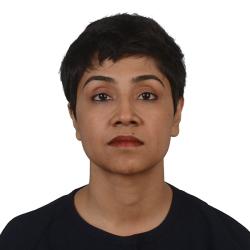
Assistant Professor, Department of History, Fairfield University. (September 2015 - Present).
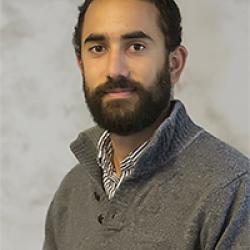
Rochana Bajpai is Professor of Politics. Her research interests are in liberalism and minority rights, constitution-making, political representation, comparative political thought, political ideologies, and modern Indian politics. She is currently Principal Investigator of Pluralist Agreement and Constitutional Transformation (PACT), funded by the Arts and Humanities Research Council (AHRC).
Rochana’s book Debating Difference: Group Rights and Liberal Democracy in India (Oxford University Press, 2011, paperback 2016, sixth impression), offered the first systematic analysis of the Indian Constituent Assembly debates (1946-49) on group differentiated rights, focussing on religious and caste minorities. Her publications address questions of constitution-making and pluralism, social justice and affirmative action, descriptive representation and democracy, democratic authoritarianism, liberal ideas in post-colonial contexts, and inter-disciplinary methods in political theory. Rochana is a founding member of the SOAS Centre for Comparative Political Thought and a co-convenor of the London Comparative Political Thought Research Group.
Rochana holds a B.A. in Political Science from the M.S. University of Baroda, India; an M.A. in Political Studies from Jawaharlal Nehru University, New Delhi; an M.Phil and a D.Phil in Politics from the University of Oxford. She joined SOAS in 2006. Rochana has held fellowships at Balliol College, St. Anne’s College and Wolfson College, University of Oxford, and at Chatham House (OSUN Senior Research Fellowship).
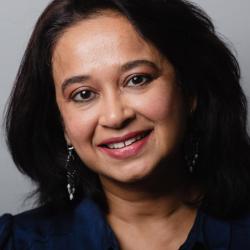
Robert Yelle is Chair of Religious Studies (with a focus on theory and methodology) and Director of the Center for Religion and Philosophy at Faculty 10. He is furthermore an external member of the Faculty of Cultural Studies and a member of the doctoral program in Buddhism Studies. Prof. Yelle has degrees in Philosophy, Law, and History of Religion. His publications range from semiotic, structuralist, and linguistic analysis of rituals and mythology, via South Asian religions in the pre-modern and colonial periods, all the way to the influence of the Protestant Reformation on European culture and society, as well as the relationship between religion, politics, law, and economics.

Professor Faisal Devji specialises in the intellectual history and political thought of modern South Asia as well as in the emergence of Islam as a global category. His research explores both the cultural and philosophical dimensions of violence, as well as the emergence of non-violence as a political project. He is also interested in the different ways in which the idea of humanity achieves political realty, particularly in the context of globalisation, where it appears simultaneously as both subject and object. His recent work examines efforts to think beyond the nation-state and the inheritance of anarchism in the post-colonial world. His forthcoming book, Waning Crescent: The Rise and Fall of Global Islam, will be published by Yale University Press in October 2025.
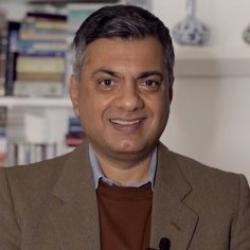
Dr Moiz Tundawala is a Leverhulme Early Career Fellow at the Bonavero Institute of Human Rights and Faculty of Law in the University of Oxford. Moiz researches in the areas of public law, legal and constitutional theory, intellectual history and global political thought. Before joining Oxford, he completed his MPhil/PhD from the London School of Economics, LLM from the School of Oriental and African Studies and BA,LLB (Hons) from the West Bengal National University of Juridical Sciences Kolkata. Moiz is currently on leave as an Associate Professor of Law at Jindal Global Law School in Delhi NCR India.
Moiz pursues a historical, sociological and philosophical study of the key constitutional and political ideas that have shaped the modern world. His postdoctoral research engages with the global problematic of the deeply entangled relationship between sovereignty and constitutionalism in the contemporary South Asian context. In contrast to the traditional understanding of a state of exception, sovereign imaginaries of theocratic rule and aggressive nationalism today stake a claim to the political sphere not by having constitutions suspended, but by translating their programmes into the language of constitutionalism itself. Focusing on South Asia, he investigates how, despite being hostile to the founding principles of civic-nationalism and liberal-secularism, the ethno-nationalist and socio-religious movements of Hindutva and Islamism have successfully instrumentalized constitutionalism to become politically powerful in postcolonial India and Pakistan.
This work follows from Moiz’s doctoral dissertation, which theorizes the Indian career of the global concept of constituent power. It presents India as an active intellectual agent whose founders rethought and remade constituent power, or the power of constitution-making, in their debates on democracy, self-determination, caste, religion and political association in the mid-twentieth century. But far from presenting a celebratory juridical account of an authentic nationalist self-realization, it establishes that India’s political field was marked by a fundamental dissensus in respect of the idea of law, whose ramifications can be felt in constitutional thought and action even today. He is developing his thesis into a monograph on law, sovereignty and constituent power in modern India.
Moiz has published his research in leading international journals, and writes regular commentaries on law, history and politics in blogs and dailies.
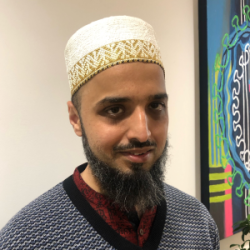
Mathew has graduate degrees in law from the National Law School, Bangalore and the University of Warwick, and completed his doctoral work at the London School of Economics on the impact of secularism on Indian constitutional practice. He has previously worked at the Alternative Law Forum, Bangalore on social justice lawyering; he was a law and culture fellow at the Centre for the Study of Culture and Society, Bangalore; and has been a visiting fellow at the Centre for the Study of Law and Governance, Jawaharlal Nehru University.
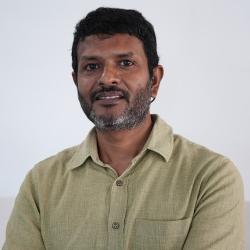
Amar Sohal is an intellectual historian of modern South Asia. He is interested in political ideas that continue to shape contemporary India and Pakistan. His research focuses on anti-colonial nationalism, religious politics, and the secular state. During the academic year 2025-26, Amar is on leave to take up a research fellowship at the Koch History Centre, University of Oxford.
Amar received his DPhil and MSt from the University of Oxford and his BA from University College London. He has a broad training in Indian history and political thought, as well as in Hindi and Urdu literature. Prior to joining King’s, Amar was an Early-Career Research Fellow at Corpus Christi College, Cambridge, where he revised his DPhil dissertation for a monograph, The Muslim Secular: Parity and the Politics of India’s Partition (Oxford University Press, 2023). It examines the political thought of three eminent Indian Muslim nationalists of the twentieth century—Abul Kalam Azad, Sheikh Abdullah, and Abdul Ghaffar Khan. Amar argues for the presence of a distinct Muslim secularity within the grander intellectual family of secular Indian nationalism.
Amar’s work has been published in leading academic journals: Modern Intellectual History, Global Intellectual History, and South Asia: Journal of South Asian Studies. He has edited two special issues of Global Intellectual History.
The first of these article collections, co-edited with Taushif Kara and published in 2022, is titled “Refusing Minority, Recasting Islam”. It argues that the Indian political was constitutive of a wider debate about Muslim minorityhood during the twentieth century. Stretching from Africa to China, this debate was liberated from any regional silo. In 2025, Amar published his second collection titled “India in Miniature: Kashmir and the History of Political Thought, 1931-1965”. It contends that Kashmir encapsulates the scale and diversity of the Indian subcontinent. Consequently, this erstwhile princely state surpasses its peripheral status to emerge as a central site for generalisable political imaginings.
Amar is a Fellow of the Royal Historical Society.
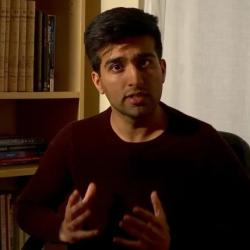
My work examines constitutions from theoretical, historical, and comparative perspectives.
I am particularly interested in federal, transnational, imperial, and regional constitutional orders, and in the role constitutions can play in creating and stabilising political orders beyond the state. My research straddles EU law and politics, constitutional law and theory, federalism, political theory, the history of political thought, and international relations.
I am currently pursuing a research project on Post-Imperial Unions, which explores federal, transnational, and regional constitutional projects that emerged in response to the decline and collapse of empires in the fifty years following the First World War.

Stewart’s current research examines law's relationship with 'nature'. This includes a critical exploration of how 'nature' is conceptualised in climate litigation and national and international environmental law; and the philosophical underpinning of the distinction between 'matter' and norms. The research is linked to questions of climate justice and legal responses to ecological crises.
Stewart has also published widely on issues of postcolonial justice; law, memory, and violence; and theories of sovereignty. This research has been articulated through discourses of law, philosophy, and aesthetics.
Stewart was Executive Dean of Birkbeck Law School, 2016-22; and Managing Editor of Law & Critique, 2015-2020.
In 2023, Stewart held the John Hinkley Visiting Professorship at Johns Hopkins University, Baltimore. He has also held visiting fellowships at Sydney Law School, Melbourne Law School, and the Stellenbosch Institute for Advanced Study (STIAS).
Prior to joining Birkbeck in 2012, Stewart taught at Kent Law School. He has also taught Law in Australia, and was an Associate to the Hon. Justice Margaret Beazley - Judge of the Federal Court of Australia; Case Manager of the Native Title Unit, Aboriginal Legal Rights Movement Inc., South Australia; and a Consultant to the Foundation for Aboriginal and Islander Research Action.
Stewart's most recent book, Archiving Sovereignty: Law, History, Violence (Michigan University Press) was published in 2018.
In 2020, he launched a podcast series called COUNTERSIGN. Stewart and guests discuss books, films, and other materials from across disciplines to consider new perspectives on law, difference, and being in common.
Stewart lectures on Foundations of Property; Law, History, and Political Violence; Law, Nature, and Planetary Justice.