

Legalising Anti-Corruption Supervision Within China’s Socialist Legal System: Theoretical Foundations and Institutional Reform in the New Era
Speaker(s):
Series:
Associated with:
 Add to calendar
Abstract
Taking comprehensive supervision over power as its theoretical foundation, the construction of discipline inspection and supervision under the rule of law in the new era of socialism with Chinese characteristics focuses on the institutionalization of anti-corruption governance to secure the Communist Party of China’s long-term rule. Through deepening reform of the disciplinary inspection and supervisory mechanisms, it seeks to place power within the bounds of institutional regulation and thereby realize the rule of law in disciplinary inspection and supervisory work. Adhering to the fundamental principle that all major reforms must be grounded in law, constitutional amendments have been implemented and the fundamental law of supervision enacted, clarifying the constitutional status of the National Supervisory Commission and the legal basis for the exercise of supervisory power. Following the basic principle of promoting the rule of law in disciplinary inspection and supervisory reform, this process strengthens the concept of integrating external checks with internal specialized supervision, establishing effective oversight of supervisory institutions and personnel through institutional design, preventing the “darkness beneath the lamp,” and advancing the institutionalization of the mechanisms governing the operation of supervisory power.
Speaker Biography
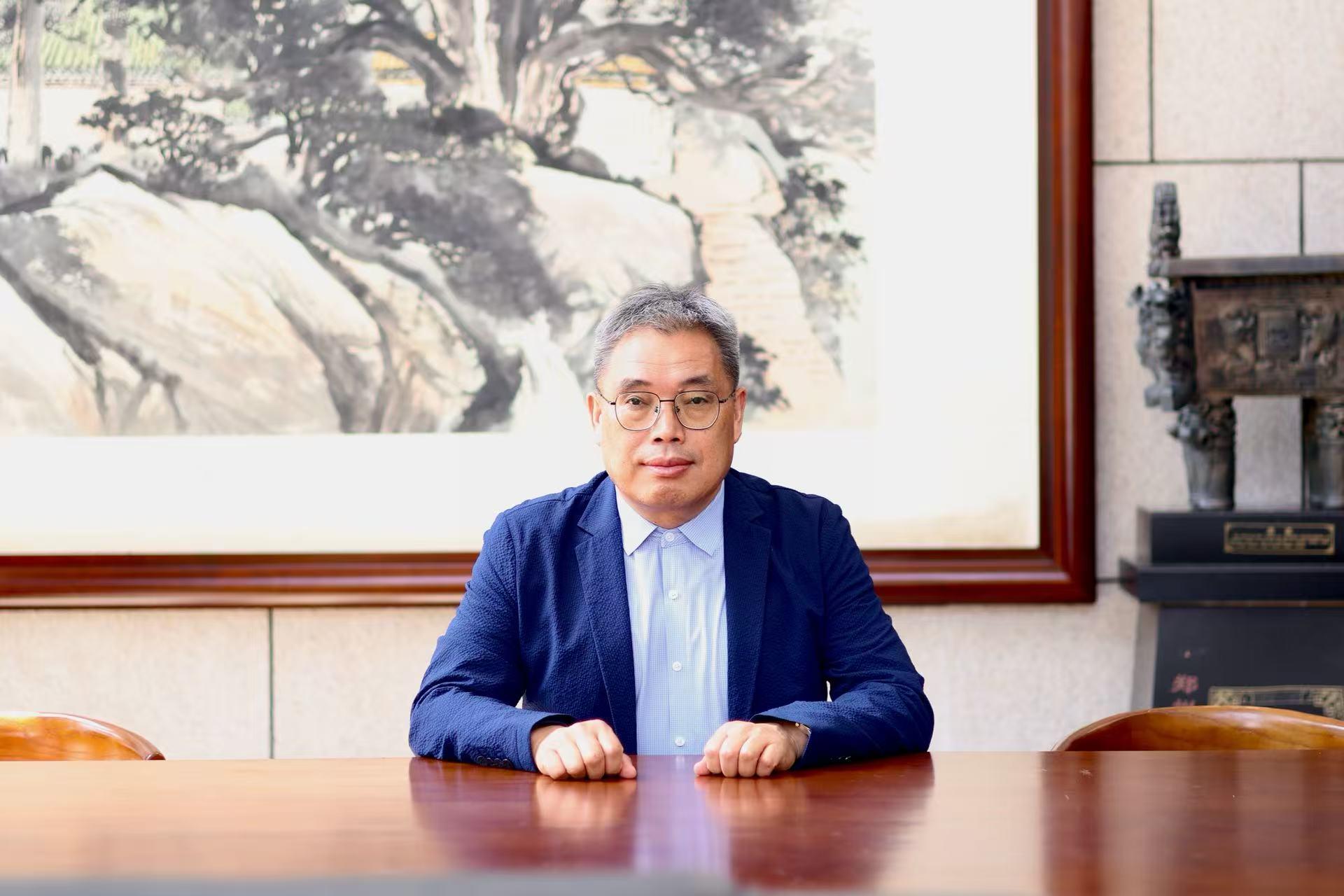
Jianguo Wang is the Chair and Professor of Jurisprudence and Legal History at Zhengzhou University. He was formerly Associate Professor at the Institute of Law, Chinese Academy of Social Sciences, and a Visiting Scholar at Irkutsk State University. He is President of the Henan Society of Jurisprudence and Legal History. Professor Wang’s research focuses on jurisprudence and comparative law. He has published extensively in these fields and is the author of a multi-volume series on Leninist jurisprudence, as well as several books on the justice system. His current research focuses on China’s disciplinary inspection and supervision and comparative studies of procuratorial systems across legal traditions.


