
The Principle of Diversity: Alive and well?
Associated with:
 Add to calendar
A piece on the Guardian recently declared that given the Trump administration's 'war on woke', 'DEI is dead...but the underlying value of equality isn’t. Not by a long shot.” While policies marked as 'diversity, equity and inclusion' (DEI) may be on their last legs, it is important to distinguish between DEI policies and the principles underlying DEI policies. In particular, it is important to consider whether not just equality, but diversity too may be valuable as a principle by itself and separately from the 'DEI' policies which ruled the roost until recently.
This panel considers the principle of diversity from a range of perspectives. It brings David Oppenheimer and his intellectual history of the principle of diversity, captured in his new book The Diversity Principle (Yale University Press 2026) in conversation with three equality law experts: Barbara Havelkova, Lucy Vickers and Sandra Fredman. Each panellist will consider diversity from a different perspective. David will outline the long history of diversity which existed well before it became the basis of the US Supreme Court's support of affirmative action. Barbara will consider the relevance of diversity in Europe; Lucy will consider diversity in UK equality law and finally, Sandy will consider diversity from a global and comparative perspective.
This is a public event. Everyone welcome.
Panellists

David Oppenheimer
David B. Oppenheimer is a Clinical Professor of Law.
He serves as the Faculty Co-Director of the Pro Bono Program, and the Director of the Berkeley Center on Comparative Equality & Anti-discrimination Law. The center brings together over 800 scholars, activists, NGO workers, government anti-discrimination agency lawyers and officials, PhD candidates and other graduate students, and legal practitioners from six continents, to address the problems of systemic inequality and discrimination. Its principal mission is to expand our understanding of inequality and discrimination through the tools of comparative legal studies, and to transfer that knowledge from those who study inequality to those who enforce anti-discrimination law.
Following his graduation from Harvard Law School, Professor Oppenheimer clerked for California Chief Justice Rose Bird. He then worked as a staff attorney for the California Department of Fair Employment and Housing, prosecuting discrimination cases, and was the founding director of the Berkeley Law Employment Discrimination Clinic. In addition to Berkeley Law, he has taught at the University of San Francisco, Golden Gate University (where he served as Associate Dean), the University of Paris (Sorbonne-Pantheon), the University of Bologna, LUMSA University Roma, and the Paris Institute of Political Science (“Sciences Po”).
Professor Oppenheimer has presented scholarly papers on discrimination law at many universities, including Berkeley, Harvard, Yale, Stanford, Columbia, Duke, Oxford, the Paris Institute of Political Science, the University of Heidelberg, Humboldt University Berlin, the Sorbonne, the University of Stockholm, the University of Melbourne, Trinity College Dublin, the University of New South Wales, the University of Buenos Aires, and Hong Kong University, and at the annual meetings of the Association of American Law Schools, the American Political Science Association and the International Academy of Comparative Law. He has published articles on discrimination law in the Pennsylvania Law Review, the Cornell Law Review, the Columbia Journal of Human Rights Law, the Berkeley Women’s Law Journal, the Harvard Latinx Law Review, the Berkeley Journal of Employment and Labor Law, Droit et Cultures, and many others.
Professor Oppenheimer is the author of The Ubiquity of Positive Measures for Addressing Systemic Discrimination and Inequality: A Comparative Global Perspective (Brill 2019), a co-author of the casebook Comparative Equality & Anti-Discrimination Law (3d ed. Edward Elgar 2020), a co-editor of Comparative Perspectives on the Enforcement and Effectiveness of Antidiscrimination Law: Challenges and Innovative Tools (Springer 2018), and the co-author of several sets of teaching materials, including Patt v. Donner: A Simulated Casefile for Learning Civil Procedure (2d ed. Foundation Press 2019) and the trial advocacy case file Rowe v. Pacific Quad (6th ed. 2019 NITA). He was a contributor to MacKinnon and Siegel’s Directions in Sexual Harassment Law (Yale University Press 2003), Guiomard and Robin-Olivier’s Diversite et discriminations raciales: une perspective transatlantique (Dalloz 2009), and Friedman’s Employment Discrimination Stories (Foundation Press 2006). His co-authored book, Whitewashing Race: The Myth of a Color-Blind Society (with M. Brown, M. Carnoy, E. Currie, T. Duster, M. Schultz and D. Wellman) (University of California Press 2003) won the 2004 Benjamin L. Hooks outstanding book award.
He teaches Civil Procedure, Evidence, and Comparative Equality & Anti-Discrimination Law.

Sandra Fredman
Sandra Fredman is Professor of the Laws of the British Commonwealth and the USA at Oxford University, and a professorial fellow at Pembroke College, Oxford. She was elected a Fellow of the British Academy in 2005 and became a QC (honoris causa) in 2012. She has written and published widely on anti-discrimination law, human rights law and labour law, including numerous peer-reviewed articles. She has authored four monographs: Comparative Human Rights (OUP, 2018); Human Rights Transformed (OUP 2008); Discrimination Law (2nd ed, OUP 2011); and Women and the Law (OUP 1997), as well as two co-authored books: The State as Employer (Mansell, 1988), with Gillian Morris, and Labour Law and Industrial Relations in Great Britain (2nd ed Kluwer, 1992) with Bob Hepple. She has also edited several books: Human Rights and Equality in Education (Policy Press, 2018, with Meghan Campbell and Helen Taylor); Discrimination and Human Rights: The Case of Racism (OUP, 2001); and Age as an Equality Issue (Hart, 2003 with Sarah Spencer). She was awarded a three year Leverhulme Major Research Fellowship in 2004 to further her research into socio-economic rights and substantive equality. She is South African and holds degrees from the University of Witwatersrand and the University of Oxford. She has acted as an expert adviser on equality law and labour legislation in the EU, Northern Ireland, the UK, India, South Africa, Canada, Malaysia and the UN; and is a barrister practising at Old Square Chambers. She founded the Oxford Human Rights Hub in 2012, of which she is the Director.
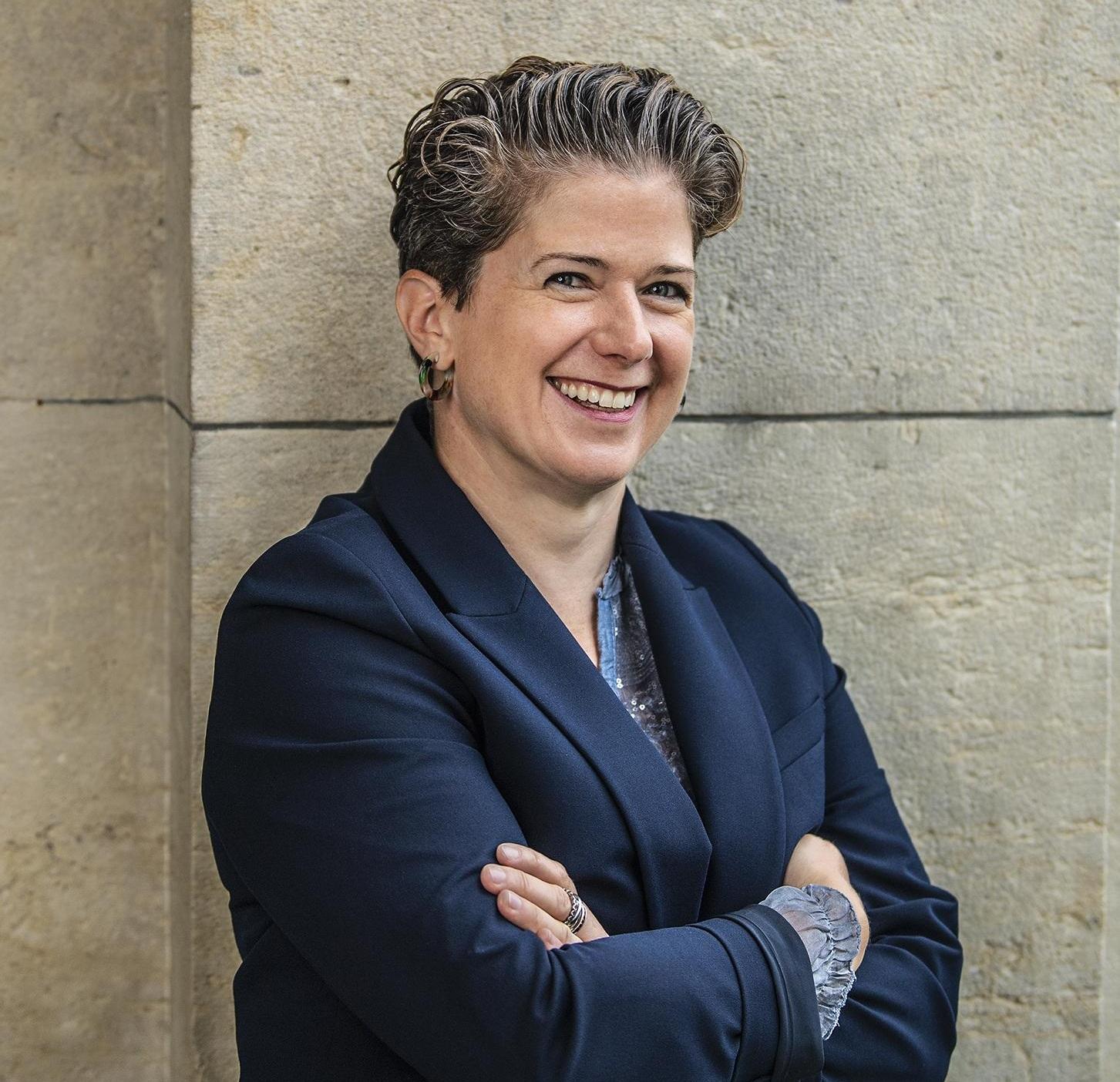
Barbara Havelková
Barbara Havelková holds degrees from Charles University in Prague (Mgr - Master in Law; summa cum laude), Europa-Institut of Saarland University (LLM) and the University of Oxford (Mst in Legal Research, DPhil).
Barbara is an Associate Professor at the Faculty of Law and a Tutorial Fellow at St Hilda's College. She was previously the Shaw Foundation Fellow at Lincoln College and held other posts at the University of Cambridge (Emmanuel College) and Oxford (Balliol). She worked for Clifford Chance Prague, trained at the Legal Service of the European Commission and in the Chambers of AG Poiares Maduro at the Court of Justice of the European Union. She was an academic visitor at several law schools, including Harvard University and University of Michigan as a Fulbright scholar and the Jean Monnet Center of NYU Law School as an Emile Noël Fellow.
Barbara’s research and teaching interests include gender legal studies and feminist jurisprudence, equality and anti-discrimination law, constitutional law, EU law and law in post-socialist transitions. She is a senior member of the Law Faculty's Feminist Jurisprudence Discussion Group. Barbara teaches Constitutional Law, EU Law and Feminist Jurisprudence to undergraduates and Comparative Equality Law on the BCL/MJur programme. She also convenes the undergraduate third year option Feminist Perspectives on the Law.
Her book, 'Gender Equality in Law: Uncovering the Legacies of Czech State Socialism', was published by Hart/Bloomsbury in 2017 and received an honourable mention from the judges of the BASEES Women’s Forum Prize for 2019. A volume Barbara co-edited with Mathias Möschel on ‘Anti-Discrimination Law in Civil Law Jurisdictions’ came our with Oxford University Press in 2019.
Barbara has also been active as an expert and an academic in the Czech Republic. Between 2014 and 2017, Barbara acted as an Advisor to the Prime Minister of the Czech Republic on issues of gender and law. She is the author of a monograph ‘Equality of women and men in remuneration’ (Rovnost v odměňování žen a mužů; Auditorium, 2007), co-author of the leading 'Commentary on the Czech Anti-Discrimination Act' (Antidiskriminační zákon. Komentář, with P Boučková et al; C.H.Beck, 1st edition 2010, 2nd edition 2016) and co-editor and co-author of the edited volume What to do with prostitution? Public policies and the rights of persons in prostitution (Co s prostitucí? Veřejné politiky a práva osob v prostituci, with B Hančilová; SLON, 2014). A collection of essays on gender and the law, 'Men’s Laws: Are Legal Rules Neutral?' (Mužské právo. Jsou právní pravidla neutrální?), which Barbara co-edited and co-authored, came out in 2020 with WoltersKluwer.
Barbara is a Co-Chair of the Central and Easter European Chapter of ICON.S, she is a member of the Editorial Board of the Czech generalist journal Jurisprudence, and a member of the Academic Board of the Faculty of Law at Charles University in Prague.

Lucy Vickers
Professor Lucy Vickers studied law at Queens' College, Cambridge, and qualified as a solicitor before joining the Law Department at Oxford Brookes University. Her main research area is the protection of human rights within the workplace. In particular she focuses on religious discrimination at work and age equality. In addition she works on freedom of speech at work, including protection for whistleblowing, and the right to freedom of speech under the European Convention on Human Rights. She was President of the Society of Legal Scholars for 2022-2023.


