Recourse to Hope as International Practice: International (Human Rights) Law between Existential Rupture and Normative Projection
Speaker(s):
Series:
Associated with:
About
The presentation explores recourse to hope as an institutional practice in international (human rights) law, focusing on moments of existential rupture. It argues that agents of international legal authority invoke hope not merely rhetorically, but as a stabilising and future-oriented instrument that sustains normative authority where conventional enforcement mechanisms are limited. Following the Second World War, references to hope during the negotiations of the Universal
Declaration of Human Rights helped anchor the moral authority of the emerging international human rights regime. In the context of the climate crisis, the International Court of Justice, in ist recent Advisory Opinion, expresses hope that its conclusions may contribute meaningfully to the global debate while remaining within the limits of its judicial mandate.
Through a qualitative analysis of the travaux préparatoires of the Universal Declaration of Human Rights, drawing on discursive theory, the presentation examines how language operates performatively in international legal settings: projecting normative futures, coordinating collective action, and shaping the expectations and behaviour of states, civil society, and international actors. Hope thus functions both as a performative tool and as a legitimating resource, reinforcing the moral credibility of international institutions in times of profound uncertainty.
Speaker
Patricia Wiater is Professor of Public Law, Public International Law and Human Rights at Friedrich‑Alexander‑Universität Erlangen‑Nürnberg (FAU) and Principal Investigator in the Cluster Transforming Human Rights. She directs the CHREN Human Rights Clinic and co‑coordinates the International Doctorate Programme on Business and Human Rights at FAU.
Her research spans public international law and human rights law. Her more recent research interests focus on the strategic and performative use of language in legal and political contexts, exploring how emotional and normative narratives – such as hope or the framing of “friendly” vs. “unfriendly” states in international politics – shape collective action, institutional authority, and public expectations.
Chair
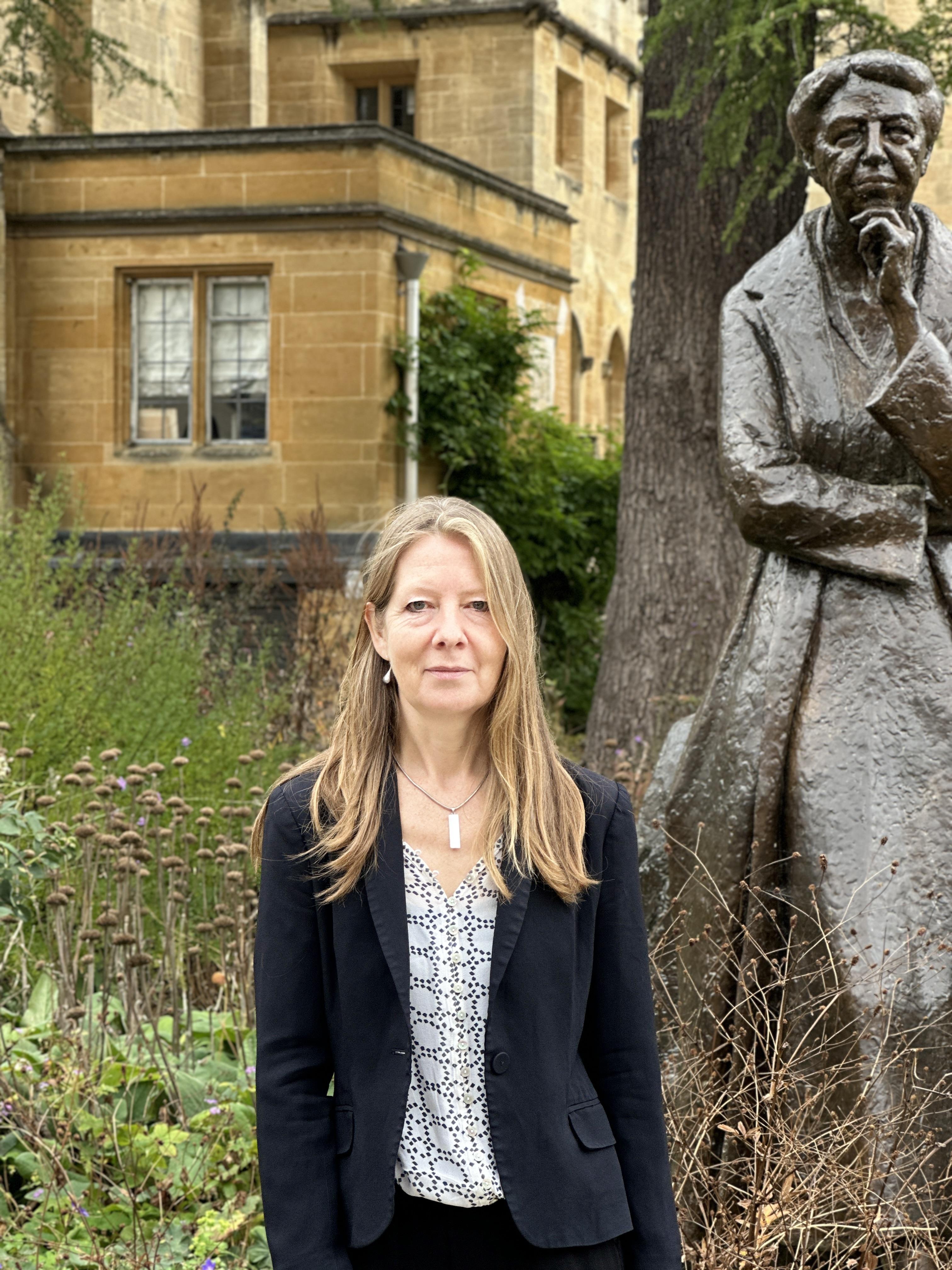
Rachel Murray is the Director of the Bonavero Institute of Human Rights and Professor of International Human Rights Law. She joined the Institute in October 2025 and prior to that was the Director of the Human Rights Implementation Centre at the University of Bristol which she co-founded with Professor Sir Malcolm Evans in 2009.
Rachel’s personal practitioner and academic work has developed in three inter-related areas: the African human rights system, monitoring of places of detention, and implementation of human rights decisions (ESRC funded, (http://www.bristol.ac.uk/law/hrlip/). For the latter, Rachel and her team were awarded the ESRC Outstanding International Impact Prize in 2023.
She has written widely in these areas for academic and scholarly audiences and also as a practitioner. She ran her own independent consultancy where she worked for, among others, the UN, OSCE, Open Society Justice Initiative, African Committee of Experts on the Rights and Welfare of the Child, NANRHI (Network of African National Human Rights Institutions), APCOF (African Policing Civilian Oversight Forum), the UK National Preventive Mechanism, and CEELI Institute.