
IHRL Summer School scholars share reflections on their time in Oxford and advice for prospective applicants
The International Human Rights Law Summer School is a 26-day residential summer school offered by the Bonavero Institute for Human Rights and George Washington University Law School, based at the University of Oxford Faculty of Law. It offers participants the opportunity to follow an intensive programme of university-level study in international human rights law within the beautiful surroundings of New College, Oxford.
Each year, the Bonavero Institute of Human Rights is pleased to offer three scholarships of £6,500 each. The scholarships aim to support talented individuals who already have an established connection to the human rights field (whether paid or voluntary) and who have the potential to make change.
This year, the scholarships were awarded to Bolorsaikhan Badamsambuu, Winnie Ishaku, and Abeer Shrivastava.
Please introduce yourself!
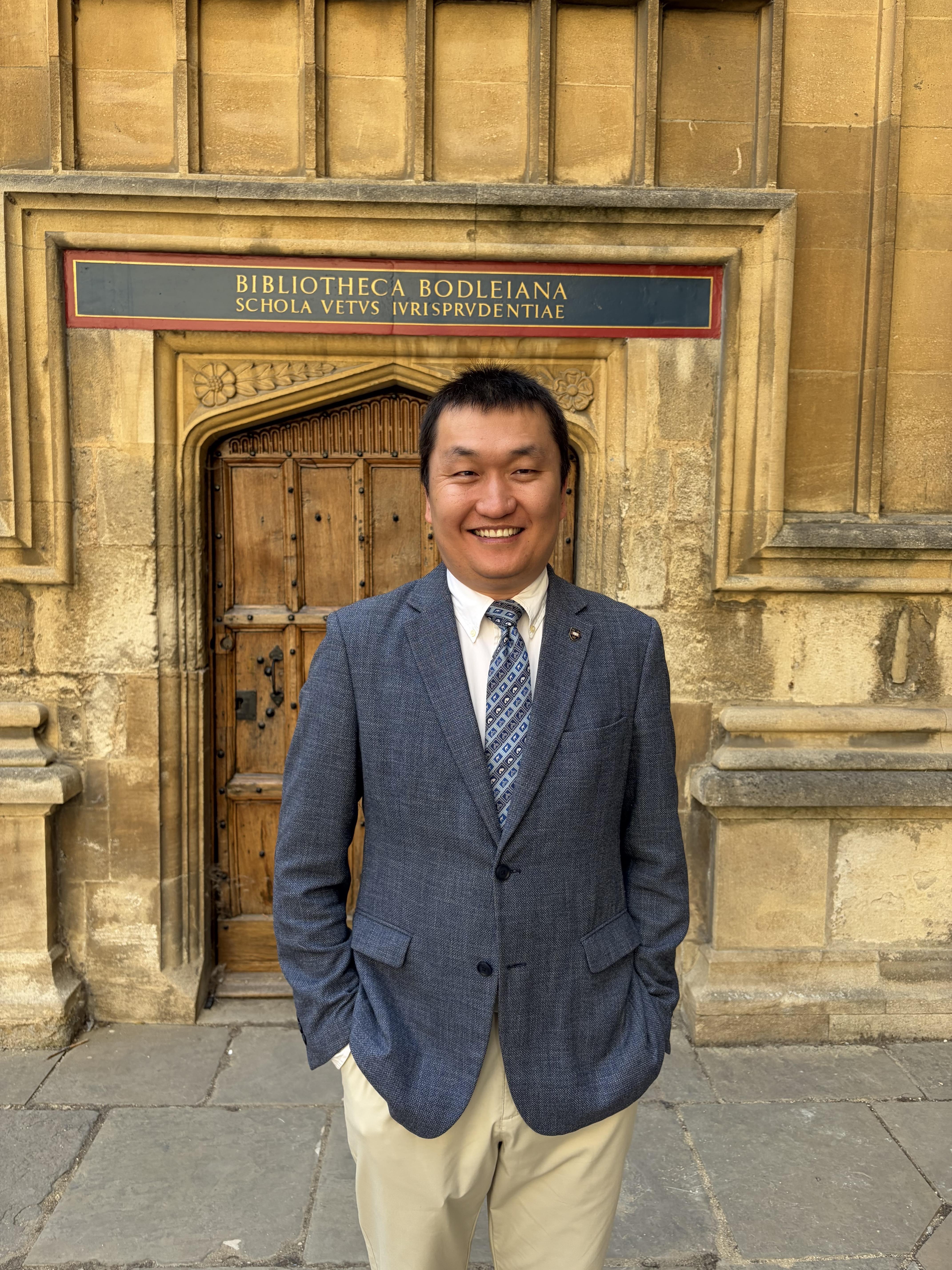
Bolorsaikhan: My name is Bolorsaikhan Badamsambuu, a human rights practitioner from Mongolia with a background in legal studies and rights advocacy. My work focuses on advancing civil society advocacy to ensure international human rights law is effectively applied to protect human rights in daily practice.
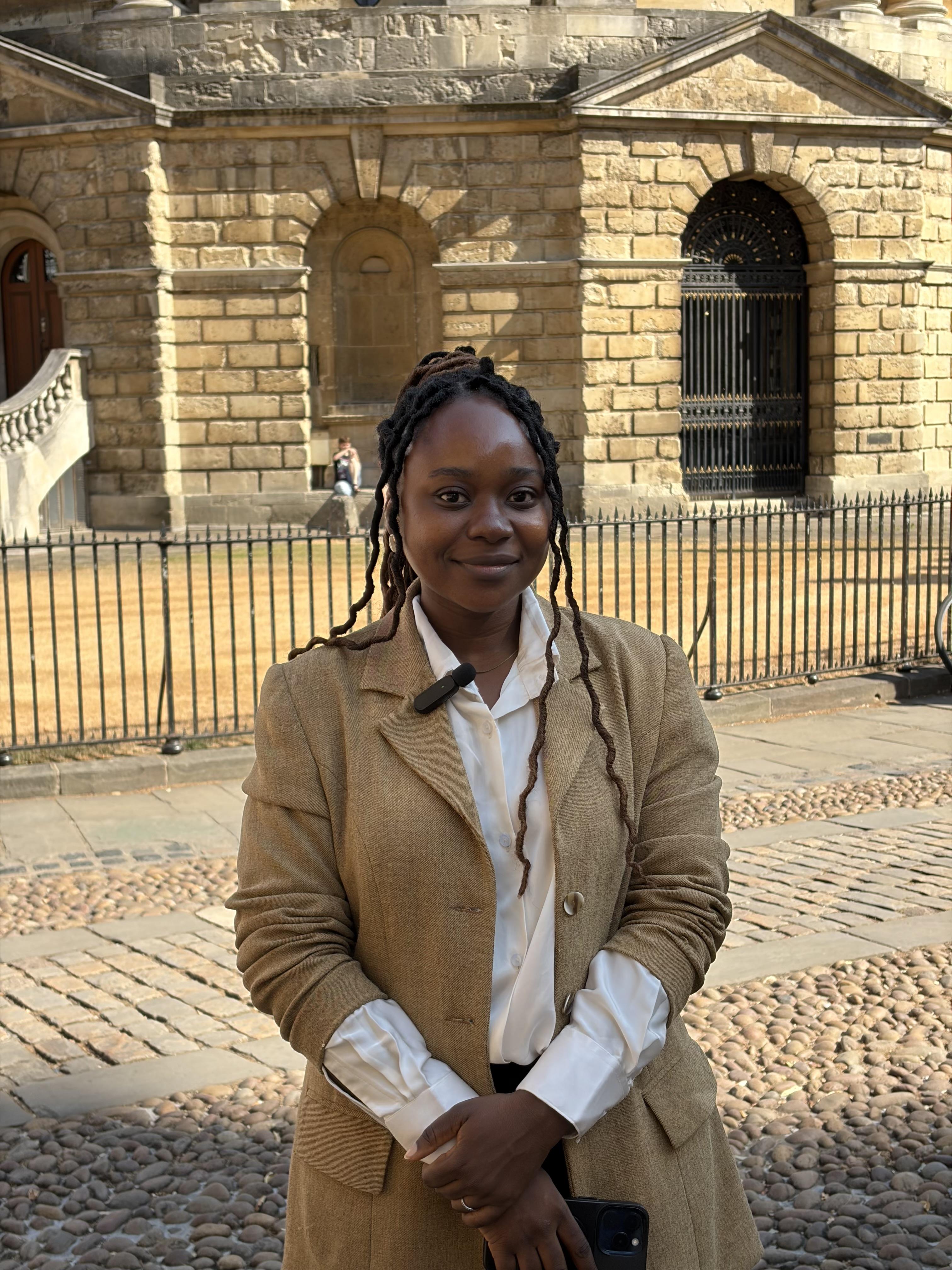
Winnie: My name is Winnie Ishaku, I am a lawyer and human rights advocate based in Nigeria, working at the intersection of criminal justice reform, disability rights, and climate justice.
Abeer: I am Abeer Shrivastava and I am a lawyer from India. I did my BA LLB from the Jindal Global Law School in India, subsequent to which I worked in think tanks, policy research centres, legal aid clinics, and litigation chambers; all of which are incidental to the larger domain of human rights. I have always been interested in how emerging technology interacts and interferes with human rights.
What drew you to the IHRL Summer School?
Bolorsaikhan: Among numerous human rights summer programmes, I specifically chose the Oxford IHRL Summer School because of its prestigious 30-year legacy of continuous refinement and excellence. I sought a top-tier environment that bridges academic theory with practical realities by bringing together world-class faculty, renowned legal scholars, and seasoned practitioners from around the globe. Beyond refining my understanding of complex international legal systems, I wanted to engage directly with experts and diverse global peers to exchange frontline field experiences, practical methodologies, and effective strategies for navigating the real-world challenges faced by human rights defenders today.
Winnie: First, it is the University of Oxford, the world's top university, which was itself a compelling draw! The courses being offered are relevant to today's human rights challenges, particularly Freedom of Expression in the Digital Age and Human Rights Lawyering (strategic litigation). These speak directly to the realities shaping human rights practice today. Before applying, I researched the profiles of the tutors and directors, especially the women. I was struck by the calibre of professors working on African human rights system and freedom of expression, such as Rachel Murray and Eliza Bechtold who taught us the fundamentals of international human rights law.
Abeer: I was primarily drawn to the summer school because of the research and reports of the Bonavero Institute of Human Rights. Additionally, the Institute is renowned for organising the Price Media Law Moot, so I had anticipated, understandably, that the discourse on human rights law and technology was going to be incredibly advanced.
What subjects have you been studying in the Summer School? What have you most enjoyed learning about?
Bolorsaikhan: Throughout the programme, I gained critical insights into international legal frameworks, protection mechanisms, and human rights lawyering across specialized thematic modules. Learning from respective UN Special Rapporteurs, specialised professors, and seasoned veterans provided irreplaceable perspectives on future trends and the strategic role of human rights defenders. Bridging global legal systems with ground level realities equipped me with stronger analytical tools and practical strategies to enhance civil society advocacy in Mongolia. Ultimately, combining these theoretical insights with the shared experiences of fellow participants has profoundly shaped my professional approach to better supporting human rights defenders on the ground.
Winnie: I studied Freedom of Expression in the Digital Age, taught by David Kaye, the former UN Special Rapporteur on Freedom of Opinion and Expression. I learned a great deal about the three-part test: legality, legitimacy, and proportionality/necessity. I think of this as the "invisible three," since these are the tests States must pass whenever they seek to interfere with individuals' rights to opinion and expression. It was a fascinating concept to analyse through real cases. I also studied Human Rights Lawyering, led by Professor Helen Duffy, renowned for her strategic litigation work worldwide, handling one of the first human rights cases at the ECOWAS court. Learning from her reminded me why I love human rights and why this work matters so much.
Abeer: My two classes were Human Rights Lawyering Advance and Human Rights and Artificial Intelligence. The class discussions in both of them were probably some of the most profound discussions I have been a part of, owing to the cohort being a mix of practitioners, industry experts and students. I loved how the advanced class was focused on strategic litigation where I learnt how courts are not the only fora for advocacy. In my AI elective, a lot of the teaching delved into the working and technicalities of the tech itself, which gave me a deeper understanding of the potential applications of IHRL.
What are your key takeaways from the Summer School?
Bolorsaikhan: A key takeaway is that human rights advocacy is fundamentally rooted in human dignity, which must guide our work across all sectors, whether in civil society, public service, or the private sector. Furthermore, the program highlighted how national level implementation directly shapes international standards. Enforcing rights locally and protecting individuals through domestic courts does not only strengthen national systems, but also contributes valuable best practices to the global legal order. Ultimately, effective local protection establishes precedents that can advance human rights frameworks worldwide, reinforcing the vital connection between national action and international law.
Winnie: Learning from international practitioners like David Kaye and Helen Duffy sharpened my understanding of how advocacy for freedom of expression in the digital space and strategic litigation shape international human rights jurisprudence. Their case-based approach gave me practical tools I can apply directly to advocacy work, particularly around freedom of expression and legal strategy. This experience has strengthened my confidence in engaging with international human rights frameworks in my professional work going forward.
Abeer: My takeaway is a little bittersweet. The program has instilled optimism in me about the robustness of IHRL with respect to dynamic issues like climate change and data privacy but has also made me cognisant of the risks that lie ahead in the future with the inevitable advent of numerous technologies and their impact on humankind.
What have you enjoyed most about your time in Oxford?
Bolorsaikhan: Beyond the rigorous academic sessions, I thoroughly enjoyed networking with a diverse cohort of peers. Highlights included the guided uncomfortable Oxford tour, revealing hidden histories, and experiencing places where Oxonians such as Thomas Hobbes, John Locke, Oscar Wilde, J.R. R. Tolkien, H. L. A. Hart and Stephen Hawking lived, read and wrote. Furthermore, Oxford served as a living example of universal design and inclusivity. Despite centuries old buildings and towers, the city seamlessly enables people with visual or mobility disabilities to study and live independently. Experiencing this historic town through these unique lenses made my time here truly unforgettable.
Winnie: The uncomfortable Oxford tour was a real highlight, hearing the history behind the colleges and banks made the city feel almost cinematic. Beyond that, simply experiencing everyday life in Oxford felt like stepping into a Harry Potter series!
Abeer: The people, honestly. Everyone from the professors, my peers, the New College Staff, the course coordinators to shop keepers, people at the pubs, librarians, strangers in the street, everyone is so accommodating, kind, and welcoming. Perhaps it is the culture in college towns like Oxford, but I have not seen this environment in big cities.
What advice would you give to anyone considering applying to the Summer School?
Bolorsaikhan: I strongly advise prospective applicants to actively engage not only with the demanding coursework, but also with their peers and tutors. Come fully prepared to share your field experiences while remaining open to learning from others. The programme strength lies in its exceptional balance of high-level legal theory, practical application, and global networking. Take full advantage of every lecture, expert panel, cultural tour, and informal conversation. Immersing yourself completely in this environment will transform how you approach human rights advocacy and leave you with lifelong professional connections.
Winnie: I would strongly encourage anyone considering the Summer School to apply. It is genuinely a worthwhile investment of time: the Summer School felt like an abridged master's programme, with the rare chance to connect with international human rights practitioners and peers from around the world. Beyond the coursework, the relationships and friendships you build often lead to lasting collaboration on human rights projects long after the programme ends.
Abeer: I would advise them to not hesitate in bringing their own unique perspective that they have formed in their respective jurisdictions. Almost all the student presentations in my advance class connected the readings to an aspect of their home jurisdiction, which in turn broadened the horizons of everyone sitting in the class. The same with electives: for example, when we were discussing surveillance, people from the USA were talking about flock cameras, I was talking about the identification system in my country, someone from Angola mentioned spyware, etc. A diverse perspective makes for an even more enriching and fulfilling program in my opinion.