
Interview with Ahmed F. Khalifa, Regional Coordinator of the Price Moot Court Competition
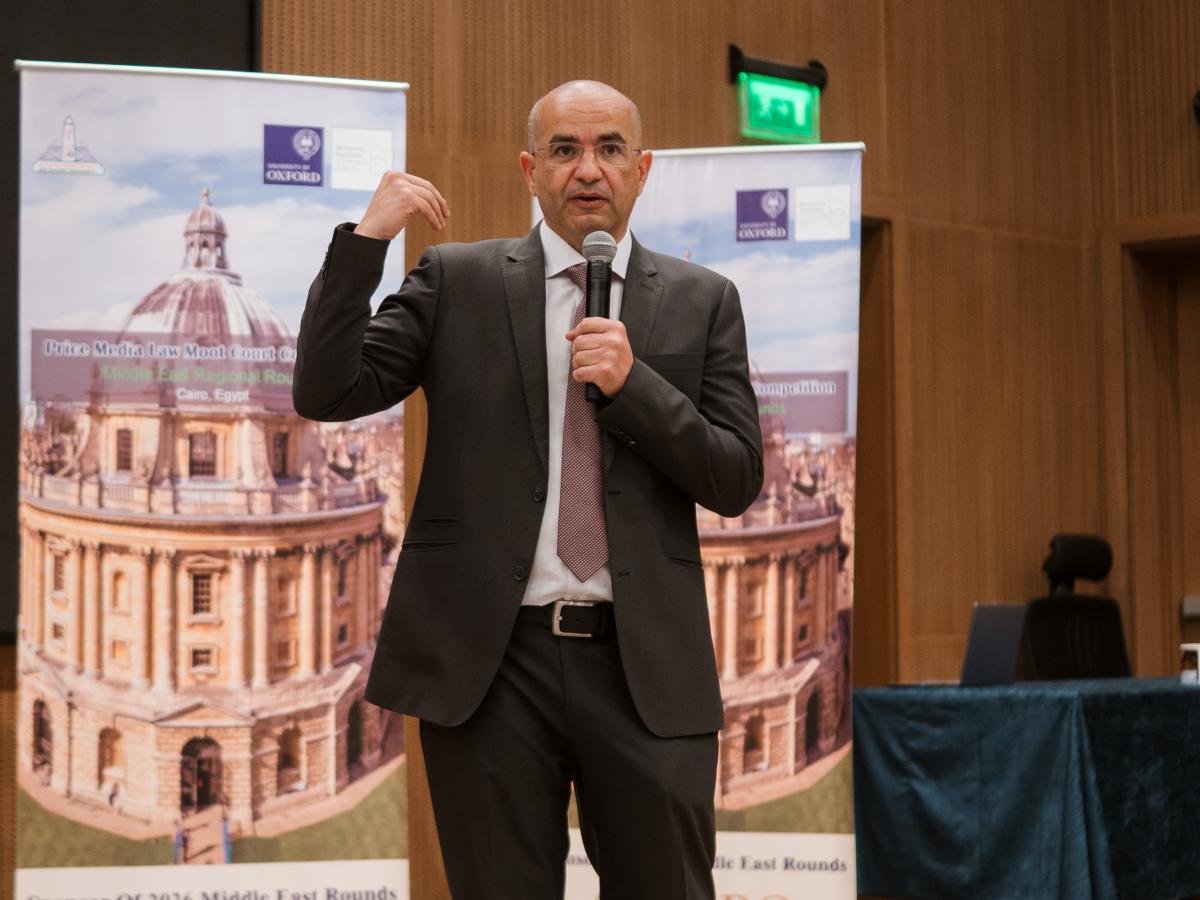
Since 2015, Dr Ahmed F. Khalifa has served as the Regional Coordinator of the Middle East Regional Rounds of the Monroe E Price Media Law Moot Court Competition. We spoke to him about his involvement in the Competition, the importance of the Regional Rounds, and what sustains his motivation and passion.
About Dr. Ahmed F. Khalifa
Dr. Ahmed F. Khalifa is an Assistant Professor of Law at Ain Shams University, Cairo, Egypt. He is an expert consultant with the ICRC in the MENA region and serves as a consultant with several international organisations including the United Nations Office on Drugs and Crime (UNODC) in the MENA Region and the United Nations Children’s Fund (Unicef). Previously, he served as a full time in-house legal consultant with the United Nations Interregional Crime and Justice Research Institute (UNICRI) in Torino, Italy.
Dr. Khalifa obtained his PhD in International Criminal Law from Poitiers University in France after finishing his LLM focusing on International Human Rights Law from Temple University, USA. His areas of research include international criminal law, international humanitarian law and international human rights law.
How long have you been involved in the Moot Court Competition?
In 2013, I coached a team from Ain Shams University in Cairo, where I am a professor, at the Middle East Regional Rounds in Qatar. We won first place, best oralist, and best memorial, qualifying for the International Rounds in Oxford. The year after, the Middle East Regional Rounds didn’t take place. I contacted the University of Oxford and volunteered to host the Middle East Regional Rounds at Ain Shams University. I have been responsible for organising and funding the Middle East Regional Rounds since 2015, establishing personal contacts within universities and students all over the region to help build and develop the programme.
How did you become involved with the Moot?
I’ve been involved in moot court competitions since 2003 in one facet or another. In 2012, a group of students at Ain Shams asked me to coach them for the Price Moot Court Competition.
What has kept you involved in the Moot for so many years?
I remain committed to supporting the Moot because Oxford provides the option of regional rounds. In my opinion, regional rounds are important and preferable to competitions that allow teams to register and go directly to the International Rounds. Without regional rounds, students aren’t sure what they are getting into and there is a high drop-off rate. This makes it challenging to fundraise from law firms to support the teams. More importantly, in my experience, if students are not given the opportunity to hone their skills in regional rounds, they are at a disadvantage because many universities in the Middle East lack the institutional and financial advantages that students in many other regions enjoy. Regional rounds represent a golden opportunity for students to compete with others who are similarly situated. This allows teams to win – and feel like winners – and to build confidence and develop the critical legal analysis and oral advocacy skills that they need to be competitive at the international level.
The Price Moot Court Competition Regional Rounds allow students to gain valuable experience and build their skill sets incrementally. They are able to gain confidence by starting at the regional level and working their way up. You don’t learn to pay football by playing with Messi!
How do the students benefit from the Regional Rounds?
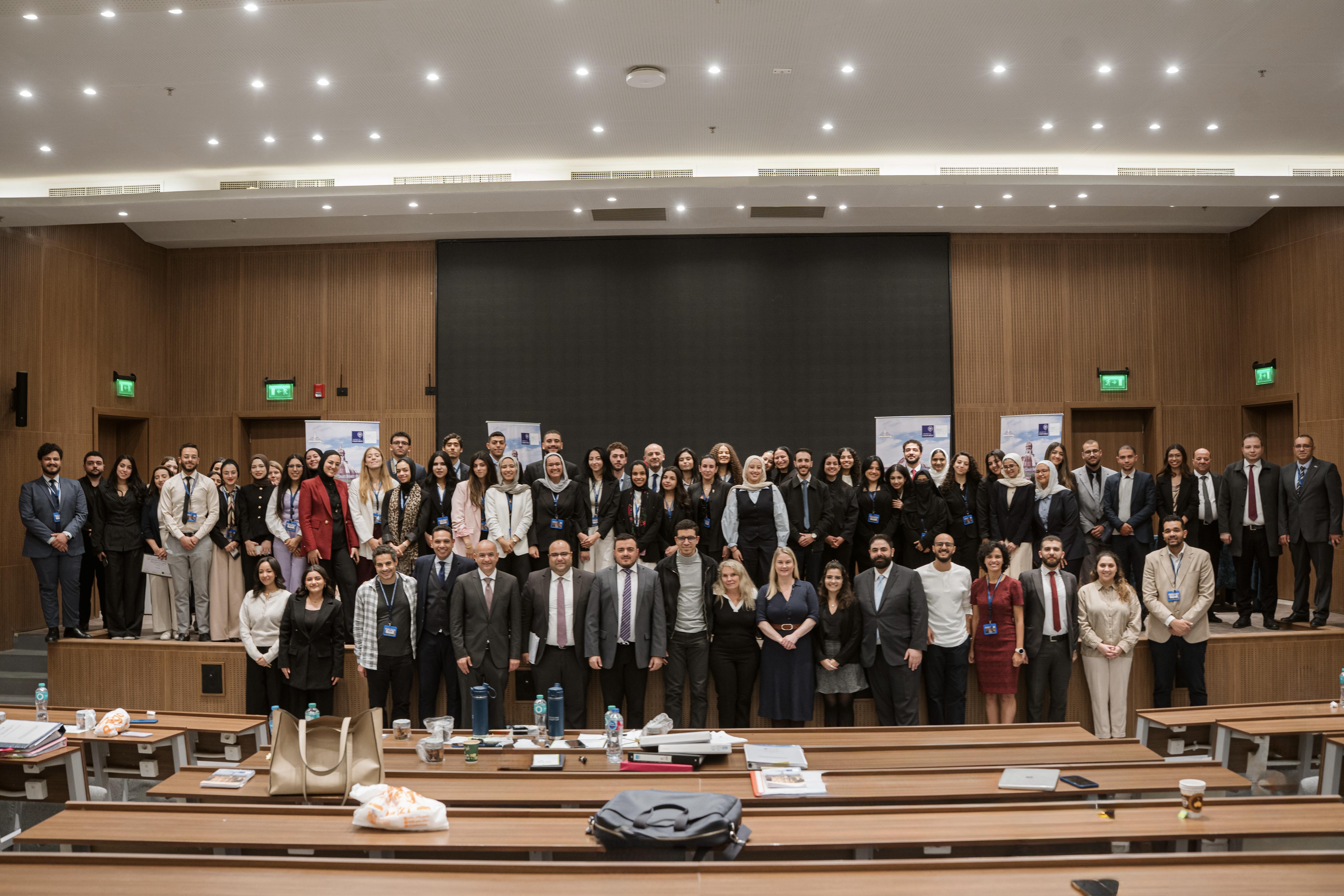
The Middle East Regional Rounds function as a social hub for law students across the Arab world, a place for them to build connections and broaden their networks. Even more importantly, it builds a community of young people that carries the message of the law throughout the region and provides them with the invaluable skills of being able to see things in different ways. All this builds tolerance and understanding of difference – qualities that are especially valuable in fostering stronger communities across the Middle East.
What makes you undertake the major effort, year after year, to organise the Middle East Regional Rounds?
You are totally right; it takes great effort to reach out to teams in universities and countries that are not used to mooting to convince them participate; to provide for technical help as much as I can for universities to form teams and train them; and to fundraise for the whole regional rounds to cover the expenses of accommodation for all the teams. Yet, I never thought to stop because I see the impact of the whole experience on students from the moment when they begin until the moment they finish. Over the years, many students have described it as life changing. I will continue putting in this effort because I feel it is my main duty as a Professor to open horizons for students, and the Price Moot Court Competition provides me with this opportunity.
It has to be said clearly also that the effort is a collective one. A reason why I am capable of continuing to serve as a regional coordinator is the great support that I find from many ex-mooters who always volunteer their time to help with organisational details.
A co-organiser with me since the first year of coordinating the Middle East Regional Rounds in 2015 till 2026 is my dear friend Ola Nagy, without whose support it would not have been possible to continue the coordination.
I cannot neglect that another main reason to continue this effort is the friendly and helpful spirit of the international team of coordination who has been in charge of the International Rounds since 2015 when I started being responsible for the Middle East Regional Rounds: Nevena Krivokapic Martinovic, Kamille Morgan-Adair and Sarah Norman.
What drives you to attend the International Rounds in Oxford every year?
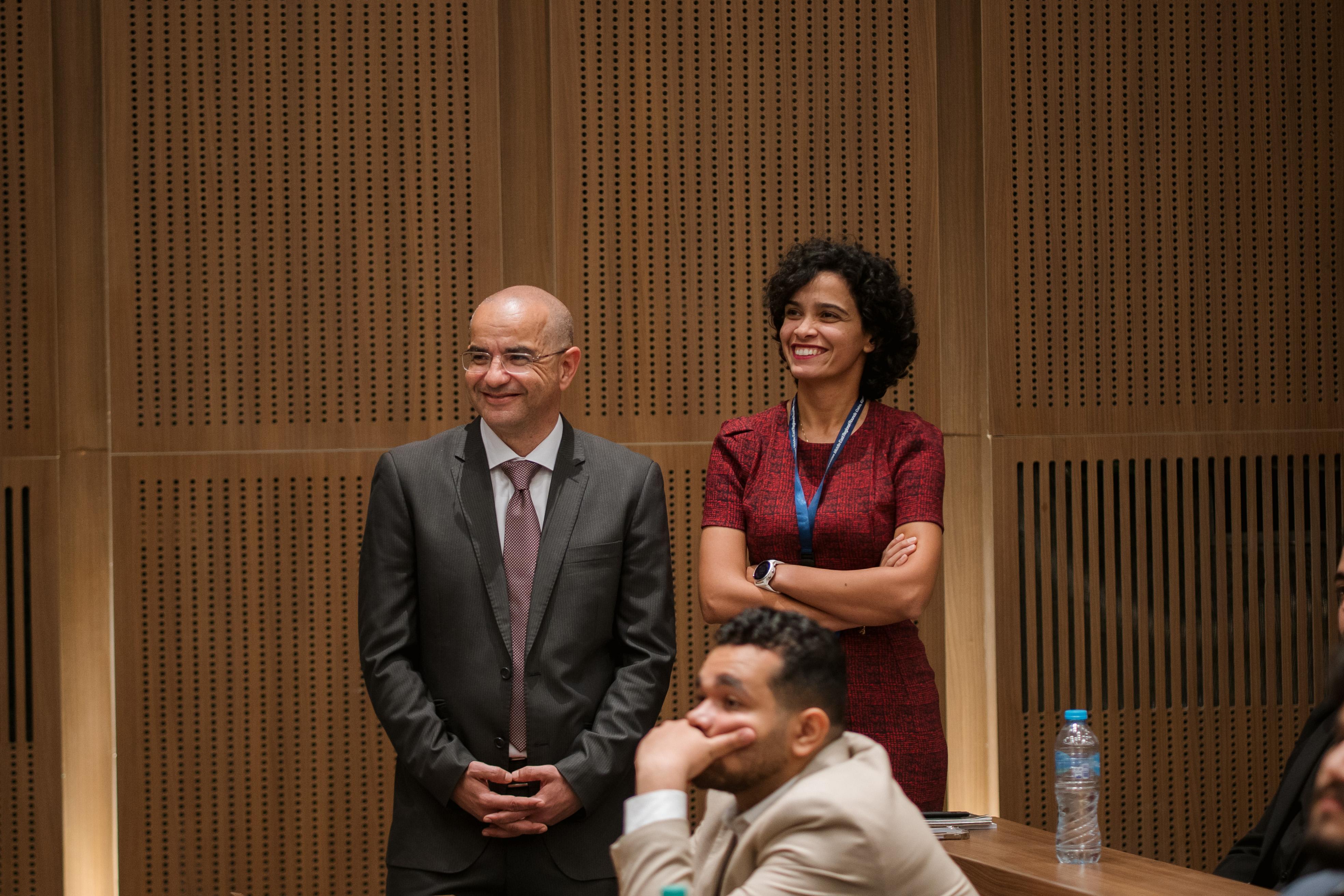
I view the International Rounds as an opportunity for Middle Eastern teams to bond and develop deeper connections among themselves and with other law students and lawyers from all over the world. I like to believe that my presence among them helps them towards that end, so I try to organise social events for Middle Eastern teams in parallel to the rich program of the competition.
Moreover, I think that the International Rounds are an opportunity to network with colleagues from all over the world who may be able to help the Middle Eastern teams in future years.
Most importantly, to have the opportunity to meet colleagues of the Bonavero Institute and from the organising team of the International Rounds to explore ways of supporting the organisation of future versions of the Moot in a way that ensures expansion and sustainability.
What is your favourite memory of the Moot?
It has been almost 14 years now that I have been involved in the Moot, and I have so many good memories that I truly treasure. Yesterday, we had a gathering of current and former Moot participants, around 40 persons including a UN official who was a member of my first team in 2013 and participants of the team of this year, 2026. Seeing all these people gathered around the table to exchange ideas, to discuss and share their different personal experiences, to plan together how to support the 2026 team, reminded me of the value of the community we’ve all worked so hard to develop over the last years. A community that helps and support each other and benefits in a quite human way from these relationships. To me, this gathering epitomised the value of the Moot and why any hard work to further develop and support it is worth it. That is how I see the main value of being a Regional Coordinator for the Middle East Regional Rounds.