
Research Assistants reflect on their time at the Bonavero Institute
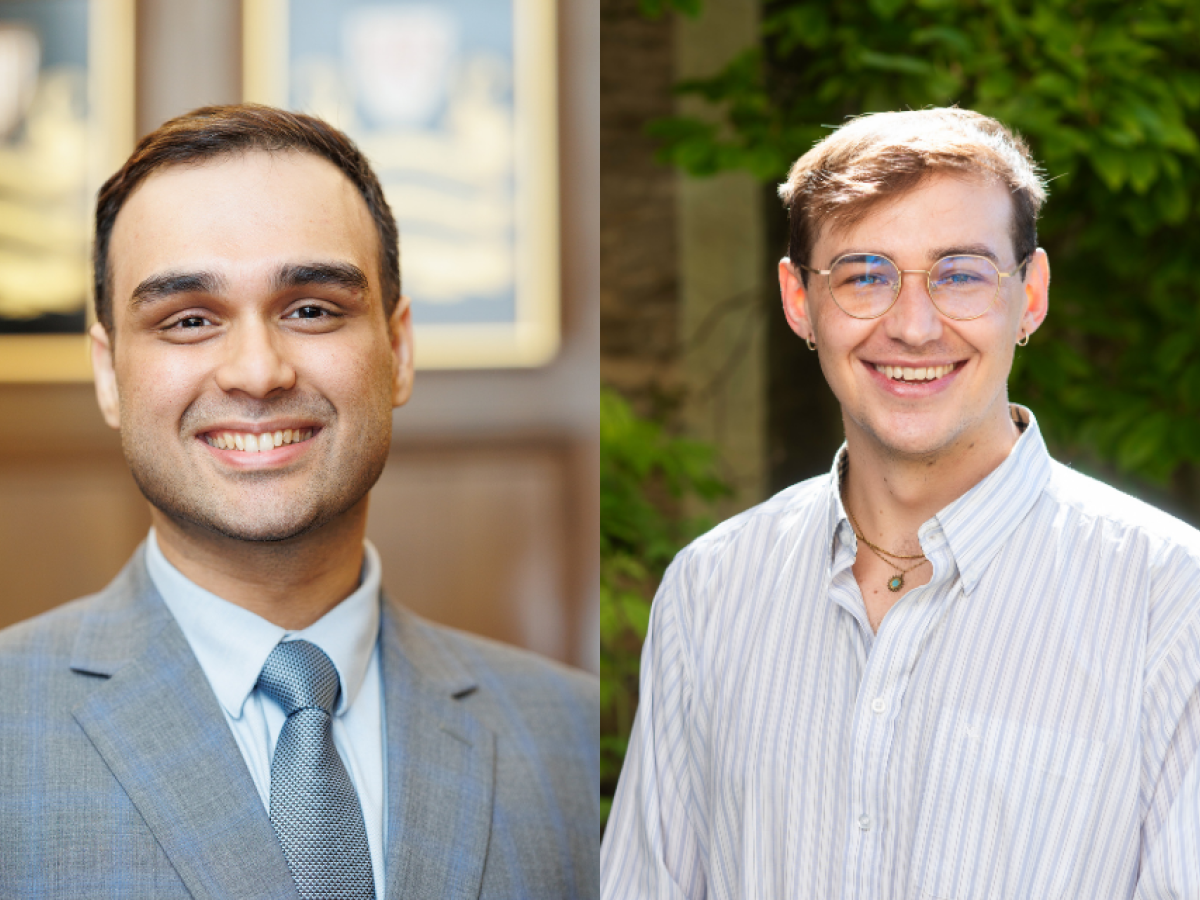
Each academic year, the Bonavero Institute of Human Rights is delighted to welcome a number of Research, Events and Communications Assistants (RAs) to the team to assist with implementing the Institute’s activities. This past year, Justin Winchester, Advait Tambe, Adrija Ghosh and Misbah Reshi supported the Institute in organising regular events such as the Institute’s weekly Perspectives event series, in publishing the Institute’s weekly newsletter, and in drafting legal and academic reports, alongside many other activities.
We spoke to Justin and Advait about their favourite part of being an RA, their favourite memories at the Institute, and their other activities at the University of Oxford.
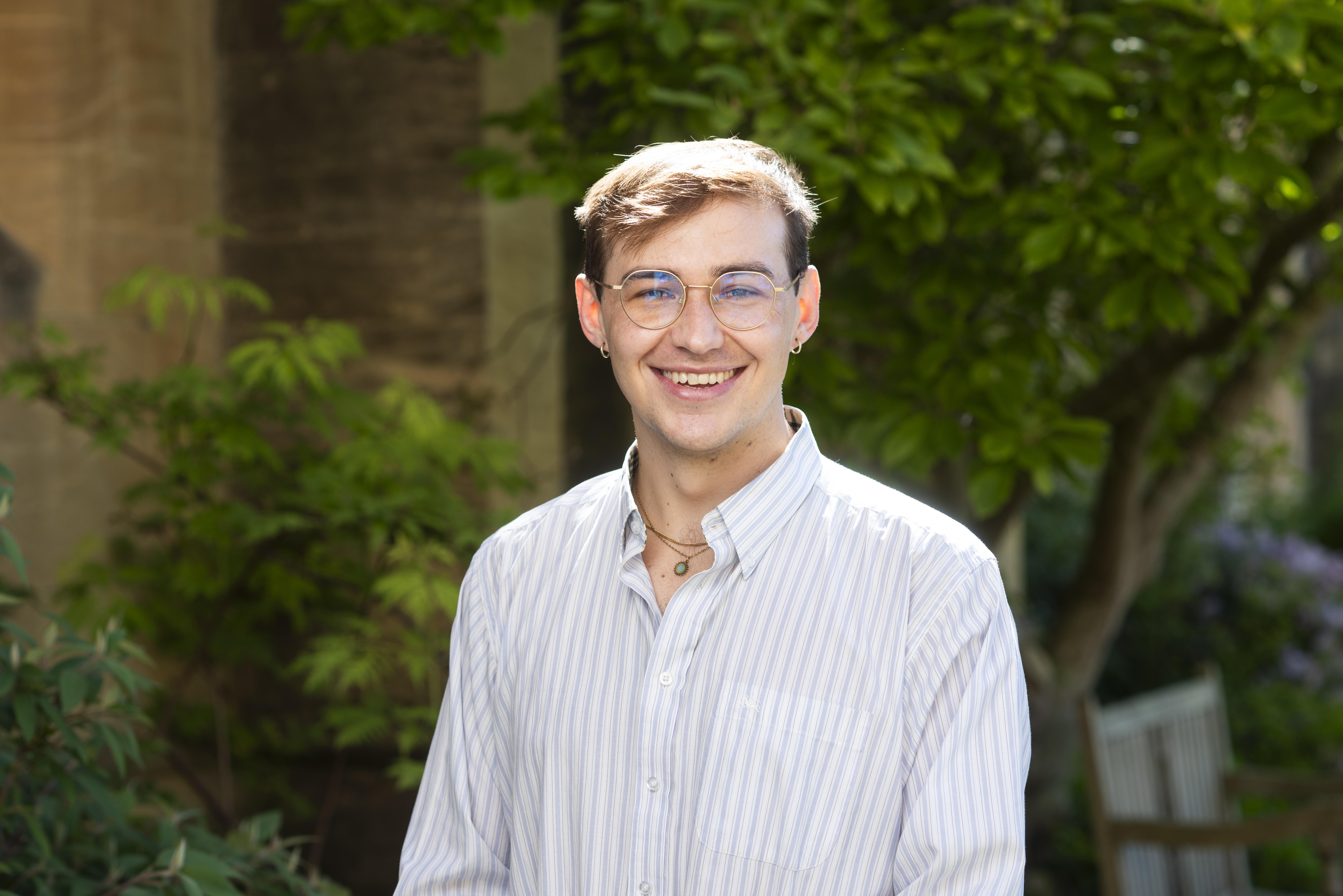
Justin Winchester is a DPhil Law candidate researching positive obligations in UK equality law. He completed a BCom in Economics with Law and LLB at the University of Cape Town, and then the BCL at Oxford as a Rhodes Scholar. Before joining the University of Oxford, he worked in litigation at the Socio-Economic Rights Institute of South Africa.
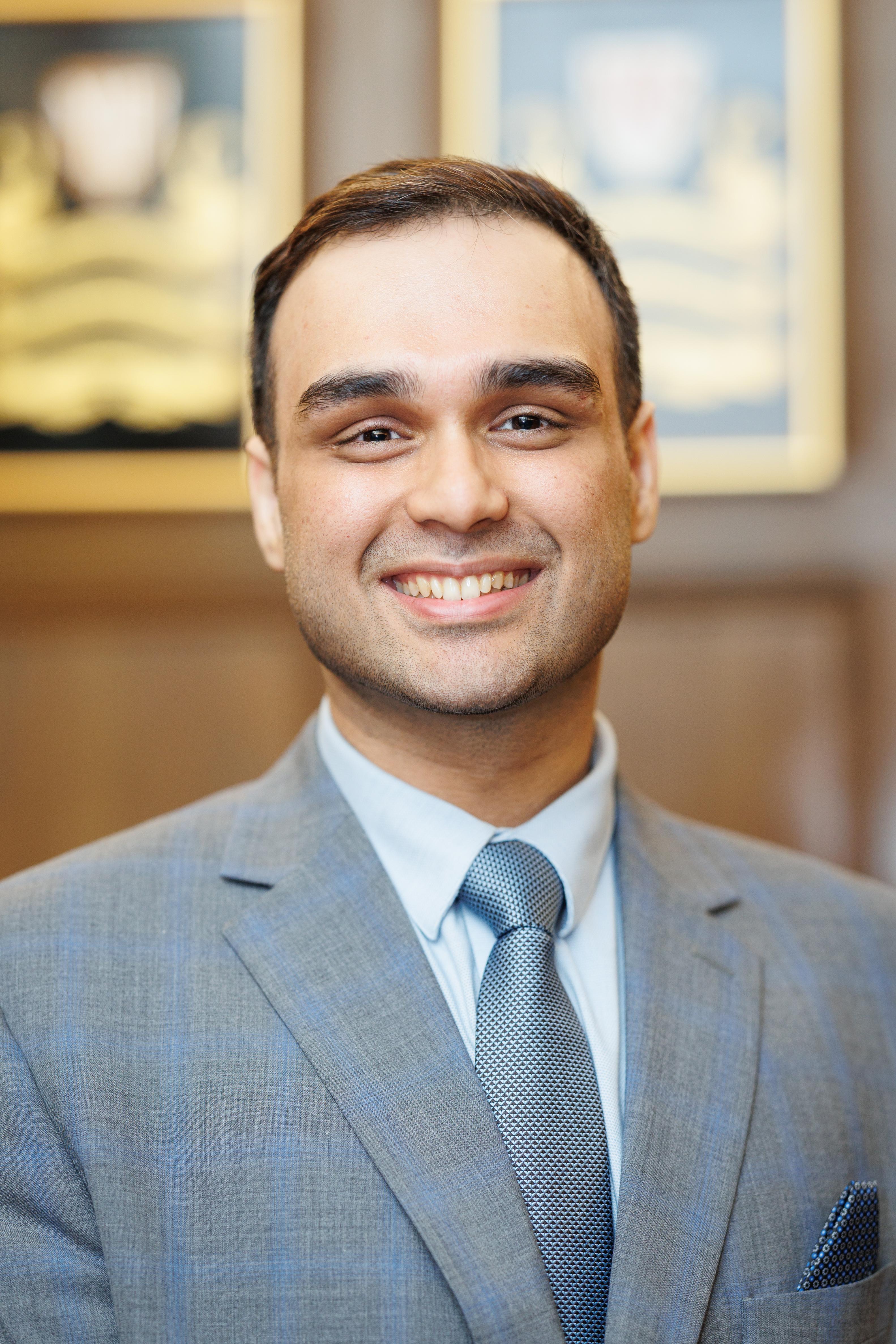
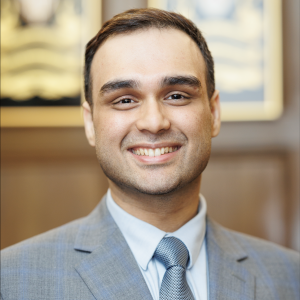
Advait Tambe is a DPhil Law candidate and Deans Scholar. He holds a B.A. LLB (Hons) from Symbiosis Law School, Pune, and an LL.M in International Legal Studies from NYU School of Law. He is a former judicial law clerk at the Supreme Court of India and has worked within the UN system.
What has been your favourite aspect of being a Research Assistant at the Bonavero Institute?
Justin: I really love working with the Bonavero team. They’re an inspiring group of people who are always insightful, thoughtful, efficient, and hilarious. Our meetings always start and end with so much laughter that I’m sure many would have a hard time believing just how much work gets done in them, and by such a small team. I’ve also always been treated like a trusted colleague. It’s really special to be in a team of such high-calibre professionals and still be afforded so much respect and independence despite my relative inexperience. I’m certainly made to feel like I’m more than an “assistant”!
Advait: The sheer diversity of the work has been my favourite part. No two weeks look alike — one day I am helping organise Perspectives, the next I am editing the Fellowship Report, preparing for the Annual Advisory Council meeting or organising conferences in the auditorium. Working closely with the three "fairy godmothers (Rosie, Sarah, Zoe)" of Bonavero has taught me as much about running a research institute as any seminar on management could. Working and learning from world-class academics like Kate O'Regan, Başak Çalı, Rachel Murray and Eliza Bechtold has been an absolute privilege and an honour. What makes it special, though, is the people: being surrounded by fellow MPhil/DPhils and visiting researchers working on cutting-edge human rights questions from every part of the world means every conversation in the corridor or over coffee turns into something genuinely stimulating.
What has been your favourite memory at the Bonavero Institute?
Justin: A stand-out for me was when Bonavero worked with the Oxford Human Rights Hub to assist with an amicus brief submitted to the African Court regarding their advisory opinion on the positive obligations that African states owe to vulnerable groups in the context of climate change. There are so many reasons it was special for me personally: as a South African, and as an aspiring human rights lawyer. But more generally, I think it was an excellent showcase of the unique strengths of that collaboration brings to human rights work. The result really was something to be proud of.
But the process was as (if not more) valuable as the result. I was impressed by the extraordinary leadership of Professors Rachel Murray and Sandy Fredman, and the brilliance of Gideon Basson cohering our inputs for the African system.
Advait: Working on Perspectives with Başak Çalı has been the standout experience for me. It's one of those projects where the ideas, the guests, and the conversations all come together in a way that reminds you why you wanted to work at a place like Bonavero in the first place — seeing it land well with an engaged audience was genuinely rewarding. Beyond that, organising the Annual Lecture and Advisory Council meeting stands out too — it was my first big event at the Institute, and there's nothing quite like the mix of nerves and adrenaline that comes with pulling off something that high-stakes for the first time. Seeing months of planning, coordination, and small logistical fires come together into a smooth, well-received event was hugely satisfying.
That confidence carried into the Fellowship Evening, where collating, editing, and designing the Fellowship Report from scratch let me get creative in a way I hadn't expected an RA role to allow, and seeing the finished report in people's hands on the night was a real moment of pride. The summer school lectures were a different kind of challenge altogether — coordinating logistics for a packed programme of guest speakers while making sure each session actually ran smoothly taught me a lot about staying organised under pressure and thinking several steps ahead.
What do you do at the University of Oxford when you're not here at the Institute?
Justin: I’m usually working on my DPhil research, which I really enjoy! I’m researching how courts should interpret positive equality duties, like the UK’s Public Sector Equality Duty, to address socio-economic inequalities. My argument is that courts have failed to properly grasp the problem which these duties were intended to address. So, I’m developing a conceptual framework for understanding institutional and structural inequalities drawing on (critical) social theory, assessing the doctrine on positive equality duties against this, and looking at how they should develop doctrinally to work as they were intended.
Outside of my thesis, I do a few odd jobs: I work as a blog editor and podcast host for the Oxford Human Rights Hub, I’ve RA’d for faculty in a range of subjects, I attend and present at conferences, and I co-chair the Oxford Pro Bono Publico.
Advait: In my DPhil, I examine structural remedies in constitutional adjudication in India and South Africa. Beyond that, I'm Co-Chair of Oxford Pro Bono Publico and serve as a DPhil representative for the Faculty. Outside of academic work, I swim regularly (trying to perfect my Butterfly stroke!), I am working on my French (incroyable!), and I'm hoping to take up rowing soon — very on-brand for Oxford, I know!