

Markus Funk
T. Markus Funk is a high-profile White & Case partner, scholar, and former federal prosecutor. He earned his DPhil in Law at New College, Oxford, clerked on the US District and Appellate Court level, and went on to serve as a federal prosecutor in Chicago, where he was part of the team that prosecuted Operation Family Secrets—described by NPR as “one of the most important criminal investigations … in American history” and by the FBI as the US Government’s most extensive mob-murder case. His trial work earned him the US Department of Justice’s Attorney General’s Award for the nation’s top trial performance, which was a first for the Chicago office.

He subsequently served for two years as a US Department of Justice Section Chief in post-conflict Kosovo, for which he received the US Department of State’s Superior Honor Award (at the time making him the first to hold both DOJ and State’s highest honours).
Today, Markus is a Partner in White & Case’s Global Litigation Practice, where he represents clients in high-stakes commercial litigation, as well as in government investigations and other complex white-collar matters. He also helped launch the firm’s Reputation Management and Defamation Practice.
Alongside his practice, Markus has built a formidable academic record. A Fellow of the American Law Institute, he taught at Oxford, the University of Chicago, and Northwestern, among other leading institutions, and has published prolifically on a wide variety of criminal law, commercial litigation, and other topics. He has penned 11 books (including two for Oxford University Press) and more than 350 law review and similar articles, earning him recognition as one of the most prolific writer of scholarship both in private practice and among full-time legal academics.
His Oxford DPhil, supervised by Jeremy Horder and Jonathan Herring, developed a value-based model of self-defence through a comparative study of the United States, Germany, and England, and was subsequently published as Rethinking Self-Defence: The “Ancient Right’s” Rationale Disentangled (Hart/Bloomsbury Publishing).
His career has remained closely connected to both legal scholarship and practice, a duality perhaps best captured by the Chicago Sun-Times, which at the time of his departure from the USDOJ described him as a “street-smart prosecutor with an Oxford pedigree.”
In this interview, Markus reflects on his unconventional path from Oxford to the courtroom and beyond, as well as on the experiences that have shaped his distinctive approach to criminal law, scholarship, and the legal profession.
To start with, could you tell us a little about your journey to Oxford? What drew you to the DPhil programme here?
Early in my career, I clerked for two federal judges in the United States [US District Judge Catherine D. Perry and Court of Appeals Judge Morris S. Arnold], and I thought I wanted to become a law professor. I had always been interested in the academic side of law and in exploring legal questions in greater depth, so I, a German-American dual national, applied to both Oxford and Cambridge and was fortunate enough to be accepted to the DPhil programmes at both. I ultimately chose Oxford and matriculated in 1997.
Like most of my peers before and after my time there, I had a wonderful time at Oxford. I was lucky enough to be a member of the Blues Tennis team and of Vincent’s Club and served as Social Co-Chair at New College. I also taught a comparative criminal law class under former Law Faculty Dean Timothy Endicott.
I wrote my thesis on self-defence law, with the outstanding Dr. Jeremy Horder [former Chair of Oxford’s Faculty of Law and later Head of Department at the LSE] as my supervisor. More specifically, I conducted a comparative analysis of self-defence in Germany, the United States and England, looking at how the defence operates in each system, the practical differences between them, and the divergent legal, moral, and public policy justifications (whether expressed or implied) animating those approaches.
My objective was to produce something that would have practical application, but my examiners [Oxford’s Andrew Ashworth and Cambridge’s Andreas von Hirsch – two eminences in the field] were looking for a thesis more firmly grounded in philosophy. (Although I of course was disappointed in the moment, with the benefit of hindsight they were of course exactly right and their feedback helped produce a far more compelling thesis.)
That led me to an unusual decision. I returned to the United States to become a federal prosecutor, with the intention of later returning to England to complete the DPhil, re-enter the academic world, and have what I thought could be the “competitive advantage” of real-world criminal law experience.
But that plan ended up not working out. I absolutely loved being a federal prosecutor in Chicago, where I had the opportunity of trying fascinating and challenging cases. These were matters that were at once legally and factually demanding but also emotionally challenging. Although I have continued to teach law school classes and to guest-lecture, I never stepped away from the in-the-trenches role of representing clients to return to academia full-time.
Eventually, in 2021 (yes, more than two full decades after my matriculation), I decided that it was time to return to Oxford and try to finish what I had started. I will forever be grateful to Timothy Endicott and Jonathan Herring, who supported my unorthodox request for readmission as a DPhil student. Jonathan was also kind enough to take me on as a well-patinaed supervisee.
At that point, I was also a partner at a large law firm and had moved from Chicago to Denver. Given the passage of time and changed focus, I had no choice but to rewrite the entire thesis during off-time and during two- to three-day stretches at our family cabin, located about three hours from where I lived with my wife and twin daughters. This, perhaps unsurprisingly, turned out to be a pretty massive undertaking. But the experience of having worked in criminal law fundamentally changed my approach to the thesis. What eventually emerged was a much more philosophical analysis, examining the underlying normative values that shape (or, in some cases, could or should shape) self-defence law across the three jurisdictions.
When I eventually returned to Oxford to receive my degree (following another round of exceptionally helpful insights shared by my patient new examiners, Professor Lucia Zedner and Tatjana Hörnle), my wife and daughters accompanied me. We went to the Sheldonian for the ceremony and afterwards, as was my custom while resident at Oxford, to the King’s Arms and the Turf Tavern.
With a two-decade-plus gap between my first visit to Oxford and the degree ceremony, all of my old friends were of course long gone. But Oxford as an institution, no great surprise, felt remarkably the same. In a sense it was surreal. If someone had told me when I first began the DPhil that, more than twenty years later, I would return to Oxford to receive my degree while joined by my wife and twin daughters, I would have hardly believed them.
By that point, I already had a book contract with Bloomsbury to publish the thesis, which made receiving the DPhil especially rewarding.
I was very happy to finally complete the degree I began working towards many years earlier and as noted, I remain deeply grateful to Timothy Endicott and Jonathan Herring for believing in me and supporting what was, by any measure, a very long journey. Whatever else can be said about the circuitous route I took or the stubbornness of my youth, it was certainly not the most conventional timeline.
What was it about self-defence, in particular, that first drew your attention as a subject of extensive legal research?
During law school and my first clerkship, I did a fair amount of writing on self-defence law and related topics. So, questions surrounding self-defence had been on my mind for some time.
When legal observers talk about self-defence, they typically begin with the leading scholars who have written extensively on the subject, such as Professors George P. Fletcher and Robert F. Schopp. But as I engaged more deeply with the literature, I became increasingly struck by a gap between the way self-defence was theorised in scholarship and the way it operated in practice.
On one side we had highly theoretical accounts developed by leading scholars; on the other was the non-specialists’, journalists’, and legislators’ more intuitive “good guys versus bad guys” way of thinking about self-defence. I thought there had to be a meaningful middle ground between these two polarities of perspective – an approach that was at once theoretically rigorous but also sufficiently grounded in the realities of legal practice to be useful. Hitting that mark was the aim I set for my thesis.
This, in turn, led me to a more fundamental question, namely, what actually drives our deeply held public policy disagreements about self-defence? When scholars, politicians, commentators, or ordinary citizens disagree about when deadly defensive force should be permitted (and they do so fuelled by a level of passion rarely encountered when discussing laws and their application), what precisely is the source of that disagreement?
Having spent two decades in courtrooms, trying cases and dealing directly with defendants, witnesses, and victims, I became convinced that there had to be a better way of articulating the normative foundations for these disagreements. My sense at the time was that the problem was not that people held fundamentally irreconcilable views. Instead, they lacked a common vocabulary with which to express and examine those views, resulting in an unnecessarily coarse, binary debate when in fact the key areas of disagreement were far more nuanced and narrow.
My thesis used this fairly common-sense insight as a jumping-off point for trying to identify the full scope of normative values that could serve as a common language for discussing self-defence. I ended up identifying seven such values and then did my best to demonstrate how they operated (and should be comparatively weighted) across a range of cases, including some of the most difficult and controversial ones. Those values were: reducing overall societal violence by protecting the state’s presumptive collective monopoly on force; protecting the attacker’s individual (default) right to life; maintaining equal standing between people; protecting the defender’s autonomy; ensuring the primacy of the legal process; maintaining the legitimacy of the legal order; and deterring potential attackers.
The advantage of this approach, I hoped, was that it would facilitate a more meaningful interchange by allowing us to identify the actual areas of disagreement (and, conversely, the areas on which both sides agree) with greater precision. If, for example, you disagree with my conclusion that deadly force should be permitted to defend against serious bodily injury even short of death, we can use this common vocabulary to identify which of those seven values leads each of us to our respective conclusions. We can then have a rational disagreement about the particular normative points at issue, rather than simply slipping into an exchange of broad and ambiguous assertions that tend to become just another wedge pushing people further apart.
For example, proclamations such as “human rights trump property rights” or “better to be judged by twelve [jurors] than carried by six” can function as caricatures of what are nuanced perspectives. And although identifying the seven values I came up with may seem like an obvious thing to do, at the time such a multivariate analysis (which can, of course, also be applied to other areas of law) was missing in the literature. Naturally, there could be a better, more comprehensive list of values that could be devised – but it was a start.
The approach I took for my thesis also reflects a broader principle that runs through my approach to scholarship. Although I over the years have covered different topics (I subsequently wrote a book for Oxford University Press on the International Criminal Court, for example, and another OUP book on bribery) I have consistently been interested in bridging the gap between more abstract legal theory and what happens in real life to real people inside and outside of the courtroom.
What I have always viewed as less than helpful is, say, a professor devising a criminal law theory that is, in fact, so novel that it finds no counterpart in any known jurisdiction. Although the desire to stake out a position as an academic provocateur or scholarly contrarian is understandable and can be professionally and personally advantageous, it is not clear that letting this become one’s driving ambition is likely to serve any broader societal purpose.
The better approach may be to strive towards “practical plus,” in that the scholarship remains theoretically rigorous but is applied in a useful way by being connected to the realities of legal practice and the laws as we find them. For me, the most useful scholarly work aims for the theoretical middle ground that speaks to, and benefits from the insights delivered by, both scholars and practitioners.
If you were advising a DPhil student working on self-defence today, what questions or emerging controversies would you encourage them to explore? Are there developments in the law or in society that you think raise particularly interesting questions about the boundaries or justification of self-defence?
I think there are several particularly fruitful directions a researcher could go. One is to take a closer look at the role subjective beliefs should play. Germany, England and the United States take quite different approaches to the question of whether a person’s honest belief that they are under threat is sufficient to trigger the defence of self-defence, or whether that belief must also be objectively reasonable. If reasonableness is required, a further question arises: what characteristics and experiences are we attributing to the “reasonable person”? And how, if at all, should characteristics such as gender be relevant to that assessment?
I also think there is considerable scope for genuinely transnational comparative research. When I wrote my DPhil thesis, I chose Germany, England and the United States because those were the legal systems I was most familiar with and that operated similarly enough to make a comparativist approach useful. But potentially more searching questions can be asked, and insights gained, by looking beyond the narrow European legal tradition.
China, Saudi Arabia, Israel and Iran, for example, provide fascinating points of comparison. The influence of religion on legal ideas and institutions could form an important part of that analysis. For example, Iran's Islamic Penal Code is explicitly grounded in Shia jurisprudence (fiqh). Offences against the person are categorised as qisas (retaliation-in-kind), diya (blood money/compensation), or ta'zir (discretionary punishment). This is a classification scheme derived directly from classical Islamic criminal law rather than a secular homicide-grading system (murder/manslaughter degrees).
Each jurisdiction, in short, brings its own distinctive historical and cultural context to the question of self-defence. I began to explore some of these questions in my work for the Oxford Comparative Law Forum and in some other publications, but I think there is much more to be done and there are far more profound insights that could be gained.
Kosovo
Having worked within two of the world’s most established criminal justice systems and then moved into Kosovo’s post-conflict legal environment as the US Department of Justice Section Chief, were there any aspects of the system or the realities of practising there that your previous legal experience hadn’t prepared you for? How did that experience reshape your thinking about the role of a criminal lawyer and the purpose of criminal law in a vulnerable, post-conflict community?
The biggest lesson I took from Kosovo was that those of us privileged to work in the broader international legal community have a profound moral obligation to people who have suffered through challenges that are difficult for us to comprehend. Whatever difficulties we may have experienced in our own lives, they are difficult to compare with what people in post-conflict societies have endured – torture, abuse, trafficking, displacement, and other forms of inhuman treatment. It may sound trite as I say this, but when you enter that environment as a lawyer, you have an obligation to do the very best job you possibly can.
Unfortunately, experience teaches that good intentions are not enough. If you are going to travel overseas to help people who have suffered so profoundly, you need to know what you are doing before you arrive. Seems basic – but often is honoured only in the breach.
The main thing that struck me about the international criminal justice community was the uneven level of practical experience and professional competence among those working in it. And to be clear, I am not offering this perspective to be disagreeable or cynical. Instead, it is a reality that is often discussed privately but not regularly addressed publicly. What we often see in the international rule-of-law arena are well-intentioned lawyers who studied human rights or worked at non-profits or law firms, but who have no prosecutorial, judicial, or defence experience. Despite these professional shortfalls, these lawyers turn up in places like Kosovo or Afghanistan to help advise local and international prosecutors, investigators, judges, or defence counsel or, worse yet, to work in those jobs.
The stakes in such situations are enormous. There should be no room for learning the fundamentals of advocacy or investigations on the job. I covered some of these systemic challenges in my book on victims’ rights at the ICC [Victims’ Rights and Advocacy at the International Criminal Court (Oxford University Press)].
But, as a result of a lack of real-world experience, there were also some very basic needs in Kosovo that had gone unmet. One example involved the publication of judicial decisions. Within days of moving to Pristina, I learned from my incredible colleague Dastid Pallaska that the majority of Kosovo Supreme Court justices viewed their rulings as their personal work product; accordingly, they did not make their rulings available beyond the parties to the case. That, for obvious reasons, posed a fundamental problem for, among other things, the development of a coherent body of precedent.

Chief Justice Rexhep Haxhimusa, who I greatly admired and was lucky enough to later consider a friend, and I developed a close working relationship even though he did not speak English and I did not speak Albanian. I regularly invited judges, investigators, foreign government representatives, marines and other US personnel, local politicians, prosecutors and defence lawyers, including Chief Justice Haxhimusa, to weekend barbecues at my house in the Dragodan neighbourhood of Pristina. Those informal meet-ups allowed us to get to know one another and develop bonds of trust before discussing more difficult institutional questions.
Eventually, Chief Justice Haxhimusa helped push through a public-facing memorandum of understanding between the Kosovo Supreme Court and the USDOJ pursuant to which the Kosovo Supreme Court agreed to make its decisions publicly available in bound volumes. That process, in turn, resulted in a more accessible body of published judicial opinions. Looking back, this seems like a small, obvious thing to do – but years of international observers spending significant sums on various rule-of-law projects failed to address this evident deficiency.
Though my next observation tends to get me into a bit of hot water, the European vacation schedules were also a surprise. I completely understand why, as a matter of culture and habituation, an office worker in Frankfurt or a family law practitioner in Brussels might want to spend a month or two on vacation in the summer. I also appreciate the European perception that lawyers in the US are workaholics. But for an international prosecutor or judge who is paid (usually by their government) to right some of the world’s most egregious wrongs to simply leave Kosovo on an extended holiday always did, and still does, strike me as a bit tone-deaf.
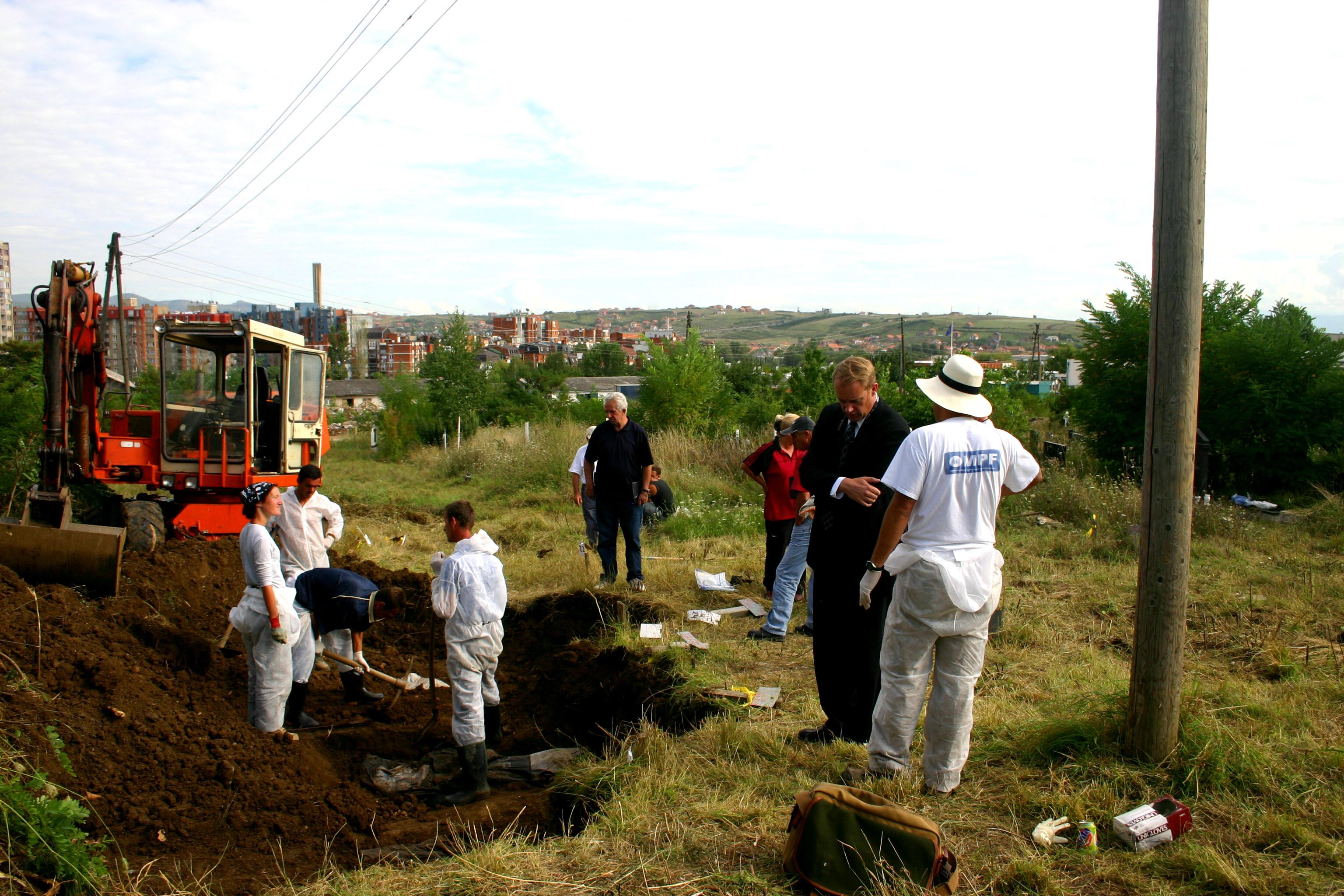
Looking back, then, my roughly two years living in Kosovo taught me that fulfilling the worthy calling of making the world a better place requires more than genuine commitment and passion. Those motivators provide a great and necessary start – but they are only a start. My suggestion to newer lawyers has always been that, as a lawyer, you must first learn the craft. You need to become a good lawyer and then take those hard-earned skills to places where they are needed most. A place like Kosovo or Afghanistan should not be your first real job in the law, nor should it form the basis for an interesting retirement plan after decades in, say, M&A work. If you are not constantly feeling the heavy weight of expectation that you must leave the system stronger and better than you found it, then your ability to truly and effectively help the people who have suffered will always be limited.
Work as a federal prosecutor (Assistant US Attorney or “AUSA”) in Chicago
As law students, we often encounter criminal law through cases, statutes and academic scholarship, where the facts are ultimately distilled into legal principles. Having worked on some of the most high-profile criminal cases in the US, including Operation Family Secrets (which the FBI characterized as the nation’s “most extensive mob-murder case”), did your practice ever challenge the way you had understood criminal law academically? Were there aspects of dealing with real defendants, witnesses and investigations that simply cannot be taught unless you start practising?
I was very fortunate to get to work with some of the best agents, law-enforcement professionals, and prosecutors in the United States. Much as you learn at Oxford by absorbing ideas and perspectives from the people around you, I learned an enormous amount from the patient and dedicated professionals I had the privilege of working with.

Operation Family Secrets was, in many ways, the capstone of my career as a prosecutor. The enduring public fascination with the case is understandable because it had all the elements of a compelling story. The activities of the Chicago Outfit (not to be confused with the “Mafia” – which is a term describing the mob on the East Coast of the US) and specifically the murders we investigated, charged, and prosecuted were depicted in the Martin Scorsese/Robert De Niro/Joe Pesci/Sharon Stone movie Casino.
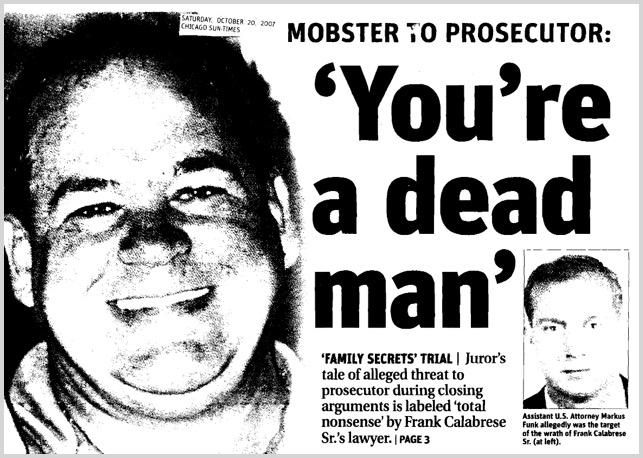
What I learned from the case, and from being a prosecutor more generally, is that the most important difference between studying law and practising it can be found in the psychology and raw emotions driving legal cases.
As practicing, public-facing trial lawyers and litigators (whether as prosecutors or serving clients at a law firm), our bottom-line job is persuasion. Whether you are a prosecutor or working in private practice, you have to persuade people – judges, juries, witnesses, clients, opposing counsel – and that requires much more than knowing the law.
You must understand what is motivating the person in front of you, at all times being careful not to stretch the truth or overpromise and under-deliver. If you lose credibility, you have lost pretty much everything.
In the practice of law, you are also constantly confronted with the consequences of what you say and do, and you must remain grounded in basic human morality and empathy. Academic scholarship can, quite properly, allow us to explore creative or highly abstract theories whose practical implications may be limited. Practice, on the other hand, constantly brings you back to the real world and to how legal rules impact real people.
That is where empathy becomes critical. As practicing lawyers, we deal with people from every walk of life, ranging from those surrounded by wealth and privilege, to those whose lives have been marked by abuse, deprivation, and misery. Whether victim, witness, courtroom employee, or defendant, it is important to remain mindful that you cannot approach all of these people in the same way. You must understand what motivates them, what experiences have shaped them, and what will allow you to establish a meaningful rapport (even if your true feelings about some of them may be closer to revulsion than compassion). Cultural, gender, ethnic, and various personality factors can all affect how someone responds to you and so you must learn to set aside your own personal biases, prejudgments, and priors.
Operation Family Secrets provided a particularly striking example. One of the cooperators we worked with had been involved in the mob his entire life and had committed multiple homicides as a hitman. Initially, he refused to cooperate with the FBI because he felt the agent who first met with him was talking down to him and wanted to order him around. When you understood his personal history, that reaction made sense. Although he himself had committed terrible acts, he had also spent much of his life being himself bullied and abused. Approaching him from a position of authority and aggression was therefore unlikely to build trust.
Another FBI agent took a completely different approach. He spoke to the mobster with friendliness and empathy, treating him as just another human being deserving of respect. The difference was extraordinary. The career mobster-turned-cooperator opened up and ultimately told us what he knew, becoming the first “made” member of the mob to cooperate with the federal government. In short, this was not just about using a particular interrogation technique; it was about understanding what makes a person tick.
That, for me, is one of the central lessons of practice. The people we meet throughout our lives, both professionally and personally, are multidimensional. And even those who are jerks are multidimensional jerks. They are not simply defendants, witnesses, colleagues, clients, or opposing parties; they are individuals with their own histories, motivations, fears, and interests. Good lawyers learn to meet people where they are; to understand how they think, speak to their interests and, above all, treat them with empathy (even when generating that empathy can be personally challenging). That is something that is very difficult to learn from the classroom alone.
There is another lesson from practice that I would emphasise to students, and that is the overarching importance of resilience. A potential weakness among people who, like your typical Oxford student, have been exceptionally successful throughout their education and careers is that they may not have had much experience with professional failure, rejection, or things otherwise not going their way. I have worked with exceptionally talented new lawyers who obtained jobs at some of the world’s leading firms but became deeply (and at times borderline-irrationally) frustrated when someone returned a redlined draft or told them that their work needed to improve.
So, over time I have become convinced that one of the most valuable skills you can develop is a thick skin. No matter what area of law you pursue, you must (and that is indeed a requirement) develop the ability to accept criticism, deal with adversity, dust yourself off, and keep going when things do not go your way without taking everything personally. Sport can be a useful teacher here. In tennis, for example, only one person ends up winning the tournament. Every other player loses.
I have experienced plenty of professional rejection myself. For every book I have published that I now humbly (or not so humbly) brag about, I have a stack of rejection letters from other publishers. For every great job I landed, there have been many other opportunities that did not come my way. Although not always easy, it is important over time to view these as learning and toughening experiences so that you are not as crestfallen when institutions, senior partners, or juries say “no” to you despite your best efforts.
Viewed from a more constructive perspective, what matters most is the ability to bounce back, learn whatever lessons that can be gleaned from the set-back, and remain positive, committed, and undaunted. In my experience, the most impressive people in practice are not necessarily those who are the most talented or credentialed (or both) when they arrive. Instead, they are the people who can be told that they need to change or improve, take that criticism seriously, reflect on it, and then actually adapt. Talent may get you through the door, but resilience, humility and the capacity to learn from others are what allow you to succeed once you are there.
White-Collar Investigation
As an AUSA, you were working for the government in building and prosecuting cases; now, in private practice, you often work with clients facing government investigations. Having worked so extensively on both sides, how has that changed the way you approach white-collar investigations?
Having worked as a federal prosecutor gives you credibility, both with clients and with government lawyers. In the white-collar bar, many senior practitioners are former federal prosecutors, so having that professional “credential” is not all that unusual. But the real value of having worked on both sides (prosecution and defence) is that, when you represent a client in, say, a government investigation, you have sat in the chair occupied by the prosecutors. You understand how they think, what they are looking for, and how they may approach a particular set of facts. That perspective is enormously useful.
It has also changed the way I think about advocacy. There are very aggressive lawyers in both government and private practice who approach a matter by trying to dominate the room. But that kind of posturing is almost never helpful. You do not need to appear hyper-aggressive to be an effective advocate. You can calmly identify the issues, explain your concerns and address the problems directly.
In fact, one of the things I have come to appreciate most in my career is that the least aggressive people are often the most confident and capable. I have seen this in all strata of practice, from prosecutors to defence counsel to judges and “big law” partners. There is nothing wrong with being demanding and having extremely high expectations, but the best in our profession tend to be remarkably kind, thoughtful, understanding, and humane. They appreciate that things do not always go perfectly and do not immediately interpret every mistake as disrespect or incompetence. On the other side of the ledger, we have those who operate by seeking to instil fear and anxiety in others. Yet these are also the same people who tend to be most deeply marked by their own barely-hidden insecurities. This basic, but frequently verified, insight has influenced the way I approach my own interactions with others in our demanding profession.
Looking back across your career as a prosecutor, scholar and now “big law” partner, you’ve taken a path that is both varied and deeply fulfilling. For an Oxford law student at the beginning of that journey, what would you say about the possibilities that a legal education can open up? And looking at your own career, is this something you could ever have planned, or is it better understood as a path that emerged by following opportunities and interests as they arose?
I had many colleagues who, even in law school, already knew exactly what they wanted to ultimately become. They wanted to be a partner at a major firm, or a federal judge, or a law professor. For better or worse, I was never wired to approach my career that way. I never had that kind of a long-term plan.
Instead, whenever I was given what seemed like an interesting professional opportunity, I asked myself a much simpler question: will this help make me a better lawyer or a happier person (which are often, but not always, the same thing)? Whether it was a district court or appellate clerkship, coming to Oxford, teaching law there, becoming a federal prosecutor, or later working for the US State Department in post-conflict Kosovo, I saw each step as an opportunity to develop my skills and broaden my experience.
Looking back, I think that approach was not a mistake. I think it is a useful way to approach a legal career. Get comfortable with setbacks, develop resilience, and focus on becoming really good at what you do. If you become genuinely excellent at something – whether that is corporate work, litigation, or another area of law – the opportunities tend to follow. I know that may not sound like some big insight, but true expertise opens doors, and one opportunity often leads unexpectedly but naturally to another.
More importantly, if your focus is on becoming better rather than simply reaching a particular position, you can treat almost every experience as an opportunity to grow. That makes it much harder to feel stagnant. Working at a major law firm can be demanding, and before you realise it, decades may have passed. There will inevitably be periods when you are tired or frustrated by the work. That is why I think it is so important to find people who recognise your potential, show you that your work matters, and are genuinely willing to invest in you.
Candidly, mentorship has been enormously important in my own life. I am deeply indebted to those who invested their time in me when I was younger, including Timothy Endicott, Jonathan Herring, and Dan Polsby. They helped me at moments when they had absolutely no obligation to do so. Their generosity had a lasting impact – not only because of what they taught me as lawyers and scholars, but because they showed me what it means to invest in another person.
That has shaped the way I think about my own responsibility to others. As trite as this may sound, giving back is not simply an obligation that comes with having been fortunate in your career. It is something I have come to genuinely care about. I would encourage students not to worry about mapping out the entire trajectory of their careers. Look for things that interest you, seek out opportunities that will make you better, become very good at your craft, and find people who will challenge and support you along the way. You may not end up where you initially imagined, but that may be precisely what makes the journey worthwhile.
This interview was conducted in September 2026 by Emily Yu (BA Jurisprudence 2027, Exeter College, Oxford).