

Can New Funding Models Increase Money to Pay for Free Legal Services?

This spring, the Oxford team responded to a Ministry of Justice inquiry about a UK scheme to fund free legal advice with interest from lawyer client accounts. The team informed the Ministry about how many international schemes redirect client interest from banks to access to justice initiatives in Australian, Canada, France, New Zealand, the United States, and elsewhere, and options for Parliament to fund free legal advice using this model. Oxford's response was discussed with stakeholders during a March conference held at Dechert LLP in London.
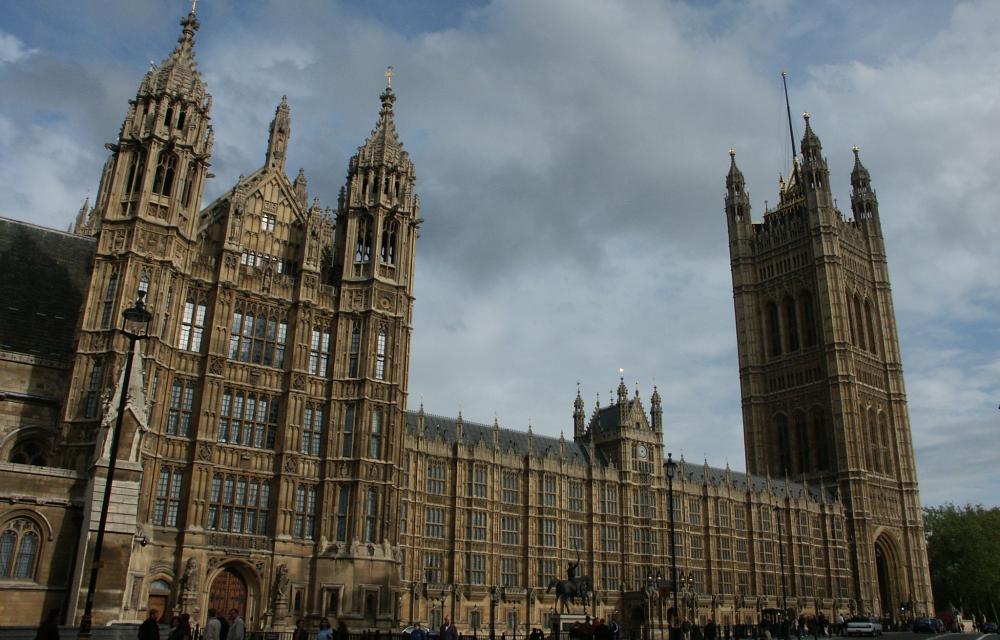
In July of last year, the Justice Select Committee launched an inquiry into access to justice which covers a number of issues being explored by a team of researchers based at the Oxford Centre for Socio-Legal Studies. The Oxford team, led by Professor Linda Mulcahy and Matthew Nesvet in partnership with the Access to Justice Foundation and Professor Neil Rickman at the University of Surrey, examined a range of international models with the potential to increase funding for free legal advice. The research team submitted a 30-page report which analysed newly accumulated data to the inquiry during its consultation process. Linda Mulcahy explained: Since severe cuts to the legal aid budget were introduced in 2013 the free legal advice sector has been in crisis. There is an urgent need to find additional ways of funding their work which serves to uphold the rule of law and ensure that everyone has access to justice."
Further details of the evidence submitted to the Inquiry can be found here.

A recent ruling by the Competition Appeal Tribunal about fees wrongly levied on consumers by Mastercard means that millions of shoppers could benefit from the settlement reached. Significantly for our alternative funding model research project, the judgement also made clear that any unclaimed cash from the settlement should go to the Access to Justice Foundation as the "prescribed charity to received undistributed funds" under the Consumer Rights Act. Clare Carter, chief executive of the Access to Justice Foundation and a sector partner on the research team, said it has "already begun working with partners to ensure any unclaimed money gets distributed to charities that will improve access to justice for those that need it the most".
Unclaimed funds in collective actions is one of the schemes that the alternative funding model project is looking into as a way of boosting the financing of free legal advice.

The government has recently confirmed that it will preserve funding for the apprenticeship route to becoming a solicitor: https://www.gov.uk/government/news/next-generation-of-builders-and-carers-set-to-rebuild-britain. The levy is a UK tax on employers with an annual pay bill of more than £3 million, which is used to fund apprenticeship training. The firms involved can use this levy to invest in apprenticeship training for their workforce or transfer up to half to other companies so that they can use it for that purpose instead. This raises issues of direct relevance to our work on alternative funding models for free legal advice providers, as those providing free legal advice services can benefit from transferred funds. The incentive for firms to transfer funds they do not use is that if the money is not used within two years it has to be given to the Treasury.
The apprenticeship levy is one of the six schemes our alternative funding models project is investigating and is of value because it can support capacity building in the free legal advice sector. There is currently a lack of any in-depth data on the apprenticeship levy, a gap which our project seeks to fill.

Professor Suzanne Chiodo critiques the use of cy-près distributions in collective actions, especially in the Merricks case. She argues that while cy-près aims to deter wrongdoing, it often fails to benefit class members directly, instead supporting general charities. Chiodo emphasizes that compensation for class members should remain the primary goal in collective proceedings.
An article discussing the implications of law firms retaining interest on client accounts, highlighting the ongoing debate and regulatory considerations.
A new research report by Liz Curran, Jane Ching, and Jane Jaman, calling for the exploration of alternative funding streams to enhance access to justice.
About the Project
This two year research project, launched in Spring 2025, is funded by the Nuffield Foundation. It takes the form of a research collaboration between the University of Oxford's Centre for Socio-Legal Studies, the Access to Justice Foundation, and the University of Surrey. The project is exploring a range of funding models operating successfully in other countries, which could be transplanted to the UK to support the work of organisations providing free legal advice.
The research that we are undertaking is informed by stakeholder engagement workshops involving jurisdictional experts, lawyers, advice providers, financiers, regulators, insurers, economists and academics. The project will result in an open-access database, policy briefings, an accessible project report with practical recommendations, and widespread dissemination of findings.
Our thanks go to Thomson Reuters and Dechert LLP pro bono teams for supporting us during the pilot stage of this research.
Why Finding New Ways to Fund Legal Advice is Important
The legal advice sector supports the most vulnerable in society. Funded through private, public and charitable funding, its funding is widely agreed to be in a state of crisis. This crisis is impacting access to justice. This research will explore potential creative and supplementary funding models to create a more sustainable future for legal advice and support. Which funding model can end the crisis in funding for legal advice?
- Residual funds from collective action cases;
- Interest on Lawyer Trust Accounts (IOLTA);
- Legal expenses insurance;
- Levies on large commercial law firms;
- The apprenticeship levy; and
- Re-direction of dormant client monies.
Research Team