
Bonavero Institute hosts workshop “The Public Interest and Media Law”

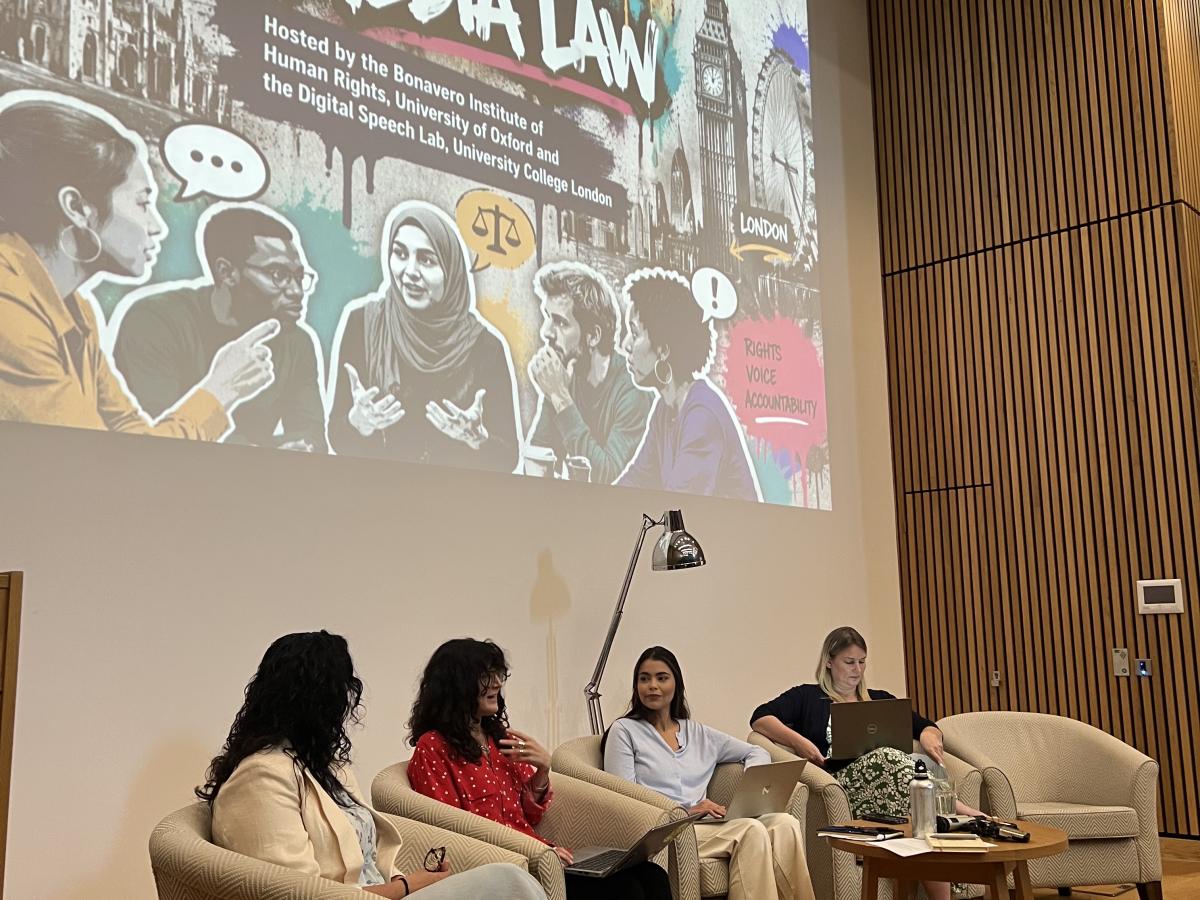
On 10th June, the Bonavero Institute for Human Rights (University of Oxford) and the Digital Speech Lab (University College London) hosted a workshop on “The Public Interest and Media Law.” This explored the relevance, definitions and application of the ‘public interest', ‘public interest’ defences and ‘journalism” across media law and regulation, human rights, and digital rights. The event was co-organised by Gill Phillips, Research Visitor at the Bonavero Institute during Trinity Term 2026, together with Ricki-Lee Gerbrandt from the Digital Speech Lab.
Setting the Stage: The Public Interest in the UK, ECHR, and Europe
The morning started with presentations to “set the stage” from Dr Fiona Brimblecombe (University of Manchester), Dr Andrew Scott (in absentia, LSE) and Jonathan Price, KC (Doughty Street Chambers) covering civil and criminal ‘public interest’ defences in England and under the ECHR.
The panel concluded with a presentation from Deniz Wagner (Adviser to the OSCE Representative on Freedom of the Media) explaining the work being done by the OSCE on putting together a ‘Public Interest Framework for Media Freedom’ and that this was necessary because some of the classical assumptions around the role played by freedom of expression in a democracy were coming under threat.
SLAPPs, Justice, and the Public Interest
The second session of the day examined SLAPPs and the public interest in protecting sexual abuse allegations. Thoughtfully chaired by Dr Eliza Bechtold (Bonavero Institute), the audience heard from Rebecca Moosavian (University of Leeds) on ‘The Limits of “Public Interest” in Gendered SLAPP Cases’ and Tejal Jesrani and Marian Da Silva (Human Rights Institute, Columbia University) exploring the difficulties of defining criminal law SLAPPs.
The Public Interest, Copyright & Influencers
After lunch, where discussions from the morning sessions were enthusiastically continued and developed, the third panel of the day, chaired by an interventionist Dr. Richard Danbury (City University), was on ‘The Public Interest, Copyright & Influencers. Dr Georgia Jenkins (University of Liverpool), presented on AI-mediated news environments and the impact of the “invisible internet” and shared some preliminary findings from an interdisciplinary project on “agentic LLM interaction with search” that she’s been undertaking with colleagues. (She kept us all awake with some art from Georgia O'Keeffe's Starlight Night to help illuminate some of her trickier concepts.) Wilhelm Böttcher (Humbolt University Berlin) presented his thoughts on ‘Journalism in Copyright Law’, looking at whether copyright law can help journalism survive its economic crisis by shifting from granting exceptions for dissemination to granting rights for remuneration, and whether the historic “institutional privileges” accorded to the press should be continued or whether the press should be left as (just another) content provider. Dr Alexandros Antoniou (University of Essex) wrapped the panel up with an interesting insight into whether “influencer speech” might serve a public interest.
The Public Interest in the Digital Sphere
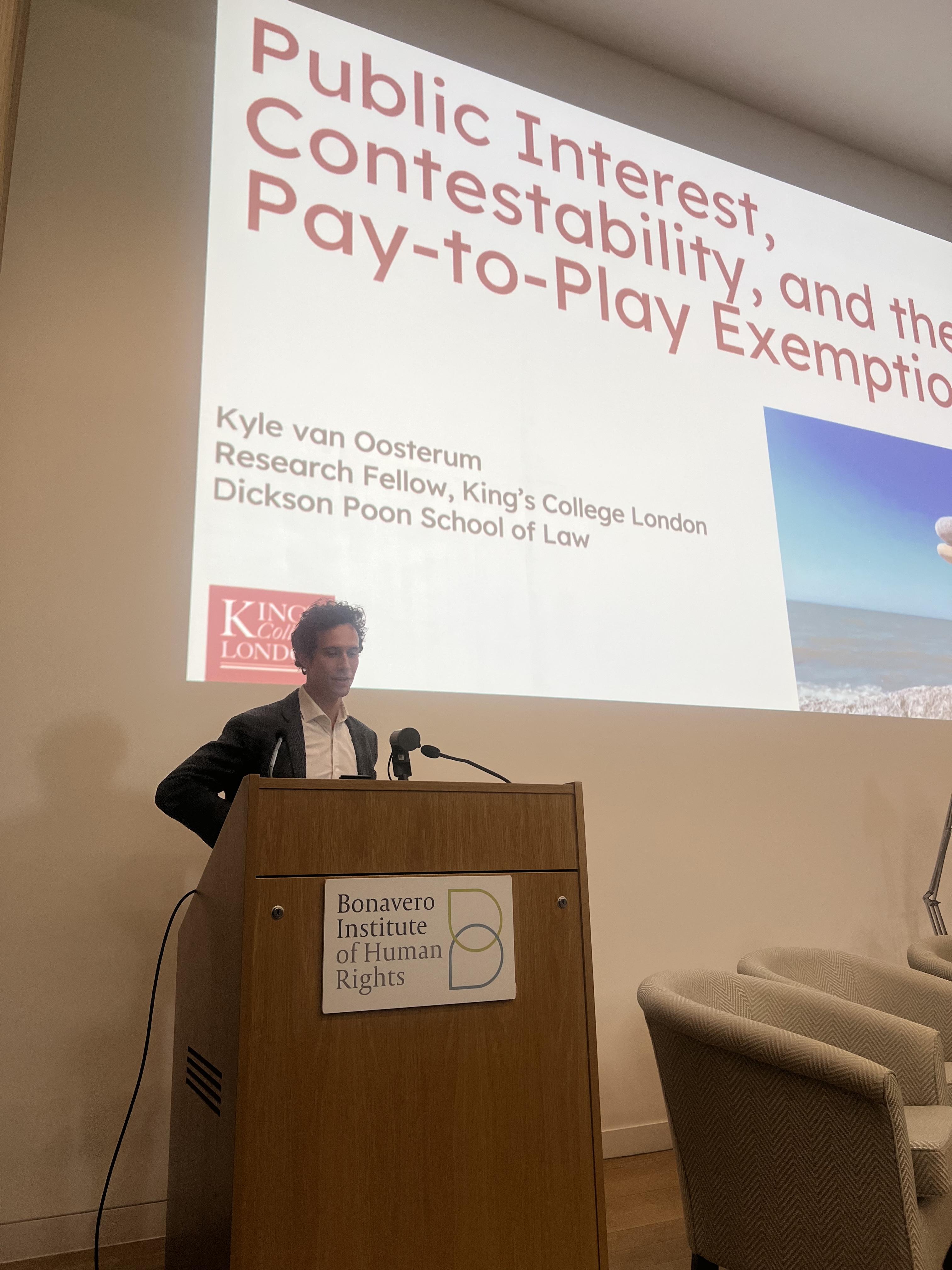
Chaired by Professor David Erdos (University of Cambridge), the fourth panel heard presentations from Dr Kyle van Oosterum (King’s College London), on the ethics surrounding the exemption of paid adverts from Meta’s new “community notes” (replacing top-down fact checking), which effectively allowsthose who can afford it an exemption from criticism. The session finished with a presentation by Thomas Broderick (City University) on whether AI-driven journalism could ever meet the legal standards for public interest defences.
Defining Journalism & the Public Interest
The final panel was chaired by Professor Jacob Rowbottom (University of Oxford) and included presentations from Dr Damian Tambini, (LSE) who looked at journalism protections under (Arts 18 and 6 of) the European Media Freedom Act and (Art 34 of ) the Digital Services Act. He highlighted the risk that such governance tools were potential vectors for control of the media. This was followed by Laura Regueiro (LSE), who presented on the “Catch 22 in section 22 of the Online Safety Act”. The OSA doesn’t explicitly mention public interest and leaves decisions on who is covered by the news publisher, news publisher content, journalism content and content of democratic importance exemptions in the hands of the platforms, as part of their duty to assess systemic risks.
Presenting in a similar vein on the role now accorded to platforms in “protecting” speech, Dr Paolo Cavaliere (University of Edinburgh) and Dr Juliana da Cunha Mota (Kent Law School), presented their current work on Trustworthiness and Defining Journalism, assessing the standards by which Very Large Online Platforms (VLOPs) could recognise 'good' (trustworthy) journalism under Article 18 of the EMFA. The session ended with a short presentation by Gill Phillips on the different ways in which the “public interest” defence currently operates in English media law.