Bonavero Human Rights Reading Group: Burke, Gandhi, and Human Rights
Speaker(s):
Series:
Associated with:
About
The Bonavero Institute of Human Rights is pleased to invite you to the Hilary Term gathering of the human rights reading group. Our aim is to interrogate foundational questions about the idea of human rights by reading canonical texts authored by some of the most influential global thinkers and actors whose works have shaped the conceptual vocabulary of our political modernity as well as the potential and the limits of the idea of human rights. For our inaugural session we read Marx and Arendt. For this session, we will read Burke and Gandhi.
Participants can attend the reading group in person or via Zoom.
Hilary term readings:
- Burke on Fox's East India Bill <https://www.gutenberg.org/files/15198/15198-h/15198-h.htm#Page_431> Pages 431-446
- Burke, Reflections on French Revolution <https://socserv2.mcmaster.ca/~econ/ugcm/3ll3/burke/revfrance.pdf> 1-10, 25-26, 49-52
- MK Gandhi, Hind Swaraj <https://www.mkgandhi.org/ebks/hind_swaraj.pdf> Chapter 11 (Condition of India—Lawyers); Chapter 16 (Brute Force); Chapter 17 (Passive Resistance)
Chairs
Başak Çalı is head of research at the Bonavero Institute of Human Rights and Professor of International Law. Previously, she was professor of international law and founding director of the Centre for Fundamental Rights at the Hertie School, Berlin. She holds a permanent visiting professorship from the I-Courts Centre for Excellence at the University of Copenhagen and is a fellow the University of Essex Human Rights Centre and the Hertie School. She has held visiting professorships in Ankara, Oslo, Paris, and Natolin and serves on the board of a number of journals.
Her expertise concerns international law and human rights. She has published widely in the fields of authority of international law, standards of review in international law, the relationship between international law and domestic law, European human rights law, UN human rights law and comparative international human rights law. She has pioneered the study of bad faith violations of human rights law (Wisconsin International Law Journal, 2018), and is the author of 'Authority of International Law: Obedience, Respect and Rebuttal' (OUP 2015), editor of International Law for International Relations (OUP, 2010), co- editor of Legalisation of Human Rights: Multidisciplinary Perspectives on Human Rights and Human Rights Law (Routledge 2006), Migration and the European Convention on Human Rights (OUP, 2021) and Secondary Rules of Primary Importance: Standards of Review, Causality, Evidence and Attribution before International Courts and Tribunals (OUP, 2022).
She is the principle investigator of ‘Deep Impact through Soft Jurisprudence? The Contribution of United Nations Treaty Body Case Law to the Development of International Human Rights Law’ (German Science Council 2023-2026) and co-investigator of ‘Frames: Framing Reality and Normativity in European Human Rights Law: Climate Change, Migration, and Authoritarianism (Volkswagen Foundation 2023-2025).
As a legal practitioner, Başak is a co-founder of the European Implementation Network, Europe’s leading civil society organization that advocates for the full and effective implementation of human rights judgments. She has acted as an expert on the European Convention on Human Rights since 2002 and has trained judges, prosecutors, lawyers and police officers in the implementation of the European Convention on Human Rights across the Council of Europe. She has acted as a legal representative or advisor in cases before the European Court of Human Rights.
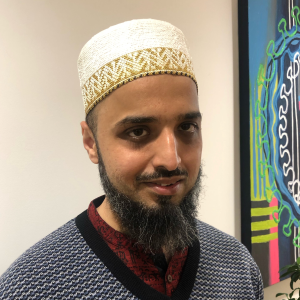
Dr Moiz Tundawala is a Leverhulme Early Career Fellow at the Bonavero Institute of Human Rights and Faculty of Law in the University of Oxford. Moiz researches in the areas of public law, legal and constitutional theory, intellectual history and global political thought. Before joining Oxford, he completed his MPhil/PhD from the London School of Economics, LLM from the School of Oriental and African Studies and BA,LLB (Hons) from the West Bengal National University of Juridical Sciences Kolkata. Moiz is currently on leave as an Associate Professor of Law at Jindal Global Law School in Delhi NCR India.
Moiz pursues a historical, sociological and philosophical study of the key constitutional and political ideas that have shaped the modern world. His postdoctoral research engages with the global problematic of the deeply entangled relationship between sovereignty and constitutionalism in the contemporary South Asian context. In contrast to the traditional understanding of a state of exception, sovereign imaginaries of theocratic rule and aggressive nationalism today stake a claim to the political sphere not by having constitutions suspended, but by translating their programmes into the language of constitutionalism itself. Focusing on South Asia, he investigates how, despite being hostile to the founding principles of civic-nationalism and liberal-secularism, the ethno-nationalist and socio-religious movements of Hindutva and Islamism have successfully instrumentalized constitutionalism to become politically powerful in postcolonial India and Pakistan.
This work follows from Moiz’s doctoral dissertation, which theorizes the Indian career of the global concept of constituent power. It presents India as an active intellectual agent whose founders rethought and remade constituent power, or the power of constitution-making, in their debates on democracy, self-determination, caste, religion and political association in the mid-twentieth century. But far from presenting a celebratory juridical account of an authentic nationalist self-realization, it establishes that India’s political field was marked by a fundamental dissensus in respect of the idea of law, whose ramifications can be felt in constitutional thought and action even today. He is developing his thesis into a monograph on law, sovereignty and constituent power in modern India.
Moiz has published his research in leading international journals, and writes regular commentaries on law, history and politics in blogs and dailies.
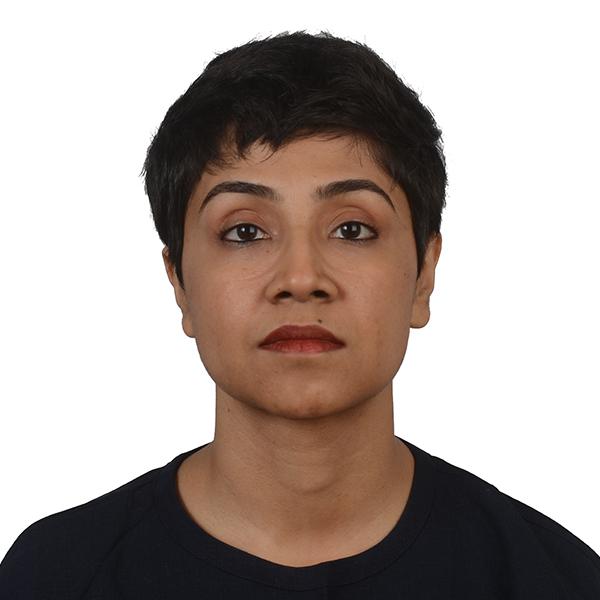
Salmoli Choudhuri is an intellectual historian of legal and political concepts that have played a foundational role in shaping modern and contemporary India and informing global thought. After completing her PhD at the University of Cambridge in 2023, she joined the National Law School Bengaluru as an Assistant Professor. She is currently at Oxford as a Koch History Fellow. In addition to developing her doctoral thesis on Tagore and freedom into a monograph, she has begun a new project on juristic ideas of state-thinking in anticolonial political thought. Her work has appeared in journals such as Political Theology, Global Intellectual History, and Economic and Political Weekly.