
Framing Migration, Authoritarianism and Climate Change in Human Rights Struggles in Europe
Speaker(s):
Associated with:
Notes & Changes
This is an invitation only event.
 Add to calendar
About
Human rights protections and their ability to respond to major challenges of our time – namely authoritarianism, migration, and climate change – are under threat globally, and Europe is no exception. Contestations over how human rights-based responses to these shared challenges are framed and counter-framed are closely correlated with declining support for human rights law among governments and the public. Those bearing the consequences of authoritarianism and climate change, including through forced and voluntary migration, demand recognition and justice by framing their struggles as human rights struggles. Yet such frames can receive lukewarm reception, rejection, or outright hostility toward those groups and their struggles.
This one-and-a-half-day research workshop, building on the research project ‘Framing Reality and Normativity in European Human Rights Law: Climate Change, Migration, and Authoritarianism’ supported by the Volkswagen Foundation will examine how authoritarianism, migration, and climate change are framed in human rights struggles in Europe, and how such frames are received by governments, courts, and supranational institutions and with what discursive, material, and legal consequences.
The workshop is organised by Prof Başak Çalı (Professor of International Law & Head of Research, Bonavero Institute of Human Rights) and Dr Agnieszka Kubal (Human Rights in Eastern Europe and Russia PI), in collaboration with the Bonavero Institute of Human Rights and the Centre for Socio-Legal Studies at the University of Oxford.
Day 1: 17 June 2026
10.00-10.30: Welcome and introductions
Session 1: Framing migration in human rights struggles in Europe (10.30-12.30)
Chair: Grażyna Baranowska, Friedrich-Alexander-Universität Erlangen-Nürnberg
Alice Donald, Middlesex University, ‘Framing human rights and migration in the UK’
Mikael Rask Madsen, University of Copenhagen, ‘Dangerous Foreign Criminals: Migration, Human Rights and the Transformation of Danish Politics’
Jens T. Theilen, Helmut Schmidt University, Hamburg, ‘Migration in Times of Fascization’
Rupert Skilbeck, Redress, ‘Addressing Authoritarianism, Migration and Climate Change through the anti-torture framework and architecture’
Session 2: Framing climate change in human rights struggles: Europe and Americas (13.30-15.00)
Chair: Başak Çalı, Bonavero Institute of Human Rights
Corina Heri, Vrije Universiteit Brussels, ‘Selective Framings of Climate Change: A Critique’
Juan Auz, University of Tilburg, ‘Framing the Inter-American Court of Human Rights’ Advisory Opinion on the Climate Emergency as a Juridical Minka’
Nele Schultz, Oxford Sustainable Law Programme, ‘Human rights framing of integrated assessment model outputs in climate litigation’
Session 3: Framing autocratisation in human rights struggles (15.30-17.00)
Chair: Agnieszka Kubal, Centre for Socio-Legal Studies, University of Oxford
Romanița Iordache, ACCEPT, ‘Frames and counter-frames for the rainbow: responding to the tides in LGBTIQ human rights protection by using EU law tools’
Beata Huszka, Centre for Socio Legal Studies, University of Oxford, ‘Resisting Illiberal Politics: Mobilising European Courts to Defend Sexual Minority Rights in Hungary and Romania’
Esra Demir-Gürsel, Hertie School, Berlin, ‘Framing Authoritarianism as a Rule of Law Deficit’
Day 2: 18 June 2026
Session 1: Framing effects of the European Court of Human Rights (9.00-11.00)
Chair: Mikael Rask Madsen, University of Copenhagen
Grażyna Baranowska, Friedrich-Alexander-University Erlangen-Nürnberg, ‘Contesting Human Rights Through Framing: The EU-Belarus Border Cases at the ECtHR’
Hanaa Hakiki, ECCHR Centre (presenting), Delphine Rodrik, ECCHR Centre, Vera Wriedt, University of Münster, ‘Framings in ND and NT v Spain (ECtHR, 2020)’
Joseph Finnerty, Utrecht University, ‘The ECtHR’s reframing of judicial independence claims in the face of authoritarianism’
Marcin Szwed, University of Warsaw, ‘What is the “Rule of Law case” before the ECtHR?’
Session 2: Closing Roundtable (11.15-12.15)
Chair: Başak Çalı
Rachel Murray, Bonavero Institute of Human Rights
Agnieszka Kubal, Centre for Socio Legal-Studies
Mikael Madsen, University of Copenhagen
Jens Theilen, Helmut Schmidt University, Hamburg
Esra Demir Gürsel, Hertie School, Berlin
Speakers
Başak Çalı is professor of international law and head of research at the Bonavero Institute of Human Rights. Previously, she was professor of international law and founding director of the Centre for Fundamental Rights at the Hertie School, Berlin. She holds a permanent visiting professorship from the I-Courts Centre for Excellence at the University of Copenhagen and is a fellow the University of Essex Human Rights Centre and the Hertie School. She has held visiting professorships in Ankara, Oslo, Paris, and Natolin and serves on the board of a number of journals.
Her expertise concerns international law and human rights. She has published widely in the fields of authority of international law, standards of review in international law, the relationship between international law and domestic law, European human rights law, UN human rights law and comparative international human rights law. She has pioneered the study of bad faith violations of human rights law (Wisconsin International Law Journal, 2018), and is the author of 'Authority of International Law: Obedience, Respect and Rebuttal' (OUP 2015), editor of International Law for International Relations (OUP, 2010), co- editor of Legalisation of Human Rights: Multidisciplinary Perspectives on Human Rights and Human Rights Law (Routledge 2006), Migration and the European Convention on Human Rights (OUP, 2021) and Secondary Rules of Primary Importance: Standards of Review, Causality, Evidence and Attribution before International Courts and Tribunals (OUP, 2022). Her forthcoming co-authored manuscript Leading Cases in UN Human Rights Law will be published by OUP in 2026.
She is the principle investigator of ‘Deep Impact through Soft Jurisprudence? The Contribution of United Nations Treaty Body Case Law to the Development of International Human Rights Law’ (German Science Council 2023-2026), and principle investigator of the 7-year German Science Council-funded cluster of excellence ‘Transforming Human Rights’based at the FAU Research Center for Human Rights Erlangen-Nürnberg. She has been the principal investigator of research grants funded by the Volkswagen Foundation, the Economic and Social Research Council and the British Academy, amongst others.
As a legal practitioner, Başak has acted as an expert on the European Convention on Human Rights since 2002 and has trained judges, prosecutors, lawyers and police officers in the implementation of the European Convention on Human Rights across the Council of Europe. She has acted as a legal representative or advisor in several cases before the European Court of Human Rights. She is the co-founder and former chair of the European Implementation Network, Europe’s leading civil society organization that advocates for the full and effective implementation of human rights judgments.
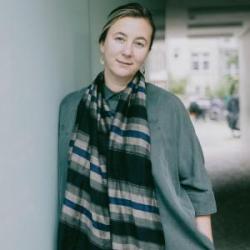
Rachel Murray is the Director of the Bonavero Institute of Human Rights and Professor of International Human Rights Law. She joined the Institute in October 2025 and prior to that was the Director of the Human Rights Implementation Centre at the University of Bristol which she co-founded with Professor Sir Malcolm Evans in 2009.
Rachel’s personal practitioner and academic work has developed in three inter-related areas: the African human rights system, monitoring of places of detention, and implementation of human rights decisions (ESRC funded, (http://www.bristol.ac.uk/law/hrlip/). For the latter, Rachel and her team were awarded the ESRC Outstanding International Impact Prize in 2023.
She has written widely in these areas for academic and scholarly audiences and also as a practitioner. She ran her own independent consultancy where she worked for, among others, the UN, OSCE, Open Society Justice Initiative, African Committee of Experts on the Rights and Welfare of the Child, NANRHI (Network of African National Human Rights Institutions), APCOF (African Policing Civilian Oversight Forum), the UK National Preventive Mechanism, and CEELI Institute.
Rachel advises and engages on a regular basis with national, regional and international organisations, including, in particular, the African Commission and Court on Human and Peoples’ Rights, the African Committee of Experts on the Rights and Welfare of the Child and the Pan-African Parliament. She has worked with governments, national human rights institutions, parliamentarians, the judiciary, civil society organisations and academics. She has acted as amicus including, currently, before the African Court, together with the Centre for Human Rights at the University of Pretoria, in App.006/2012, African Commission on Human and Peoples’ Rights v Republic of Kenya. She has held a number of grants, including a major grant from the UK Economic Social and Research Council on the implementation of human rights decisions which tracked decisions from the regional and UN treaty bodies to examine the extent to which the States have complied with them. She is Global Distinguished Professor of Law at the University of Notre Dame London Law School, a member of the Academic Expert Panel of Doughty Street Chambers and is also a magistrate. She has previously held trusteeship positions at INTERIGHTS, the Human Dignity Trust (HDT) and the Institute for Human Rights and Development in Africa (IHRDA), the latter of which she was also its Vice-Chair. She is a member of technical committees drafting standards and guidelines on rights and implementation of decisions, for instance, for the African Commission on Human and Peoples’ Rights, and currently engaged in developing a Model Law on the Implementation of African Human Rights Bodies with the Pan-African Parliament and Centre for Human Rights in Pretoria.
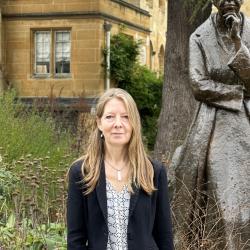
Agnieszka is Associate Professor at the Centre for Socio-Legal Studies (CSLS), Law Faculty and a Research Fellow at Green Templeton College. She completed her DPhil at University of Oxford (2011). Upon post-doctoral spells at International Migration Institute (Oxford), CSLS (Oxford) and Davis Centre for Russian and Eurasian Studies (Harvard), she was based at the School of Slavonic and East European Studies (SSEES) at UCL, where she held an Associate Professorship in Sociology.
Significant Publications
Agnieszka is an interdisciplinary socio-legal scholar with area studies interest in Central Eastern Europe and Russia. She is the author of two monographs, Socio-legal Integration. Polish post-2004 EU Enlargement Migrants in the UK (2012, Ashgate/ Routledge) and Immigration and Refugee Law in Russia. Socio-Legal Perspectives (2019, Cambridge University Press). The latter was acclaimed as ‘reminiscent of Ewick and Silbey’s The Common Place of Law’ (by Kathryn Hendley, William Voss-Bascom Professor of Law and Political Science, University of Wisconsin-Madison). Together with Marina Kurkchiyan, Dr Kubal co-edited a volume on A Sociology of Justice in Russia (2018, Cambridge University Press) praised by the critics as 'the most analytically sophisticated and empirically rich volume ever produced on the everyday operation of the Russian legal system' (Eugene Huskey, Stetson University). She is currently working on a co-authored monograph entitled Who are the humans behind Human Rights in Eastern Europe and Russia? Historical and Comparative Perspectives (under contract with UCL Press).
Research Projects
Dr Kubal is currently a Principal Investigator on an UKRI/ERC Starter Grant (2022-2027) ‘Who are the humans behind Human Rights in Eastern Europe and Russia?’ (HuRiEE) This five-year research (GBP 1.2 m) breaks new ground in studying human rights mobilisation as a window into the societies of Eastern Europe and Russia. The ultimate ambition for this project is to develop a brand-new theory of the relationship between human rights mobilisation, ECtHR’s legitimacy, and the development of societies under the conditions of authoritarianism (Russia), open military conflict (Ukraine), deep transformations (Romania), democratic backsliding (Hungary) and transition back to the rule of law (Poland).
Dr Kubal just completed a major British Academy’s Knowledge Frontiers Symposia collaborative project ‘Activism As A Modality Of Resistance And Communication? Comparing Judicial Activism Across Eastern Europe’ (2023-2025). This was supported by Dr Beata Huszka from the HuRiEE team and Professor Birgit Apitzsch (University of Bochum) and Professor Ramona Coman (Université Libre de Bruxelles).
In the past Agnieszka was awarded research grants by the British Academy, Leverhulme/BA and the John Fell OUP Fund.
Research Impact
Agnieszka’s research has had a significant impact beyond academia. Her work with undocumented Syrian asylum seekers in Russia contributed to a European Court of Human Rights judgment (LM and Others v Russia, 2015) that protected Syrians from deportation across Europe. The judgment was translated into nine languages (including Turkish, Croatian, Czech), meaning it was deemed a helpful tool by human rights and immigration lawyers across several countries.

Dr Alice Donald is Professor of Human Rights Law at Middlesex University. Alice's research lies in the field of human rights implementation and the relationship between human rights and democracy, with a focus on the role of parliaments and the European Convention on Human Rights. She also writes regularly on the UK's relationship with the ECHR system and recently co-authored two reports published by the Bonavero Institute on The European Convention on Human Rights and immigration control in the UK: Informing the public debate and Examining 10 reasons to stay in the European Convention on Human Rights: Informing public debate in the UK. Alice is a Trustee of Just Fair, which works to bring social justice and human rights together by championing economic, social, and cultural rights in the UK.
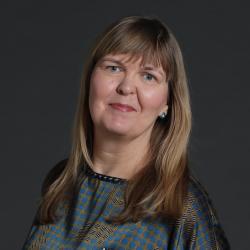
Joseph (Joe) Finnerty is an Assistant Professor of European Human Rights Law at the Europa Institute, Leiden University. His primary research interest is the regulation of restrictions on rights and freedoms, particularly the purposes that are permitted or prohibited. In his research, Joe focuses on states undergoing processes of autocratisation and the role of human rights law in this context. His main focus is the European Court of Human Rights, but he regularly employs comparative legal methodologies in his work, drawing parallels with other international (human rights) courts as well as domestic constitutional courts. His work has appeared in renowned international journals such as the European Journal of International Law, the European Convention on Human Rights Law Review, and the Human Rights Law Review. Before joining Leiden, Joe was a Postdoctoral Researcher at the Academy for European Human Rights Protection (University of Cologne). He defended his PhD at the Centre for Fundamental Rights (Hertie School, Berlin) and holds degrees in law (and history) from the University of Glasgow (LLB and PgDip) and Ghent University (LLM). Joe has further held visiting positions at the European University Institute, Johannes Gutenberg-University of Mainz, and the Centre for International and European Studies (University of Strasbourg). He qualified as a Scottish solicitor in 2021.
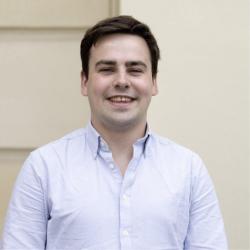
Prof. Corina Heri is Associate Professor of human rights and climate change at Vrije Universiteit Brussel (VUB) and PI of the TEMPORALAW project, which is funded by the Odysseus scheme of the Research Foundation Flanders (FWO).
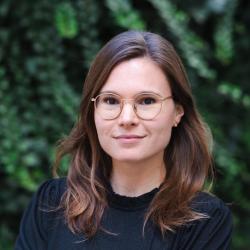
Dr. Jens T. Theilen is a post-doctoral researcher at Helmut-Schmidt-University, Hamburg. Their research interests span international law, human rights, and constitutional law, with a focus on critical perspectives. Jens is one of the principal investigators of the project “Framing Reality and Normativity in European Human Rights Law: Climate Change, Migration, and Authoritarianism”, funded by the Volkswagen Foundation. They have published on European human rights law, for example, in the European Journal of International Law, the International Journal of Human Rights, and the European Journal of Migration and Law.
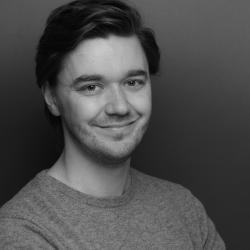
Beata is a Research Fellow at the Centre for Socio-Legal Studies (CSLS), Law Faculty, working in the HuRiEE project focusing on Romania and Hungary. Previously, she was based at UCL SSEES involved in the same project (from February 2023). She completed her PhD at the Central European University (CEU) in Budapest in 2010 and worked as an associate professor at Eötvös Loránd University (ELTE) faculty of social sciences in Budapest. She was a Marie Skłodowska-Curie (MSCA) Fellow at ELIAMEP, Athens, Greece (2019-2021) and a visiting researcher at ECFR focusing on policy issues in Southeast Europe (2020-2022).
Research projects
Dr Huszka's MSCA research 'Assessing the agency of national minorities through court cases: mapping legal mobilization patterns in CEE' analysed the state of minority rights through the lens of litigation and legal mobilization in Romania and Hungary. From 2013 to 2017, Beata led a work package of the EU’s FP7 project FRAME at ELTE, coordinated by Leuven Centre for Global Governance Studies, researching the role of human rights in the EU’s external relations. She has extensive research experience on minority issues in Central Eastern Europe and the Balkans, including academic and policy research. She was a visiting researcher at the Woodrow Wilson International Center for Scholars (2007), the European University Institute (2006), the Centre for European Policy Studies (2007), the New Europe College in Bucharest (2014-2015) and held an International Policy Fellowship at the Open Society Institute (2006-2007).
Publications
Dr Huszka is the author of the book Secessionist Movements and Ethnic Conflict (Routledge, 2014), and her articles appeared in journals such as the Europe-Asia Studies, Journal of Common Market Studies (JCMS), Nationalism and Ethnic Politics, Nations and Nationalism and the Southeast European and Black Sea Studies.
Juan Auz is a postdoctoral researcher with the TransLitigate project at Tilburg University's Law School, where he examines the socio-legal aspects of transnational environmental litigation, with a focus on Latin America and the Caribbean. Before obtaining his PhD at the Hertie School's Centre for Fundamental Rights in Berlin, he was an Alexander von Humboldt fellow at the Potsdam Institute for Climate Impact Research (PIK). Juan has worked for years in Ecuador on indigenous peoples' rights in Amazonia, serving as co-founder of Terra Mater and executive director of Fundación Pachamama. He is currently a board director of the International Center for Not-for-Profit Law, a member of the International Union for the Conservation of Nature, and a legal analyst for several international climate litigation databases, including Columbia’s Sabin Center and NYU’s Climate Litigation Accelerator.
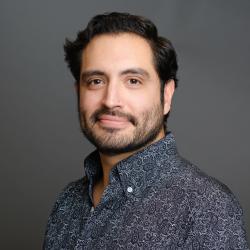
Romanița Iordache is a human rights researcher specialising in equality and non-discrimination with more than 25 years of experience in the field. Romanița is the expert for Romania in the Equality Law Network of the European Commission, since 2008. Since 2014, she has been coordinating the independent expert team for Romania FRANET of the European Union Agency for Fundamental Rights.
Besides her work on daily basis on non-discrimination research and her work as an equality and non-discrimination trainer, her ongoing pro bono work includes strategic litigation before the CJEU and ECHR for promoting fundamental rights and freedoms. Cases built as a team before national and European courts resulted in 2018 in receiving together with her colleagues the Financial Times the Innovative Lawyers Award for Innovation in the Rule of Law and Access to Justice.
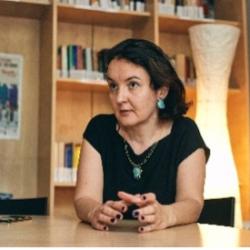
Hanaa Hakiki directs the Border Justice Program of the European Centre for Constitutional and Human Rights (ECCHR), an NGO addressing grave human rights violations through transnational legal interventions. Since 2014, her work focuses on border rights, and more specifically on litigating the informal and violent handling of migrants by states at European borders (“pushbacks”) in front of international bodies. She has supported cases against Spain, North Macedonia, Bulgaria, Greece, Croatia and Slovenia in front of the European Court of Human Rights and UN treaty bodies. Previously, Hanaa trained as a lawyer in England, where she specialised in litigation against state violence, detention and institutional racism.
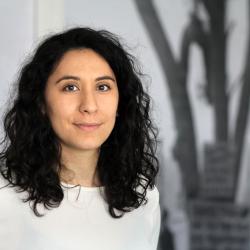
Rupert Skilbeck is the Director of REDRESS, an international human rights organisation based in London and The Hague. Since 1992 REDRESS has supported victims of torture to bring legal cases to obtain justice, working with national partners around the world. REDRESS uses strategic litigation against torture, with programmes on reparation, torture related to dissent, and discriminatory torture, as well as supporting the anti-torture movement through the solidarity programme. Previously he was the Litigation Director at the Open Society Justice Initiative, the United Nations Principal Defender for the Extraordinary Chambers in the Courts of Cambodia, the director of Odsjek Krivicne Odbrane, the criminal defence section of the State Court in Sarajevo, and defence advisor at the Special Court for Sierra Leone. He is a barrister, and practised in London, primarily in criminal law and human rights law.
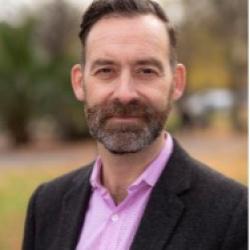
Esra Demir-Gürsel is a research fellow at the Hertie School’s Centre for Fundamental Rights and adjunct lecturer. Her research focuses on European and international human rights. Drawing on international legal theory, political theory, and history, her work traces the limits of human rights law.
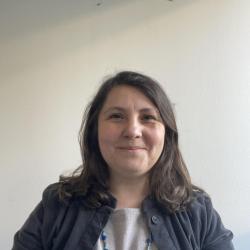
Marcin Szwed is an Assistant Professor in the Faculty of Law and Administration at the University of Warsaw and serves as the coordinator of the Strategic Litigation Programme at the Helsinki Foundation for Human Rights, Poland’s largest human rights NGO. He specialises in constitutional law and international human rights law. He earned his Ph.D. from the University of Warsaw and holds an LL.M. in Comparative Constitutional Law from the Central European University.
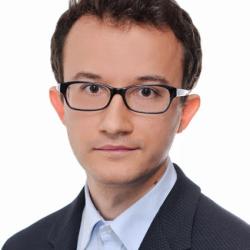
Grażyna Baranowska is a Professor of Migration Law and Human Rights at the Friedrich-Alexander-Universität Erlangen-Nürnberg. Prior to that, she was a senior researcher at the Hertie School, leading a Marie Skłodowska-Curie project on missing migrants, and worked as an Assistant Professor at the Institute of Law Studies of the Polish Academy of Sciences. In the past she also worked for the Volkswagen Stiftung funded MEMOCRACY project (2021-2024), which scrutinized the intersection of memory laws and democracy in Central and Eastern Europe, and the EU-funded project ‘Memory Laws in European and Comparative Perspective’ (2016-2019). She has published, among others, in Law and Social Inquiry, Leiden Journal of International Law, European Constitutional Law Review, International Journal of Human Rights, Netherlands Quarterly of Human Rights and European Convention on Human Rights Law Review. She is the author of the monograph Rights of Families of Disappeared Persons: How International Bodies Address the Needs of Families of Disappeared Persons in Europe (Intersentia, 2021) and the co-editor of Enforced Disappearances. On Universal Responses to a Worldwide Phenomenon (Cambridge University Press, 2025). In 2022, she was appointed by the UN Human Rights Council as an independent expert of the UN Working Group on Enforced and Involuntary Disappearances.


