
PIL Discussion Group: Rethinking Human Rights Treaty Withdrawals: A Process-Based Approach
Speaker(s):
 Add to calendar
Abstract
This article presents the case for reconsidering the rules governing withdrawals from human rights treaties that permit unilateral exit. Once a rarity, such withdrawals have been on the rise across the globe. We propose a process-based approach to address this trend. The heart of our proposal focuses on sequenced domestic and international processes to publicise and scrutinise the nearly unfettered authority of executive branch officials to exit from such human rights treaties. This approach requires that national executives explain and justify a decision to withdraw, which can then be evaluated by a wide range of domestic and international actors. Drawing upon numerous real-world examples from international law, foreign relations law and comparative constitutional law, we explain how national legislatures, domestic and international courts, state parties, and treaty depositories can implement the process-based approach. Opening the black box of unfettered executive power in pursuit of reason-giving and dialogue is not only timely for human rights treaties but also has the potential to radiate across international law more generally.
Speakers
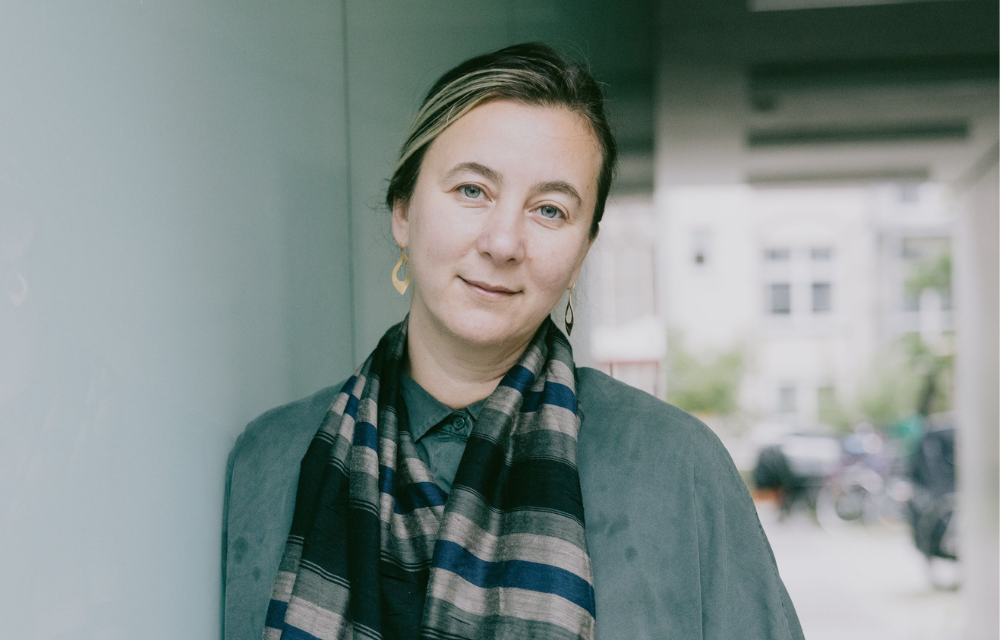
Başak Çalı is Professor of International Law at the Faculty of Law, Head of Research of the Bonavero Institute of Human Rights and a fellow of Mansfield College at the University of Oxford. Her research interests span general international law and international human rights law. She has published widely on the European Convention on Human Rights and comparative international human rights law with a focus on the law and politics of treaty interpretation, application, implementation, and enforcement.
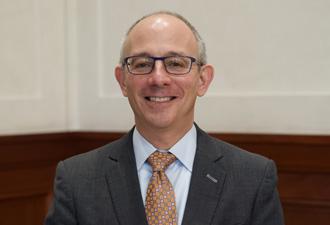
Laurence R. Helfer is an expert in the areas of international law and institutions, international adjudication and dispute settlement, human rights (including LGBT rights), and international intellectual property law and policy. He is co-director of Duke Law's Center for International and Comparative Law and also serves as a Permanent Visiting Professor at the iCourts: Center of Excellence for International Courts at the University of Copenhagen, which awarded him an honorary doctorate in 2014.
Helfer was nominated by the United States as a candidate for the UN Human Rights Committee. He was elected by the states parties to the International Covenant on Civil and Political Rights in 2022 and is serving as a member of the Committee from 2023 to 2026. He recently completed a four-year term as co-Editor-in-Chief of the American Journal of International Law.
Prior to joining the Duke Law faculty in 2009, Helfer was a professor of law and director of the International Legal Studies Program at Vanderbilt University Law School. He has also taught at Harvard Law School, Loyola Law School in Los Angeles, Princeton University, the University of Chicago Law School, and the University of Toronto Faculty of Law.
Helfer has authored more than 100 publications and has lectured widely on his diverse research interests. He is the coauthor of Transplanting International Courts: The Law and Politics of the Andean Tribunal of Justice (Oxford University Press, 2017); The World Blind Union Guide to the Marrakesh Treaty: Facilitating Access to Books for Print-Disabled Individuals (Oxford University Press, 2017); Human Rights and Intellectual Property: Mapping the Global Interface (Cambridge University Press, 2011) and Human Rights (2d ed., Foundation Press, 2009). He has also published International Court Authority (Oxford University Press, 2018) (co-editor); Intellectual Property and Human Rights (Edward Elgar, 2013) (editor), and a monograph, Intellectual Property Rights in Plant Varieties: International Legal Regimes and Policy Options for National Governments (2004), with the U.N. Food and Agriculture Organization. His articles have appeared in leading American law reviews, including the Yale Law Journal, the Columbia Law Review, the California Law Review, the Virginia Law Review, the University of Pennsylvania Law Review, and Law and Contemporary Problems, as well as in numerous peer-reviewed political science and international law journals, such as International Organization.
Helfer holds a JD from New York University, where he graduated Order of the Coif and was articles editor of the New York University Law Review. He also holds an MPA from Princeton University, where he was a Woodrow Wilson Fellow, and a BA from Yale University. He served as a law clerk to Chief Judge Dolores K. Sloviter of the U.S. Court of Appeals for the Third Circuit. Before beginning his academic career, Helfer practiced with the New York law firm of Rabinowitz, Boudin, Standard, Krinksy & Lieberman, P.C., focusing on international law, intellectual property litigation, and civil liberties.
Theme:


