
Could We Do More to Secure Human Rights? Interview with Professors Kate O’Regan & Başak Çalı
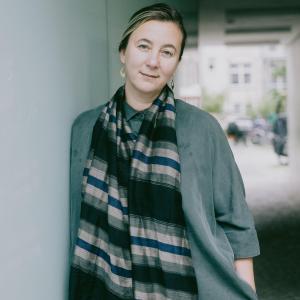
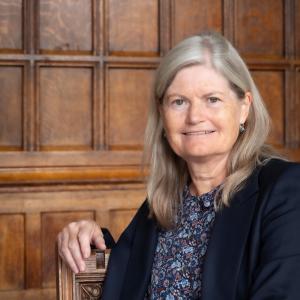
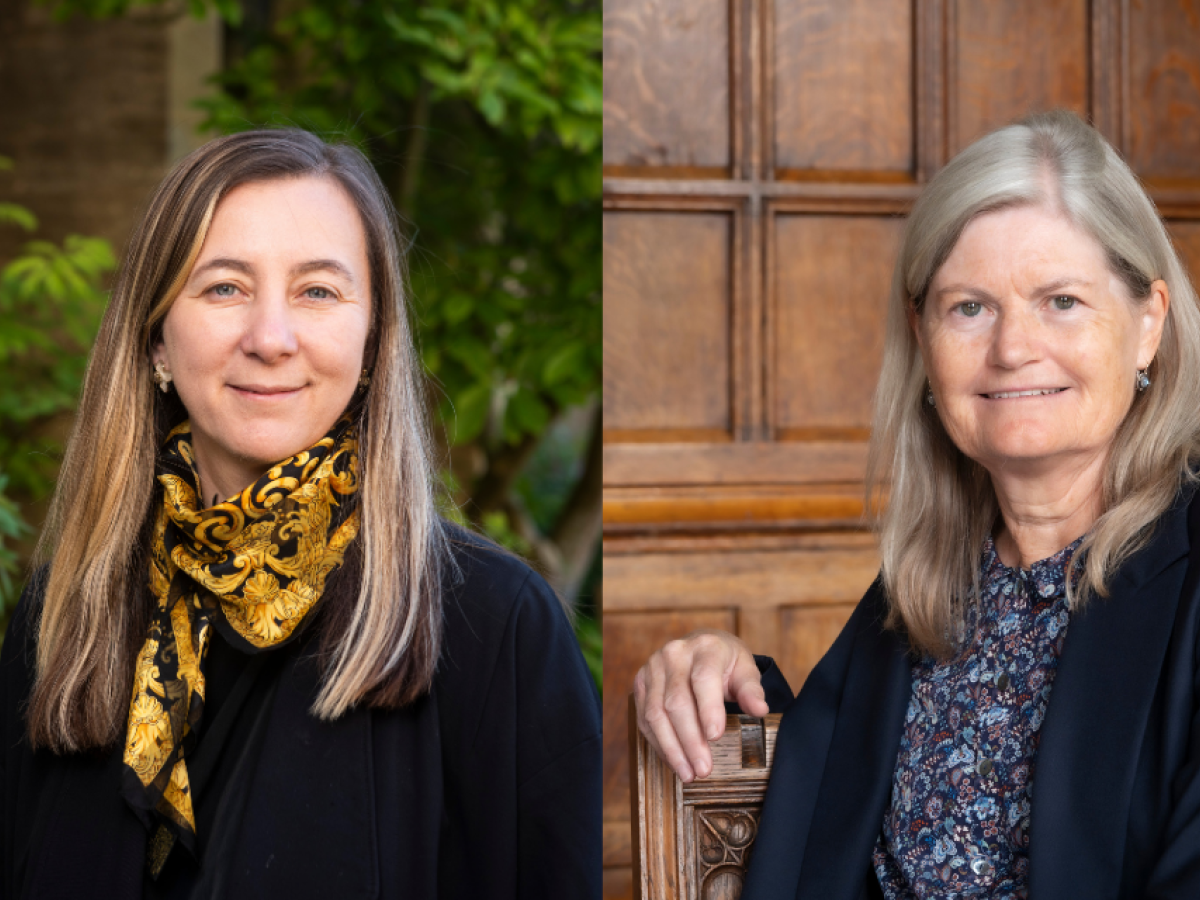
Marking 75 years since the BBC asked the question "Could We Do More to Secure Human Rights?" in their London Forum, Songs of the People have published a podcast under the same name, in which they invite leading voices in human rights law to reflect on what human rights mean today.
Together with Professor Kate O’Regan, inaugural Director of the Bonavero Institute of Human Rights, and Professor Başak Çalı, Head of Research at the Bonavero Institute of Human Rights, the podcast explored how human rights have evolved, why they must be rooted in everyday life, and the vital role of education, institutions and perseverance in protecting them for future generations.
Read below a condensed version of their discussion.
Human rights are a way of describing the universal character of humanity. At present, many people don't relate to this. Fear, division, and lack of knowledge get in the way. Why is that?
Kate: “I think there is no doubt that difficult circumstances, fear and division all drive this division of the world into ‘us’ and ‘them’. And then I think when people suddenly start realizing the humanity in ‘them’ and the possibility that, but for the grace of God go I in ‘them’, people start thinking: would I really like to be treated like this?”
Başak: “When people are given the time to reflect on these very important ideas which underpin these rights, I don't think that they fear these ideas. They actually widely accept them. So, I believe that the problem with human rights is not about the ideas that underpin them but actually how they are represented in political discourse or in the media discourse.”
What practical steps can help people recognise their own human rights, respect the rights of others, and understand that human rights are universal?
Kate: “Human rights start in small places: in the workplace, in the family, in the home, in our organisations — just the ordinary places where human beings are. And I think there's a lot of truth in that, so that the way in which we treat people in our ordinary lives, whether it's in our homes, our workplaces, our schools, this is a place where you can start fostering an understanding of what it means to be respectful of human rights.”
Başak: “The way to understand the value of human rights is to make sure that these human rights ideas are relatable to the everyday experiences of people. But additionally, I think that we also have to explain the value of having human rights as legal-institutional safeguards.
Our understanding of human rights adapts to the conditions of the world at any time. How would you describe the evolution of human rights over the past 75 years?
Kate: “There have been in many parts of the world some very significant gains achieved over the last 75 years. So whether it's a much greater consciousness of principles of non-discrimination, whether on the grounds of race, ethnicity, gender, religion, by and large these are ideas that are now much more widely available and much more widely respected and indeed with institutional enforcement than they were 75 years ago.”
Başak: “The evolution has been really from having these very abstract statements to very concrete and grounded rights for groups who are historically and structurally discriminated. So I hope this continues, because who is historically and structurally discriminated also changes over time, and that's why we have a long LGBTQI+ movement, who are also trying to become in the fold of the big discussions on the rights of the elderly.”
What can we learn from the pioneers of modern human rights after the Second World War?
Kate: “Never give up. If somebody had said as a business school problem: how can you get so many different countries to agree to adopt a declaration on human rights in 1948? it would have seemed pretty unlikely. So perseverance seems to be the one thing we can learn.”
Başak: “One of the things that I find incredibly valuable in the post-war thinking about human rights is the combined embracing of economic, social and cultural rights and civil and political rights all in one place, and this is what the Universal Declaration of Human Rights has also achieved. So not to compartmentalize rights and not to think about only a certain set of rights as the most important ones, but actually to think about rights holistically.”
What would be your principal objectives for a programme to educate future generations in human rights?
Kate: “I think the objective would be to enable people to understand what we mean by human rights and why they're important, and to be able for people to make up their own minds about what they think about human rights. So I think it should be about enabling critical thinking, assessment, understanding about what human rights can and should mean.”
Başak: “Any human rights education has to be very relatable to the experiences of young people themselves. People have to understand the relevance of the things that they're learning for themselves, for their peers, for their lives. So there's always a challenge not to be too didactic and saying these are the important things, and so on, and also perhaps really remove these things from everyday life.”
What is the single most important thing that could be done to ensure human rights are secured?
Kate: “I think it comes back to the last question, which is to foster good human rights education. Obviously there are what I might consider to be second-tier things we could do, which is have good legislation, have institutional enforcement of human rights. These are all important. But unless human rights are understood and embraced by ordinary people in their ordinary lives, the prospect of securing human rights, I think, remains a slim one.”
Başak: “It's always a struggle to secure human rights. It's not because it's really hard to secure human rights; it's because the vulnerabilities that human beings face are changing and shifting. So this means that we always have to think very critically about the changing dynamics — the societal dynamics, political dynamics, technological and environmental dynamics.”