Articles
Kubal, A., & Oliinyk, H. (2026) Inter Arma, Judicialis: Legal Bricolage and the Agency of Ukrainian Judiciary in Wartime, Social & Legal Studies, 35: 548-72.
Proudman, F. & Obrebska, M. (2026) Navigating structural legal alienation: Contextualising Polish LGBTQ+ legal consciousness, Social & Legal Studies
Huszka, B., & Kubal, A. (2025) Resisting illiberal politics: mobilizing European courts in defence of the rights of sexual minorities, Democratization (online first), 1–23.
Huszka, B., & Farkas, L. (2025) The Roma’s right to housing in Romania: the efficiency of legal versus policy interventions, Journal of Contemporary Central and Eastern Europe, 1–24.
Oliinyk, H. (2025) Photography as Visual Evidence, British Journal of Photography, 7923: 172–175.
Kubal, A. (2024) Judicial relational legal consciousness: authoritarian backsliding as a catalyst of change, Journal of Law and Society, 24(1): 1-21
Kubal, A. (2024) Queer coalition? The crisis of justice in Poland and the LGBT rights before the Polish courts, Europe-Asia Studies, 76(9): 1347-1370
Kubal, A.; Mrowicki, M.; (2024) Pushback or Backlash against the European Court of Human Rights?, Russian Politics, 9(1): 135-159
Kubal, A. (2023) Who Are the Humans Behind Human Rights in Poland? Preliminary Remarks on a Sociological Profile of Victims Before the ECtHR, European Court Review, 11: 58-69
Kubal, A. (2023) The Women’s Complaint: sociolegal mobilization against authoritarian backsliding following the 2020 abortion law in Poland, Journal of Contemporary Central and Eastern Europe, 31(3): 585-605
Kubal, A. (2023) Dissenting Consciousness: A Socio-Legal Analysis of Russian Migration Cases before the European Court of Human Rights, The International Journal of Interdisciplinary Civic and Political Studies, 18(2): 57-77
Huszka, B. (2023) Restitutio Interruptus: Minority Churches, Property Rights and Europeanisation in Romania, Europe-Asia Studies, 75(9): 1453–1474
Conference papers
Kubal, A. (2026) The Court is closer than you think… Developing a theory of socio-legal proximity, BASEES Annual Conference, University of Birmingham, Birmingham, 10-12 April 2026
Huszka, B. (2026) History of the human rights movement in Hungary and the creation of the Hungarian Helsinki Committee (1975–1989), BASEES Annual Conference, University of Birmingham, Birmingham, 10-12 April 2026
Shedov, D. (2026) Silenced Trauma: Human Rights Lawyers’ Responses to Russia’s Exclusion from the European Court of Human Rights, BASEES Annual Conference, University of Birmingham, Birmingham, 10-12 April 2026
Oliinyk, H. (2026) Ukraine Negotiating the Accession to ECHR, BASEES Annual Conference, University of Birmingham, Birmingham, 10-12 April 2026
Kubal, A. (2026) Experiences of the European Court of Human Rights by Eastern European applicants and lawyers, SLSA Annual Conference, University of Sussex, Brighton, 30 March-1 April 2026
Shedov, D. (2026) Transforming Community: Identity Shifts among Russian Human Rights Lawyers after 2022, SLSA Annual Conference, University of Sussex, Brighton, 30 March-1 April 2026
Oliinyk, H. (2026) Professionalisation of Human Rights in Ukraine: From Fragmentation to Integration under Pressure, SLSA Annual Conference, University of Sussex, Brighton, 30 March-1 April 2026
Huszka, B. (2026) Hungary and Romania: Divergent Paths of the Post-Socialist Human Rights Complex, SLSA Annual Conference, University of Sussex, Brighton, 30 March-1 April 2026
Kubal, A., Huszka, B, Oliinyk H, and D. Shedov (2025) We Are the 99% – Comparative Legal Culture of the Denied Claimants before the European Court of Human Rights. Paper Session of RCSL WG Comparative Legal Culture, part of the RCSL Sessions at the V ISA Forum, Knowing Justice in the Anthropocene, Rabat, Morocco, 6-11 July
Huszka, B. (2025) The Legal Complex: Professionalization of Human Rights in Hungary and Romania, ISA Forum, Knowing Justice in the Anthropocene, Rabat, Morocco, 6-11 July 2025
Oliinyk, H. (2025) The Court Is Closer Than You Think: On the Everyday Experiences of Strasbourg from Ukraine, ISA Forum, Knowing Justice in the Anthropocene, Rabat, Morocco, 6-11 July 2025
Shedov, D. (2025) Negotiating Membership: A Comparative Study of ECtHR Accession in Russia, ISA Forum, Knowing Justice in the Anthropocene, Rabat, Morocco, 6-11 July 2025
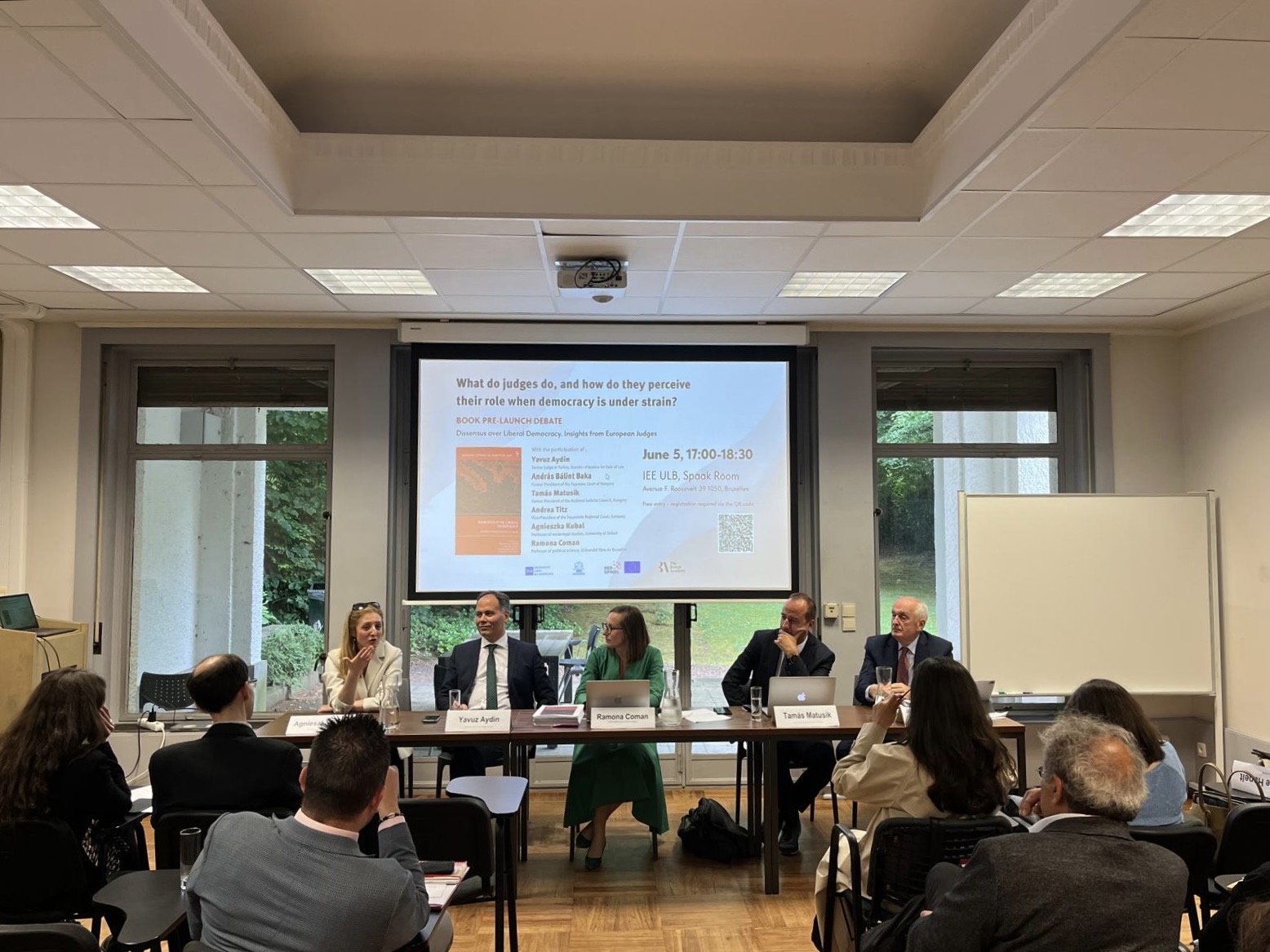
Huszka, B, and A. Kovacs (2025) Judging Under the Grind of Authoritarian Politics, Conference on Judicial Activism and Resistance in Europe, Brussels, 4-5 June 2025
Kubal, A. and H. Oliinyk (2025) Judicial Resilience in Times of War: Ukrainian Judges' Experiences of Maintaining Rule of Law During Russian Military Aggression (2014-2025), Conference on Judicial Activism and Resistance in Europe, Brussels, 4-5 June 2025
Kubal, A. (2025) We are the 99% - legal consciousness of the denied claimants before the European Court of Human Rights, Law and Society Association Conference, Chicago, 22–25 May 2025
Kubal, A. and H. Oliinyk (2025) Inter Arma, Judicialis: legal bricolage and the agency of Ukrainian judiciary in wartime, Law and Society Association Conference, Chicago, 22 – 25 May 2025
Kubal, A. (2025), Strategic Litigation and Systemic Justice: Unpacking Human Rights Cases in Central and Eastern Europe, University of Oslo invited talk, 14 February 2025
Huszka B. (2024) Mixed legal framing: Mobilising European courts in defence of the rights of sexual minorities in Hungary and Romania, Gender Wars conference, Oxford, UK, 25-26 September 2024
Huszka, B. (2024) Mobilising European courts in the defence of the rights of sexual minorities in Romania and Hungary, RCSL conference, Bangor, Wales, UK, 3-6 September 2024
Kubal, A. (2024) Who Are the Humans Behind Human Rights in Eastern Europe and Russia?, Exploring the 'Human' of the European Court of Human Rights Workshop, Zurich, Switzerland, 5 September 2024
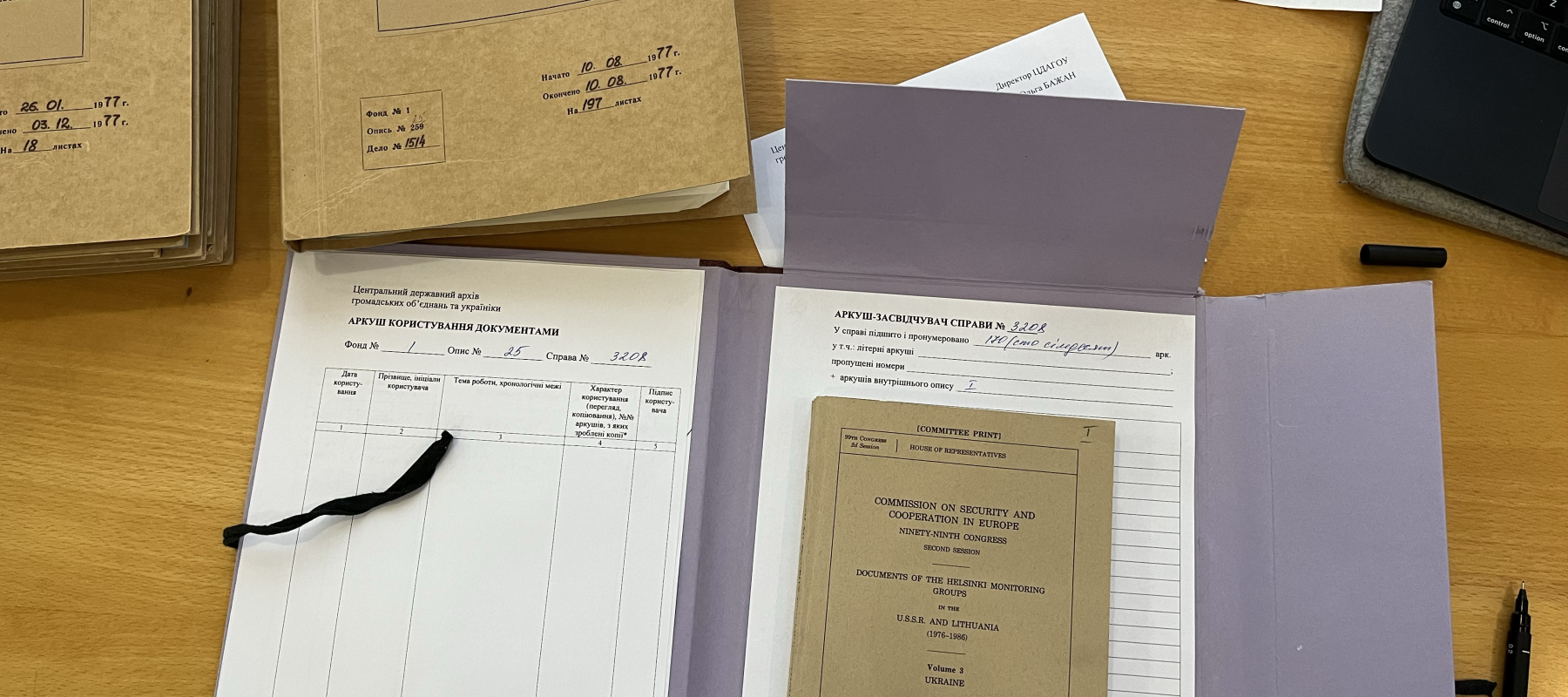
Oliinyk, H. (2024) Search for Human Rights in the Ukrainian Communist Archives, Re(kn)own: Region(s) from Within conference organised by the RUTA Association, Carpathian Mountains, Ukraine, 27-30 June 2024
Oliinyk, H. (2024) Rally Around Human Rights: Case of the Ukrainian Human Rights Lawyers. Ukrainian Identity, Regional Diversity, and Wartime Unity roundtable discussion at the British International Studies Association Conference, Birmingham, UK, 4-7 June 2024
Kubal, A. (2024) The epistemological reflection on the humans behind Human Rights in Eastern Europe and Russia, lecture, ELTE University, Budapest, Hungary, 2 May 2024
Huszka, B. (2024) 'Like seeing in a fog:' recording human rights violations in Ceaușescu's Romania, BASEES conference, Cambridge, UK, 5-7 April 2024
Kubal, A (2024) Judicial Legal Consciousness in Poland - authoritarian backsliding as a catalyst of change?, BASEES conference, Cambridge, UK, 5-7 April 2024
Oliinyk, H. (2024) From Silence to Solidarity: The Retrospective of the Human Rights Activism in Soviet Ukraine, BASEES conference, Cambridge, UK, 5-7 April 2024
Shedov, D. (2023) Inventing a New Justice. Lawyer's Reflection on Litigation in Russia without the ECtHR, BASEES conference, Glasgow, UK, 31 March–2 April 2024
Shedov, D. (2023) Restrictions on access to historical documents in Russia, Meeting of the PACE Committee on Legal Affairs and Human Rights, Larnaca, Cyprus, 22-23 May 2023
Op-eds and policy interventions
Shedov, D. (2025) Anwält*innen unter Anklage (Lawyers under Prosecution), Amnesty International Germany’s Human Rights Magazine, October–December, 2025, 62–63 pp.
Huszka, B. (2024) The Impact of Enlargement on Human Rights in the EU: Disentangling negative Trends, EU Law Live