
Recent Publications
Recent articles, chapters, and other scholarly publications by current members of the Centre for Socio-Legal Studies.
CHRISTOPHER DECKER
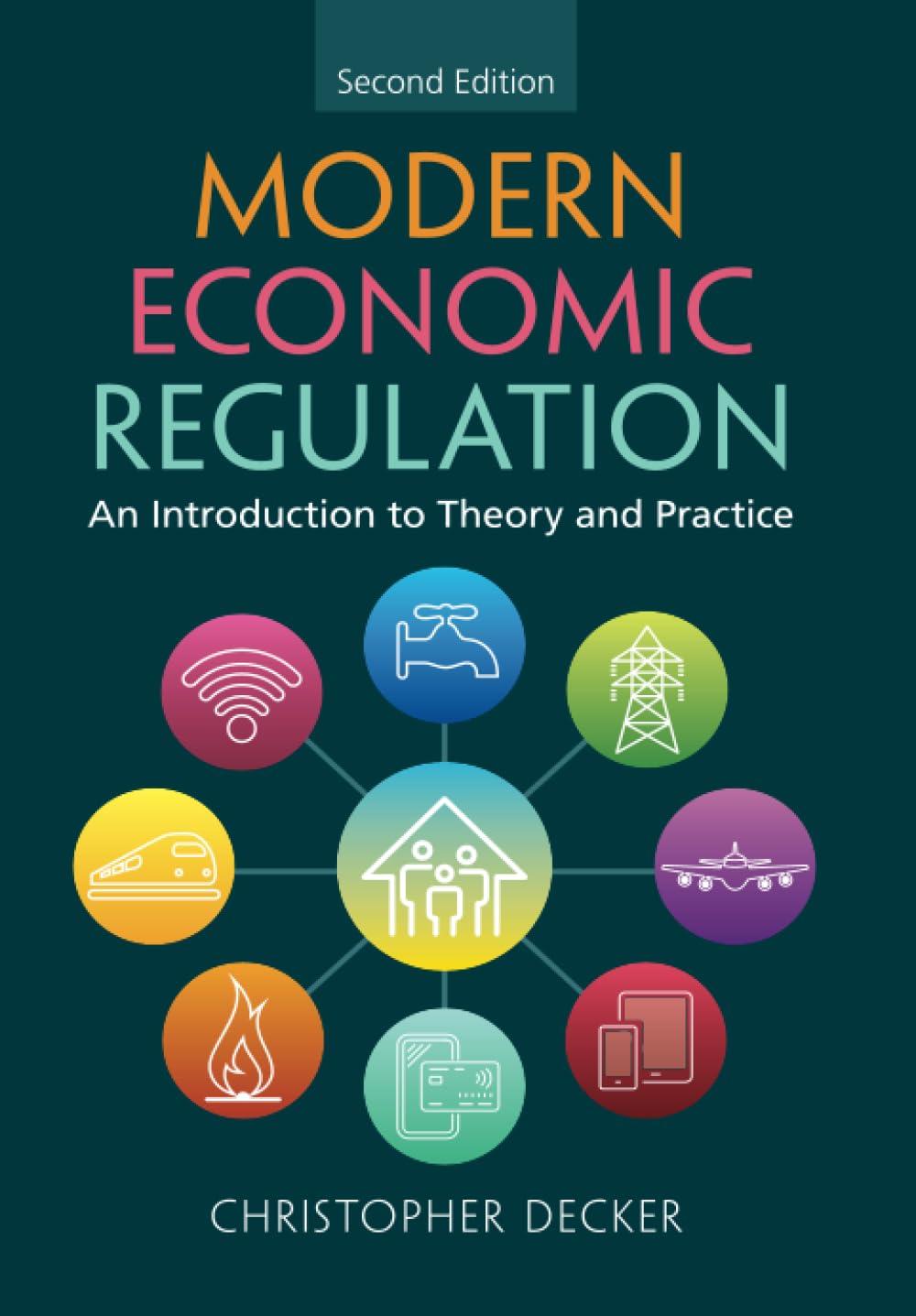
The new edition of Modern Economic Regulation connects the most important insights from regulatory theory with real-world applications of economic regulation around the world. It comprehensively surveys the latest theoretical research and summarises the evidence on the effects of regulation, identifying policies that have been more, or less, effective in practice. In addition to five new chapters, covering behavioural economics and the regulation of rail, aviation, payment systems and digital platforms, all chapters are fully updated to reflect current issues such as the impacts of digitalisation, decentralisation and decarbonisation on economic regulation. The new edition features discussion questions at the end of each chapter intended to cement the reader’s understanding of the most important themes and insights from each chapter.
FLORIAN GRISEL
This article examines how social capital affects the resolution of disputes by focusing on English Wikipedia’s Arbitration Committee, sometimes described as ‘Wikipedia’s Supreme Court’. Drawing on quantitative and qualitative data, the article contends that the Committee not only examines the merits of the claims made by the disputants but also, and more crucially, considers the position of each disputant within the community of editors in its decision-making process. In doing so, the Committee does not simply decide or arbitrate disputes but also seeks to attenuate their impact on Wikipedia’s social fabric. This data allows us to revisit sociological debates on the role of social capital, by revealing the ways in which well-connected individuals employ it strategically to obfuscate their noncompliance with norms, thus leading to what the author calls ‘dispute cancellation’.
BEÁTA HUSZKA
This article draws on an EU-funded Marie Skłodowska-Curie research project which assessed the agency of national minorities through court cases and mapped legal mobilization patterns in Central and Eastern Europe. This involved investigating the situation of minority rights through the lens of litigation and legal mobilization by focusing on the Roma and Hungarian minorities in Romania and the Roma minority in Hungary. This article focuses on the Hungarian minority and is based on extensive fieldwork that the author carried out in Romania, involving civil society activists, politicians, researchers, attorneys, church lawyers and antidiscrimination specialists. It concentrates on the property restitution process for Hungarian minority churches in Romania which has been neglected in the academic literature, both with regard to ethnic minorities and property restitution. The article argues that it constitutes an important aspect of the implementation of minority rights, while also illuminating some crucial aspects of property restitution and the (dysfunctional) operation of the rule of law in Romania.
ALMA IONESCU
This article presents a critical review of the literature on mental health activism and advocacy in low- and middle-income countries. It identifies a lack of cohesive definitions and shared understandings of ‘activism’ and ‘advocacy’, which has contributed to fragmented and often superficial engagement with these concepts in existing research. In response, the review proposes a conceptual framework to support deeper and more nuanced analyses of mental health advocacy and activism. The framework highlights three key dimensions - legitimacy, context, and timing - as central to understanding advocacy and activism efforts. By offering this framework, the article seeks to strengthen conceptual clarity in the field and to enhance understanding of how communities envision and enact change, particularly in ways that enable the meaningful inclusion of lived experience in policymaking.
AGNIESZKA KUBAL
Between 2015 and 2023, Poland’s authoritarian drift reshaped its judiciary, with judges increasingly turning to the European Court of Human Rights – not just as interpreters but as direct applicants challenging government actions. This article explores how judges’ legal consciousness evolved through dynamic interactions with legal professionals, activists and civil society. By framing this shift within relational legal consciousness, it highlights how law and politics intertwine in times of crisis. The piece offers fresh insights into how judges navigate liminal spaces of legal uncertainty, redefining their roles amid political upheaval and using human rights law as a tool of resistance.
DOMINIK KRELL
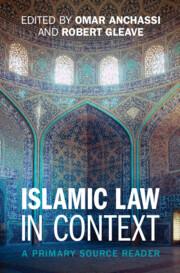
The study of Islamic law is complicated by the multitude of languages used across the Muslim world and the complexity of both contemporary and premodern legal texts. This chapter is part of an innovative volume designed to help researchers and students bridge the language gap by providing commented translations of Islamic legal texts from a wide range of languages, thereby reflecting the diversity of Islamic law. Krell’s contribution focuses on a text by Ibn Khunayn, one of the most prominent Saudi jurists of recent decades. In this text, Ibn Khunayn describes how the Saudi legal system is rooted in the sources of Islamic law and how royal decrees issued by the Saudi king are incorporated into the religious legal framework. The text illustrates how he draws upon works from various historical periods, demonstrating that, for him and other contemporary Saudi jurists, the validity of a legal argument is independent of its historical context.
BETTINA LANGE
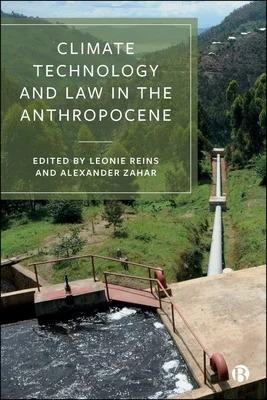
This chapter explores the nexus between evidence, climate law and mitigation technologies by focusing on economic evidence about the cost-effectiveness of mitigation technologies, specifically carbon capture, use and storage (CCUS). CCUS is controversial, not least because of its significant costs. Should states intervene in private business activity to subsidize not just research and CCUS pilot plants but also its commercial application? This question forms part of lively debate in a number of jurisdictions. The chapter examines the United Kingdom’s response to this debate: the creation of economic incentives in Parts 1 and 2 of the UK’s Energy Act 2023 to promote the deployment of CCUS at speed and at scale. The chapter examines arguments for and against this economic regulatory framework. In building on science and technology studies, the chapter argues that this framework is a ‘boundary object’ that coordinates actors with diverging interests on CCUS. While the economic evidence on CCUS as a climate mitigation technology may still be uncertain, Parts 1 and 2 of the UK’s Energy Act 2023 create new climate law that is based on claimed links between science and policy.
SONIA MACLEOD AND FRANCESCA UBERTI
This article examines the efficacy and fairness of no-fault compensation schemes (NFCS) for adverse events following Covid-19 vaccination. Based on an international comparative study of vaccine injury no-fault compensation, the article analyses the rapid expansion of NFCS globally, focusing on three multinational schemes – COVAX, AVAT and UNICEF – created in response to the Covid-19 pandemic. After assessing the ethical rationales behind the creation of NFCS for vaccine injuries, the authors discuss how NFCS can meet accessibility requirements and ensure adherence to justice principles. The article highlights concerns regarding access, transparency and the need for improved public oversight of these schemes, especially in low- and middle-income countries. Finally, some recommendations are made for enhancing future pandemic preparedness and NFCS design.
CAITLYN MCGEER AND NICOLE STREMLAU
This article discusses the issues which arose when conducting surveys with social media users in several African countries in order to gauge their definitional understandings of online hate and mis/disinformation, awareness of content moderation processes and flagging/reporting of issues. This raised challenges relating to how to conduct survey research in difficult-toreach places, some of which are affected by violent conflict, and within a limited budget. Social media platforms present unique opportunities for researchers to recruit participants in these contexts. These platforms show promise in reaching participants who would otherwise be unreachable, but they pose significant limitations as well. Given the goal of the research to reach social media users, the authors used Facebook to advertise the survey, drawing on the breadth of research on using the platform as a research tool and the fact that it has a large user base in the targeted countries. In this article, they explore the practicalities, challenges, and limitations of Facebook as a tool for survey research in African countries.
LINDA MULCAHY
Drawing on research funded by the National Institute for Health Research, this article looks at all the data that patients and their carers presented to the National Health Service (NHS) about their experiences of care in one year. This ranged from medical negligence claims, complaints, patient satisfaction surveys and NHS-sponsored social media outlets. Examining the different logics underpinning these systems for voicing grievances and praise, this article considers the shift in ideology from redress systems which challenge existing practice to risk management systems in which aggrieved patients are data providers. Returning to seminal law and society texts on the antecedents of disputes and reflecting on the data gathered, it argues that insufficient attention has been paid to the act of voicing as an independent act divorced from the claiming or complaining process.
FERNANDA PIRIE
This review article discusses the editors’ calls to expand the field of comparative law and their attempt to do so in a handbook that includes authors drawn from all parts of the world. It argues that this wide geographic remit is helpful as a way of moving beyond traditional ‘families’ and doctrinal topics, and it points out the ways in which the contributors raise new themes for comparison, many related to public law and processes of change. But this, in turn, raises questions about the purposes of expanding the field. The volume largely concerns the laws and legal issues of modern states, and the authors do not venture far into history. Nor do they consider the alternatives offered by religious and traditional legal systems or forms of non-state ordering. The article suggests that empirical and historical studies of such subjects can productively expand the field further, raising theoretical questions about what law is and does.
NICOLE STREMLAU
This book explores how information and communications technologies are adapted, governed and reinterpreted in areas where the state has limited reach. It brings together an eclectic collection of cases from the favelas in Brazil to the border regions of Ethiopia and Somalia and markets in Thailand. In doing so, it teases out the broader arguments and logics about the ways in which diverse enabling environments for technology and innovation may evolve. It also considers the wide range of public authorities that may be involved in providing governance and security for such innovation, beyond the state. By looking at technologies and the rule of non-law in areas that are often seen as marginal or at the peripheries, from a profit and business perspective, this book reflects new insights back to more Western-dominated mainstream debates about law, technology and innovation.
DANIEL WOJAHN
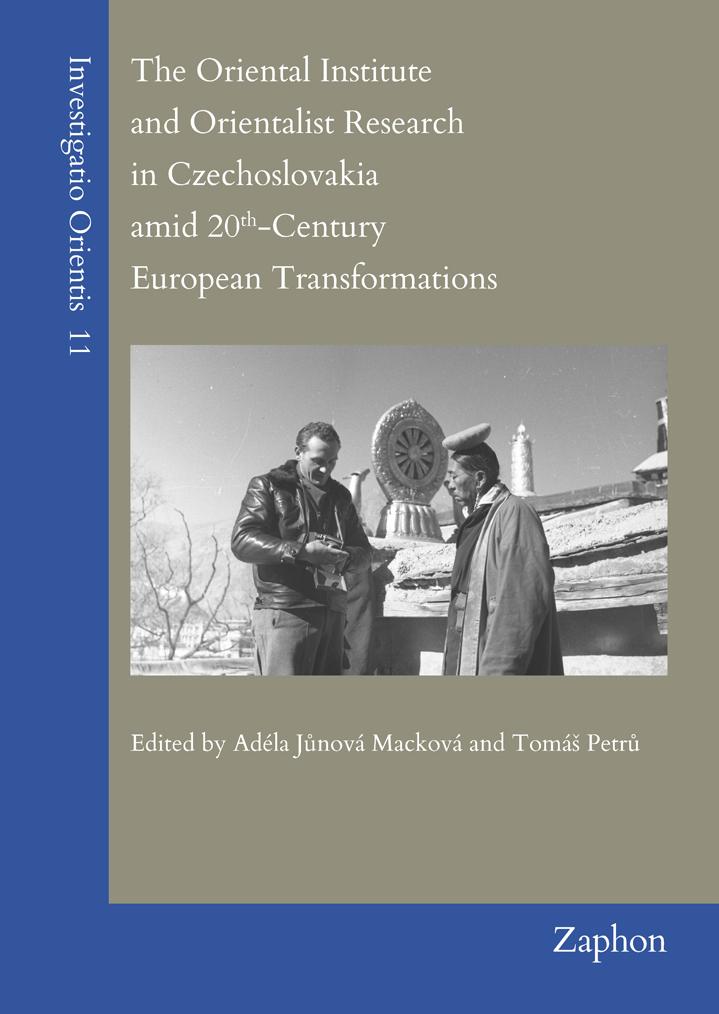
Based on oral history interviews with six pioneering scholars, this article traces the emergence of Tibetan Studies in Central Europe through their lived experiences. It examines how political constraints, limited institutional support, and international scholarly networks shaped research trajectories behind the 'Iron Curtain'. By foregrounding personal narratives, the article offers a grounded account of how the field took shape under conditions of restriction and exchange.