
Ballots Across Borders: Fieldwork During Elections in Thailand and India
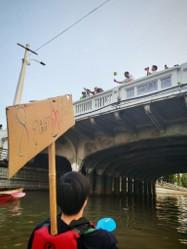
Like many CSLS students, we spent extended periods conducting fieldwork overseas. Ayesha is writing up her thesis based on a year-long ethnography in India following internal migrants from rural Odisha working in Kerala’s urban informal economy. Supakorn is interviewing Thai Buddhist monks about their experiences with the tightening regulations after recent high-profile scandals.
Despite working in different countries and at different stages of our research, we discovered an unexpected parallel: both of us were conducting fieldwork in our home countries during polarising general elections, and found this blurred the boundaries between voter and researcher.In this piece, we reflect on how elections shaped our research and respond to a set of general questions.
In this piece, we reflect on how elections shaped our research and respond to a set of general questions.
How did the elections affect your research?
Ayesha: The Indian general elections in 2024 led to a tension between my role as a researcher and as a citizen. I would have to leave Kerala to cast my vote in my own state, which was also conducting regional elections. My dilemma closely mirrored those faced by workers I was spending time with. For them, returning to vote meant wages lost and travelling at considerable cost. One man laughed when I asked if he would return and said, ‘Who will feed my family if I leave?’
While I worried that returning home would disrupt the momentum I had built in my fieldwork, many workers worried that leaving for the village could jeopardise hard-won employment opportunities. Drawing these parallels highlighted how the right to vote could come into tension with access to stable work and livelihoods. It was a useful reminder that voting is not equally accessible to everyone.
Supakorn: Monks were more reluctant to give interviews during the months leading up to the election. This may have been because Thai monks are expected to disavow politics. As my research could be perceived as politically sensitive, the atmosphere during the election may have made them more cautious.
Due to the difficulty of accessing new interviewees, I decided to spend time volunteering for a local candidate and campaigning for a constitutional amendment. Although I do not regret this decision, I, like Ayesha, still wonder whether I struck the right balance between my responsibilities as a citizen and as a researcher.
What interesting findings did the elections produce for your research?
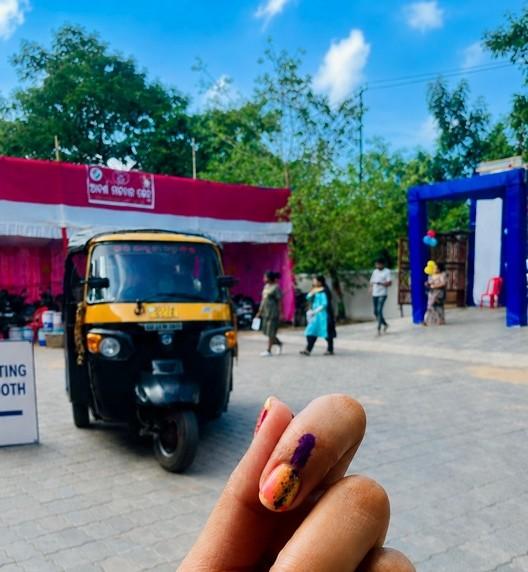
Ayesha: I decided to return home to cast my vote, and this became a topic of conversation among my participants. Most workers were unsure whether a change of government would make any difference to their lives. Working and living in Kerala had now made the general elections feel distant from their everyday realities. What emerged most clearly was how migrants related differently to the two states. In Odisha, they were citizens whose votes mattered, while in Kerala they were just workers.
This issue resurfaced in 2026 when workers from West Bengal returned home to vote, and Kerala's newspapers reported labour shortages across sectors that depended on migrant labour. These articles highlighted what migrants already knew: they become most visible when their labour disappears.
Supakorn: The monks I did manage to interview brought up topics related to the election unprompted. One such topic was legal disenfranchisement. A monk told me that although monks are rightly prohibited from voting in the general election, due to its partisan nature, they should still be allowed to vote in the constitutional referendum, as Thai citizens. To me, this illustrated the tension experienced by members of the monastic community: when is one a citizen and when is one a monk? Looking back, this tension is not unlike the one that elections posed for Ayesha and me.
We have discussed the influence of elections on our research. Now, how does doing research during elections affect our views on elections and politics?
Supakorn: Fieldwork during the election made me realise I had been shaped by my progressive education and upbringing, just as monks and lay devotees are shaped by theirs.
Moreover, I was reminded that conservatism has long been the status quo in my country. The monks I interviewed often lumped the progressive movement together with other globalised imports, whether contentious politics, consumerism, or social media. Due to the monks’ role as community leaders, they took the view that these imports threaten religion and the nation, and this may influence their surrounding communities.
Ayesha: Conversations with Supakorn often returned to the rightward shifts occurring in both of our countries. In my fieldwork, migration had become entangled in these political narratives, with some workers blaming other migrants for taking jobs away from them in Odisha.
However, discussions about politics often led back to everyday concerns about work, opportunity, and livelihoods. What appeared as hostility towards migrants frequently reflected frustrations with employers and limited opportunities at home. Like Supakorn, I came away with a stronger appreciation of how political views are shaped by the same social and economic structures that influence people's choices about work and migration.
Supakorn: Although we were both disappointed by the election results, reflecting on these experiences reminded us of the plurality of social worlds within our home countries.
How did the elections affect your research?
Ayesha: The Indian general elections in 2024 led to a tension between my role as a researcher and as a citizen. I would have to leave Kerala to cast my vote in my own state, which was also conducting regional elections. My dilemma closely mirrored those faced by workers I was spending time with. For them, returning to vote meant wages lost and travelling at considerable cost. One man laughed when I asked if he would return and said, ‘Who will feed my family if I leave?’
While I worried that returning home would disrupt the momentum I had built in my fieldwork, many workers worried that leaving for the village could jeopardise hard-won employment opportunities. Drawing these parallels highlighted how the right to vote could come into tension with access to stable work and livelihoods. It was a useful reminder that voting is not equally accessible to everyone.
Supakorn: Monks were more reluctant to give interviews during the months leading up to the election. This may have been because Thai monks are expected to disavow politics. As my research could be perceived as politically sensitive, the atmosphere during the election may have made them more cautious.
Due to the difficulty of accessing new interviewees, I decided to spend time volunteering for a local candidate and campaigning for a constitutional amendment. Although I do not regret this decision, I, like Ayesha, still wonder whether I struck the right balance between my responsibilities as a citizen and as a researcher.
What interesting findings did the elections produce for your research?
Ayesha: I decided to return home to cast my vote, and this became a topic of conversation among my participants. Most workers were unsure whether a change of government would make any difference to their lives. Working and living in Kerala had now made the general elections feel distant from their everyday realities. What emerged most clearly was how migrants related differently to the two states. In Odisha, they were citizens whose votes mattered, while in Kerala they were just workers.
This issue resurfaced in 2026 when workers from West Bengal returned home to vote, and Kerala's newspapers reported labour shortages across sectors that depended on migrant labour. These articles highlighted what migrants already knew: they become most visible when their labour disappears.
Supakorn: The monks I did manage to interview brought up topics related to the election unprompted.
One such topic was legal disenfranchisement. A monk told me that although monks are rightly prohibited from voting in the general election due to its partisan nature, they should still be allowed to vote in the constitutional referendum as Thai citizens. To me, this illustrated the tension experienced by members of the monastic community: when is one a citizen and when is one a monk? Looking back, this tension is not unlike the one that elections posed for Ayesha and me.
We have discussed the influence of elections on our research. Now, how does doing research during elections affect our views on elections and politics?
Supakorn: Fieldwork during the election made me realise I had been shaped by my progressive education and upbringing, just as monks and lay devotees are shaped by theirs.
Moreover, I was reminded that conservatism has long been the status quo in my country. The monks I interviewed often lumped the progressive movement together with other globalised imports, whether contentious politics, consumerism, or social media. Due to the monks’ role as community leaders, they took the view that these imports threaten religion and the nation, and this may influence their surrounding communities.
Ayesha: Conversations with Supakorn often returned to the rightward shifts occurring in both of our countries. In my fieldwork, migration had become entangled in these political narratives, with some workers blaming other migrants for taking jobs away from them in Odisha.
However, discussions about politics often led back to everyday concerns about work, opportunity, and livelihoods. What appeared as hostility towards migrants frequently reflected frustrations with employers and limited opportunities at home. Like Supakorn, I came away with a stronger appreciation of how political views are shaped by the same social and economic structures that influence people's choices about work and migration.
Supakorn: Although we were both disappointed by the election results, reflecting on these experiences reminded us of the plurality of social worlds within our home countries.