
Advanced Programme on Regulatory Systems
Overview
Individuals charged with implementing regulations are encouraged to develop an in-depth knowledge of the law and the processes in their sector, but that only makes sense in the context of the general landscape and techniques of regulation, and how they are changing.
The course is particularly timely since many aspects of regulation are subject to re-evaluation and change. These include:
- The recognition of the need for regulation to deliver on a range of societal outcomes, and therefore questions about how this is to be achieved.
- Moves to deconstruct regulation and/or ‘regulate regulators’, through new duties and maturity or performance requirements on regulators alongside traditional tools such as Regulatory Impact Assessment and “one-in-x-out” policies.
- Evidence of the ineffectiveness of the Legal Model (identifying non-compliance with rules and imposition of sanctions) on the theories that compliance with rules is the goal and that this can be achieved by enforcement and deterrence.
- The spread of the findings of empirical behavioural science and socio-legal research into how regulatees and regulators are in fact motivated, obey rules, or breach legal or ethical requirements.
The programme methodology will centre on lectures by the course leaders, with wide-ranging case studies, provoking open discussion, and with some group tasks.
Course in brief
Participants will access the latest research and practical insights from our faculty and thought leaders on regulation with examples from a wide range of regulatory regimes in UK and across the globe.
Date: 1-3 March 2027
Format: In-person
Location: Worcester College
Cost: £3,000 plus accommodation (£350), including all meals and formal college dinner with keynote
Available spaces: c40
Contact: pdp@law.ox.ac.uk
Who the programme is for?
The programme has been designed to develop the knowledge in this area for;
- Those leading in regulatory authorities, both established practitioners and those who are new to role,
- Officials across Government and Local Government, including elected representatives,
- Those working in industry or other areas subject to regulation including trade bodies and self-regulating schemes,
- Leaders in standards and accreditation functions who want to explore the impact they can have on regulatory schemes.
What the programme will cover
- What regulation is and what it is not.
- The purposes and goals of regulation.
- The models and tools of regulation, and their historical and current evolution.
- How variations apply across different sectors, subject-matters and regimes.
- How private (or self-) regulation works (standardisation, certification and accreditation), as specific regimes and in coordination with public regulation.
- The challenges of ‘regulating’ new technologies (e.g. AI, quantum, engineering biology, space, and others).
- Criticisms of regulation and attempts to reform regulation (including Better/Agile Regulation) and an analysis of the effectiveness of these initiatives.
- Critical analysis of all the above issues, with an overview of research into legal and economic theories, empirical research in socio-legal and behavioural science, and the implications.
- An overview of what works in regulation and what does not.
- Attendees who work with regulation, on ‘either side,’ should come away with a clear overview of what regulation is, what regulators do and why, and how this should help their work, and how they might do things better
- Access a cutting-edge review of recent developments and regulatory trajectory
- Gain perspectives from leading experts from some of the most influential organisations active in this dynamic sector
- Network with peers in an exclusive, small group setting
- Contribute towards your annual Continued Professional Development requirement
- Join the Faculty of Law Professional Development alumni for life
- Introduce an enriched understanding within your organisation of the scope and limits of regulatory systems, as well as business, risk and compliance implications
- Enhance your knowledge and expertise with practical insights and learnings that your organisation can start applying immediately
- Cascade learning through your team and into the wider organisation
- Make deeper cross-organisational connections
Advanced Programme on Regulatory Systems

What past participants have said

This was a brilliant opportunity to explore and share ideas with colleagues across regulation. After almost 30 years as a regulator, I still love listening to and learning from people who have a passion to improve how we regulate, to make a genuinely positive impact for those affected; whether the communities regulation is designed to protect or the industries and people we regulate.

The programme has allowed me to consider different aspects of regulatory systems and the interactions/inter-dependencies. It has also highlighted the psychology of human nature and how this impacts or influences regulatory outcomes.
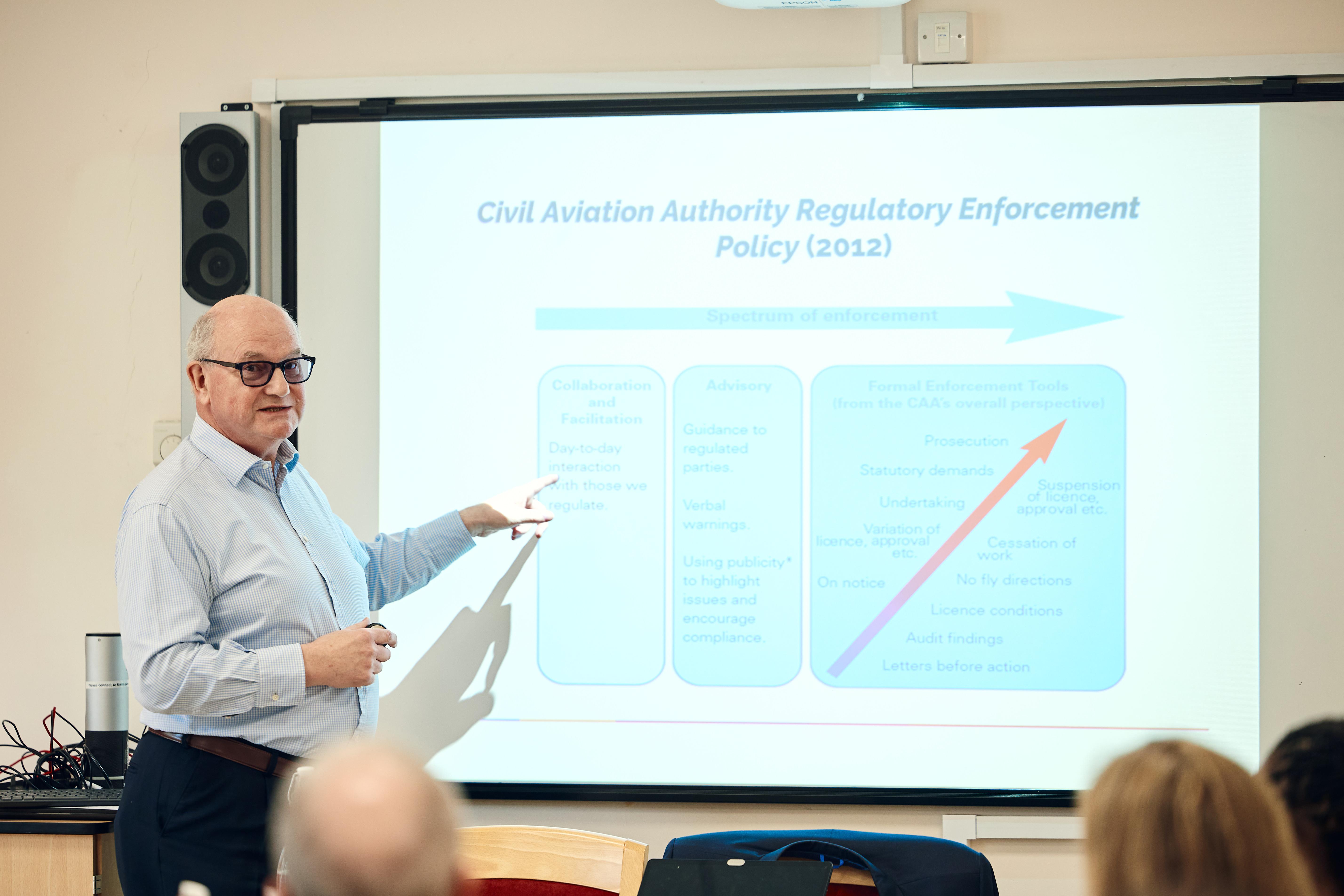
The APRS was a fantastic opportunity to work with other regulators who are equally focused on how regulatory practice needs to evolve. One aspect that struck a real chord was how we might gain more balanced stakeholder engagement and support for regulation by working in partnership with those who, in our situation, seek environmental protection and improvement – from environmental NGOs to members of the public.
Programme Faculty and Contributors
Christopher Hodges, OBE is Emeritus Professor of Justice Systems, Centre for Socio-Legal Studies, University of Oxford. He is Chair of the Regulatory Horizons Council, which advises HM Government (DSIT) on regulation of innovative science and technology; Chair of the Horizon Compensation Advisory Board advising HM Government (DBT) on compensation for Post Office workers; and Chair of the Housing and Property Redress Group, comprising judges, ombudsmen and redress schemes in those sectors.

- Graham Russell MBE, Director in the UK Department for Business and Trade.
- Srikanth Mangalam, Founder President of PRISM Institute, Toronto.
- Dr Christopher Decker, Associate Fellow, Centre for Socio-Legal Studies.
- Stephen Deadman, Keynote Speaker, ex Vice President at Meta and Vodaphone
* List of speakers may be subject to change

Application and Payment
To apply for the programme on Regulatory Systems please follow one of the following payment processes.
Apply Now - Pay by Credit Card
If you require a Visa for this programme please visit short periods of study as a Visitor | University of Oxford
For any other information please contact: pdp@law.ox.ac.uk
See our programme in action