Welcome to CSLS
For over fifty years the Centre for Socio-Legal Studies has been at the forefront of research into the nature and role of law in society. CSLS researchers study law as a historical and culturally specific mode of social organisation, which takes a variety of forms within and across societies. They bring together a wide variety of disciplinary expertise, including sociology, anthropology, politics, international relations, human rights, economics, geography and art history, to examine the interface of law and society throughout the world.
Explore Our Work

Frontiers of Socio-Legal Studies Blog

What do we lose when artificial intelligence summarises feminist activism? In this week's Frontiers of Socio-Legal Studies, Professor Linda Mulcahy (Oxford CSLS) and Dr. Ellie Whittingdale (LSE Law School) reflect on their experiences using AI to summarise interviews with advocates of the Rape Crisis Movement, exploring the risk of erasing critical feminist perspectives on sexual violence. Read the full article, which is published as part of the blog's Methodological Musings section. If you would like to receive a summary of all of Frontiers’ latest posts, please sign up to receive our bi-monthly newsletter.

How does an international body with no binding legal authority wield extraordinary influence over domestic legal reform? In this week's Frontiers of Socio-Legal Studies, Samira Bello (Cardiff University) examines the paradox of the Financial Action Task Force (FATF), exploring why countries adopt its anti-money laundering standards despite uneven and ineffective enforcement. Read the full article, which is published as part of the blog's Borderlands section. If you would like to receive a summary of all of Frontiers’ latest posts, please sign up to receive our bi-monthly newsletter.
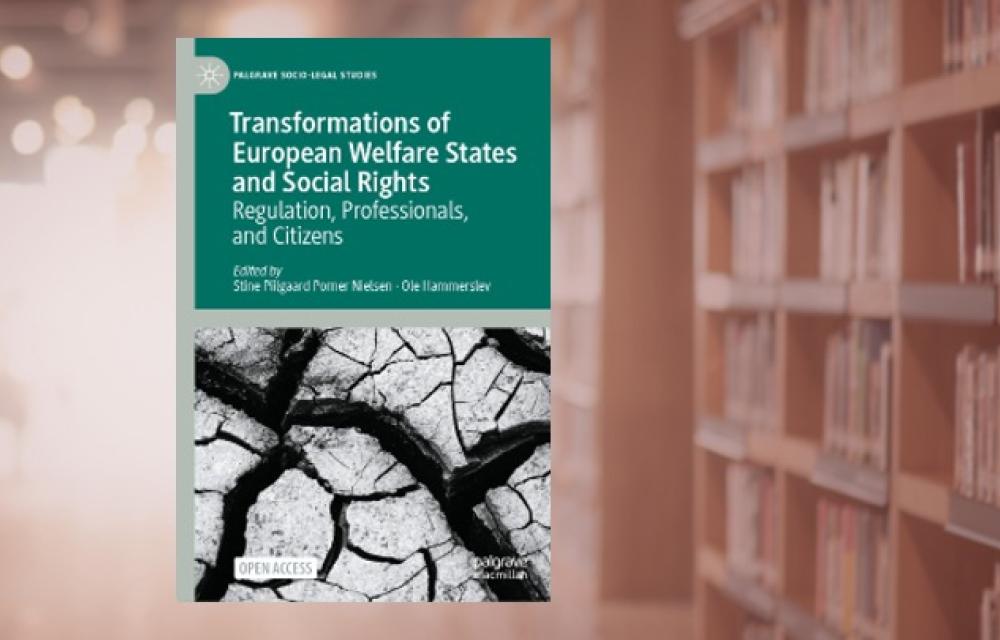
Anke van der Hoeven reviews Nielsen and Hammerslev's edited collection, Transformations of European Welfare States and Social Rights: Regulation, Professionals and Citizens (Palgrave Macmillan, 2023). Read the full article, which is published as part of the blog's A Good Read section. If you would like to receive a summary of all of Frontiers’ latest posts, please sign up to receive our bi-monthly newsletter,
Our graduate students are at the heart of the Centre’s research community. Meet our current DPhil and MPhil students and explore Notes from the Field, where they reflect on fieldwork, methods, and the practice of socio-legal research.


Featured News
Professor Fernanda Pirie reflects on her career, research and the Centre for Socio-Legal Studies
Professor Fernanda Pirie, Director of CSLS, reflects on her career from barrister to legal anthropologist and discusses the Centre’s interdisciplinary approach, her research on Tibetan law, and the importance of studying law in society.