

Law Faculty sponsors conference exploring the Motherhood Penalty in Higher Education.

A conference designed to draw attention to the motherhood penalty and discuss practical solutions to build a more inclusive future for mothers in the workplace took place at the Saïd Business School on 19 March 2026.
The ‘Mind the Motherhood Gap’ conference brought together sector leaders, policy experts, and inspiring changemakers to dive deeper into the reality for working mothers, to hear how organisations support mothers and how successful such initiatives are, and to highlight the skills mothers bring to their workplaces. The interactive sessions allowed the audience to feed into the discussions and offer their own unique perspectives.
The conference was hosted by the Saïd Business School and opened by the Vice-Chancellor of the University of Oxford, Professor Irene Tracy. Clare Oxenbury-Palmer, Head of Communications at the Faculty of Law, was part of the steering committee that conceived and organised the event.
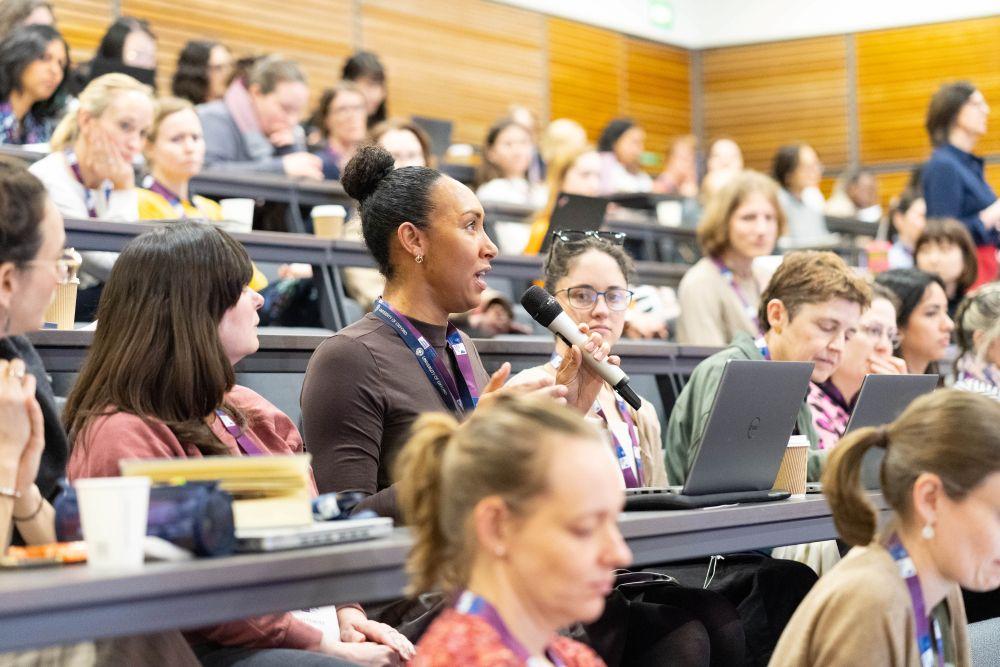
During the morning the audience heard about research by Professor Tina Miller (Oxford Brookes University) into the costs, causes and consequences of the motherhood penalty, including shocking figures such as up to 74,000 women in the UK are forced out of their jobs annually due to pregnancy or maternity discrimination. Research presented by Dr Charikleia Tzanakou into the different approaches to supporting parents in higher education institutions revealed how some parenthood policies and practices can be truly transformative and how others simply signal compliance.
A panel laid open why the motherhood penalty exists even in institutions committed to gender equality in a discussion that included the Head of Athena Swan at Advance HE, Sally Baden, Susan Harkness, Professor of Public Policy at the University of Bristol, Jane Johnson, Founder of Careering into Motherhood, and Mahima Mitra, Senior Lecturer in Organisational Behaviour at the Saïd Business School discussed.
The afternoon opened with an online conversation between Beth Berry and Catherine Neiner, both based in USA, about needs and fixes. Beth’s work focuses on identifying an individual’s needs and looking at ways to meet them as a means to having a more satisfying work experience. She also asked the audience to reframe their thinking about their own capabilities to enable them to challenge the systems that hold them back and empower themselves to make change.
Emily Ma continued to reframe motherhood as she talked about her research which shows motherhood as the critical stage of leadership training we need to recognise f. She has identified key areas of growth and change that happens to a mother which are also skills and capabilities that translate into employees being even more effective in the workplace
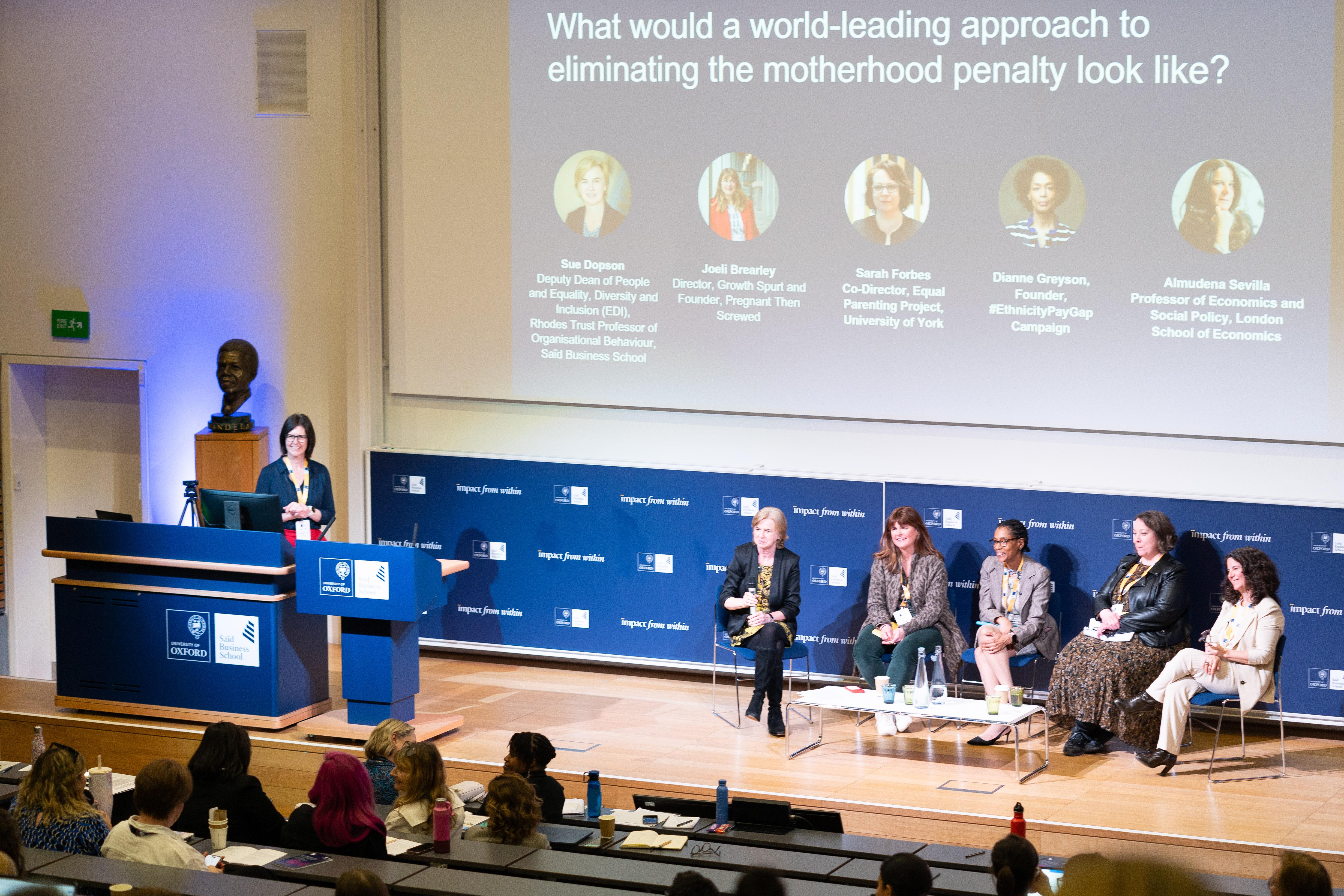
The final panel discussion asked what a world-leading approach to eliminating the motherhood penalty would look like. The panel discussed initiatives that were both organisational and societal, such as enhanced maternity and paternity leave, better training for managers to help avoid the ‘line manager lottery’, ensuring policies address the full parenting journey and don’t simply focus on time around pregnancy and the first year, better funded and available childcare and adjustments to the working day to better accommodate school hours. The panel was chaired by Professor Sue Dopson and featured Joeli Brearley, founder of Pregnant then Screwed and Director of Growth Spurt, Sarah Fobes, Co-Director of the Equal Parenting Project at the University of York, Dianne Greyson founder of the #EthnicityPayGap campaign, and Almudena Sevilla, Professor of Economics and Social Policy at LSE.
The audience feedback was incredibly positive. When asked what resonated with them at the end of the event, comments included ‘Motherhood is a super power – let’s use it’, ‘One size does not fit all, as leaders we need to support and be curious to find out what individuals need’ and ‘ I am not alone…..my experiences and frustrations at the barriers to career progression are shared by all’.
The event was conceived and organised by Elisha Ward, Jennifer Chapin, Clare Oxenbury-Palmer, Anne Wolfes, Chariklei Tzanakou and Catherine Neiner with the support of the University of Oxford’s Social Sciences Division, Faculty of Law and Saïd Business School, and Oxford Brookes University.