

PIL Discussion Group: Equivalent Protection and Participatory Protection in European Human Rights Law
Speaker(s):
Notes & Changes
This seminar will take place in the Old Library. A light sandwich lunch will be provided in the Wharton Room from 12.15 pm onwards.
Regardless of whether you have registered to attend the event in person or online, you will receive a Teams link before the seminar once the form closes at midday on Wednesday, 21 January 2026. Please consider this email as confirming your registration.
 Add to calendar
Abstract
More than 50 years ago, in 1974, the German Federal Constitutional Court introduced in its seminal Solange I decision what has become known since as the ‘equivalent protection test’. In a nutshell, this test stipulates that ‘as long as’ the level of human rights protection in another legal (sub-)regime is equivalent to the level of protection in the legal system of the adjudicating body, the judges would refrain from reviewing actions of states that implement legal obligations deriving from the other legal order. More than 35 years ago, in 1990, the European Commission of Human Rights (now the European Court of Human Rights) followed suit in its decision M & Co and started a long line of judgments applying a similar test, especially vis-à-vis the EU legal order, most prominently in its famous Bosphorus decisions.
While this test at first glance seems to constitute little more than a narrow judicial device to deal with possible incompatibilities in the protection of human rights by judicial self-restraint, it has over time stabilised, integrated and harmonised European human rights law in a way that few had foreseen when the test was launched half a century ago. This test has – hand in hand with other systemic elements in European human rights law, such as consistent interpretation and informal judicial interaction – contributed to the unification of European human rights law and paved the way for further integration. At the same time, it has conditioned this integration and sustained, at least to a certain extent, autonomy of the respective legal orders as a residual rule. Even tough, the equivalent protection test appears from the outset in essence as dualist in nature, its effect is normative convergence and unification rather than fragmentation of human rights law in Europe. The practice of the German Constitutional Court and the European Court of Human Rights applying this test debunks claims on a functional differentiation of legal regimes, but, to the contrary, provides proof of unifying tendencies in European human rights law. It shows that the courts involved are willing to engage in a discursive coordination of the relationship between their legal orders.
This presentation will give a comprehensive account and analysis of the development of the equivalent test, both in international and in national law. It will explain its systemic relevance for European human rights law both as an element contributing to the opening of legal orders, but also as a potentially limiting element, a so-called “counter-limit”, that under certain conditions closes the door of the legal order for norms and obligations emanating from another legal order. Though the main field of application of the equivalent protection test concerned the relationship between EU law and the ECHR and between national law and EU law, a number of cases show that it has a wider scope of application. This presentation will also look at these developments. In its final part, this presentation will reflect on the possible future of the equivalent protections in European and international human rights law
Speaker
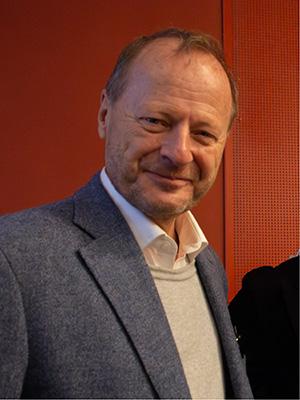
Mads Andenas KC is Professor of law at the Faculty of Law, the University of Oslo, Norway and a member of the ICSID Panel of Arbitrators. He is the former director of the British Institute of International and Comparative Law, London and the former director of the Centre of European Law at King’s College, University of London, former UN special rapporteur on arbitrary detention and the chair of UN Working Group on Arbitrary Detention. Andenas was a Research Fellow of the Institute of European and Comparative Law, University of Oxford and the Director of the Centre for Commercial and Financial Law and a Senior Research Fellow at the Institute of Advanced Legal Studies, University of London. He was General Editor of the International and Comparative Law Quarterly (Oxford University Press, later Cambridge University Press) 1999-2006, the General Editor of European Business Law Review (Kluwer Law International) from 1996 to today and on the editorial boards of ten other law journals and book series, including the Peking University Law Journal. He was the Secretary General of the Fédération internationale de droit européen 2000–2002, the Hon Secretary of the UK Association of European Law 1997–2008 and the Hon Secretary of the UK Committee of Comparative Law 1999–2005. He was the Chair, Association of Human Rights Institutes in 2008. He was the UN Special Rapporteur on Arbitrary Detention, and the Président-Rapporteur of the UN Working Group on Arbitrary Detention 2009-2015. In 2019, Andenæs was made Queen’s Counsel honoris causa. He holds the degrees of cand. jur. (University of Oslo), Ph.D. (University of Cambridge) and M.A. and D.Phil. (University of Oxford). He is the author of books and articles on various topics of international law, European law, financial law, and comparative law. Han held the Chaire Vincent Wright at Sciences-Po, Paris 2011-12 and has held visiting professorships at University of Rome La Sapienza, Université Libre de Bruxelles (Chaire W J Ganshof van der Meersch under the Fondation Philippe Wiener–Maurice Anspach), Roma Tre, and Paris I (Sorbonne). In 2016 he was Visiting Fellow at All Souls College, University of Oxford, and in 2025 Robert S. Campbell Visiting Fellow at Magdalen College, University of Oxford. In addition to those with Ludovica Chiussi Curzi and Johann Ruben Leiss, see below, his publications include Guy Canivet, Mads Andenas and Duncan Fairgrieve, Comparative Law before the Courts (The British Institute of International and Comparative Law 2005), Mads Andenas and Duncan Fairgrieve, Courts and Comparative Law, In Search of a Common Language for Open Legal Systems, (OUP 2015) and Mads Andenas and Eirik Bjorge, A Farewell to Fragmentation: Reassertion and Convergence in International Law (CUP 2015).

Johann Ruben Leiss is Professor of Law at the Faculty of Law, the University of Oslo, Norway. From 2019‒2023. Leiss was an associate professor at the Inland Norway University, adjunct associate professor at the Law Faculty of the University of Oslo; and a guest researcher at PluriCourts – Centre for the Study of the Legitimate Roles of the Judiciary in the Global Order. In autumn 2019/20, Leiss held the Chair of Public and International Law at the Georg-August-University Göttingen as a deputy professor. Leiss obtained his PhD from the University of Oslo in 2019. He was a Visiting Research Fellow at the Lauterpacht Centre for International Law, University of Cambridge (UK) and University of Bologna. In 2014, he obtained the German second state examination at the Highest Court in in Berlin. During his practical legal education (Referendariat) he worked inter alia for the law firm Redeker/Sellner/Dahs, the German Foreign Ministry, and the German Federal Constitutional Court. In 2012, he obtained a Master in Comparative, European and International Laws from the European University Institute in Florence (EUI). He graduated from the Faculty of Law at the University of Göttingen in 2011. Previous publications of Leiss include ‘The Juridical Nature of General Principles’ in Mads Andenas KC, Malgosia Fitzmaurice, Attila Tanzi, and Jan Wouters (eds), General Principles and the Coherence of International Law (Brill 2019) 79‒99, ‘Article 103’ (with Andreas L. Paulus) in Bruno Simma, Daniel-Erasmus Kahn, Georg Nolte, Andreas L. Paulus (eds), The Charter of the United Nations: A Commentary, 4th ed (OUP2024) 2743–2782, ‘The Systemic Relevance of ‹Judicial Decisions› in Article 38 of the ICJ Statute’ (with Mads Andenas), (2017) 77 ZaöRV 907–972, and ‘Constitutionalism and the Mechanics of Global Law Transfers’ (with Andreas L. Paulus) in Till P. Holterhus (ed), The Law Behind Rule of Law Transfers (Nomos 2019) 37–72.


