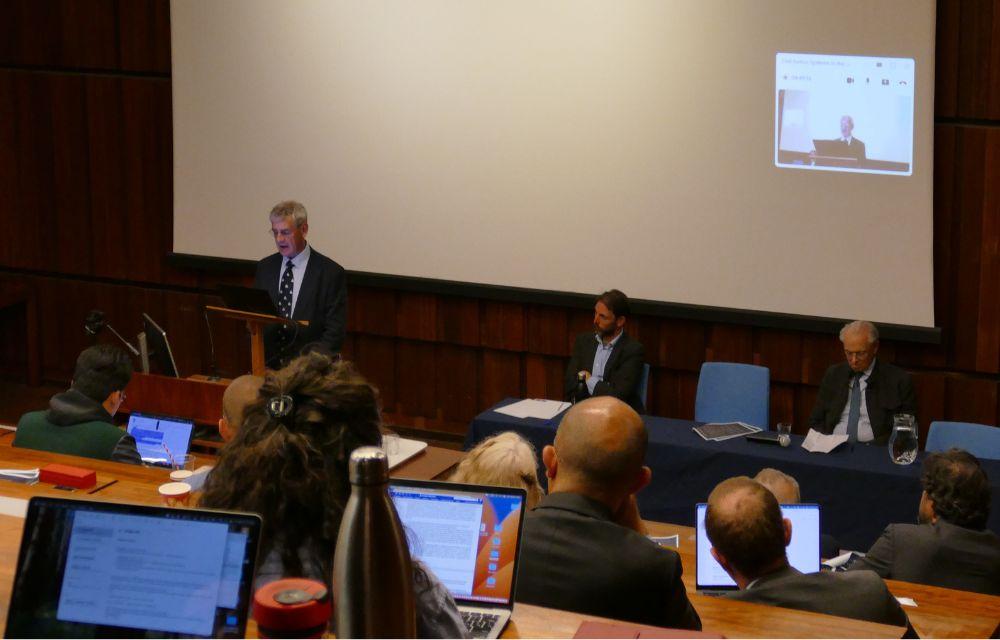
Lord Briggs speaks on the role of artificial intelligence at Oxford conference on civil justice


In May, the Oxford Faculty of Law hosted a conference on Civil Justice Systems in the 21st Century. The conference examined topical issues facing civil justice systems in England and around the world. These include the role of litigation funding and its implications for access to justice and the regulation of the litigation market; balancing the demands of national security and the administration of justice, including the use of closed proceedings and public interest immunity; using the courts as a means of promoting accountability and redress for corporate and public scandals; and the growing role of alternative dispute resolution and artificial intelligence in reshaping how disputes are resolved. The conference also examined leading empirical legal research projects into how justice systems operate in practice, how litigants and the wider public experience them, and how these findings influence perceptions of the courts and those responsible for administering justice. Together, these themes reflect the profound pressures and opportunities facing civil justice systems as they adapt to the demands of modern society. The conference heard from a number of distinguished judges, academics, and practising lawyers on their research into, or firsthand experience of, the strengths and weaknesses of the civil courts and ADR processes.
In delivering the keynote address Lord Briggs of the UK Supreme Court suggested that the extent of the use of AI in civil justice, including to assist or even replace some judges, was ultimately a democratic question for the public. He warned, however, that the courts may struggle to cope with an impending “tsunami” of AI-generated claims without the assistance of AI. His Lordship stated: “we ought to begin to think seriously about developing procedural rules and regulation to accommodate AI in advance, rather than responding piecemeal to technological developments as and when they occur”, and that “we ought now, before it is too late, to identify just what contribution to the rule of law is made by the human elements in the process, and how to preserve it from erosion”.
The conference was convened by Professor Andrew Higgins, with support from Shaurya Upadhyay, and funding from the British Academy.
The video recording of the conference can be see on YouTube.