
Wim Decock appointed as new Regius Professor of Civil Law
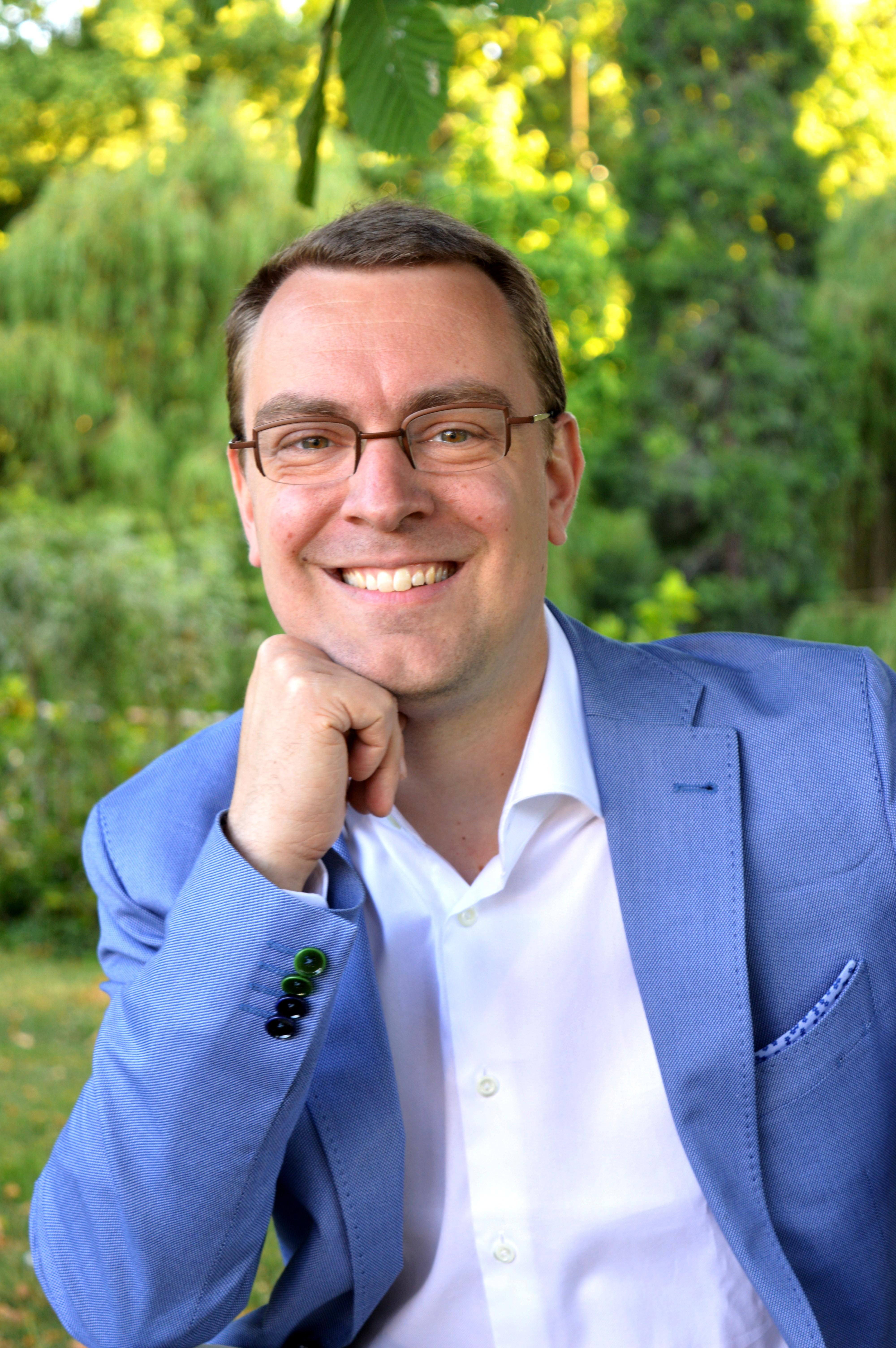
His Majesty The King has approved the appointment of Professor Wim Decock, of the Universities of Louvain (UCLouvain) and Liège (ULiège), as the new Regius Professor of Civil Law at the University of Oxford. He will take up the post on 1 October 2026 and succeeds Professor Wolfgang Ernst.
Professor John Armour, Dean of Oxford’s Faculty of Law, said: “We are greatly looking forward to welcoming Wim as the new Regius Professor of Civil Law in the Faculty. This chair is one of the most prestigious in the University, and Wim’s appointment reflects his exceptional scholarship in this area. I’d also like to thank Wolfgang Ernst for his enormous contributions since joining us as Regius Professor in 2015.”
Founded in the 1540s by King Henry VIII, the Regius Professorship of Civil Law at Oxford is one of the oldest of its kind. Professor Decock will be the 29th Regius Professor and will also be a fellow of All Souls College, Oxford. He said: “I am both delighted and humbled to join the extraordinary community of scholars and students at Oxford’s Faculty of Law. For centuries, the Regius Chair in Civil Law has fostered a rich dialogue between jurists from continental Europe and the Anglo-Saxon world. Its location at All Souls College is especially meaningful to me: the college was founded as a place for the study of Roman law, canon law, and theology, whose interaction lies at the heart of my research. The opportunity to work alongside such exceptional colleagues across law, the humanities, and the social sciences is truly a dream come true.”
Professor Irene Tracey, Vice-Chancellor of the University of Oxford, added: “I am delighted that Professor Wim Decock is to join Oxford in this historic and prestigious role. His scholarship exemplifies the curiosity, depth, and international outlook that define Oxford at its best. I look forward to seeing the contribution he will make to our academic community and more broadly the profession internationally in the years ahead. I welcome him and wish him every success.”
About Professor Wim Decock
Since 2021, Professor Decock has been Professor of Roman Law, Legal History and Comparative Law at UCLouvain in Louvain-la-Neuve (Belgium). He also teaches legal history at ULiège. Before joining UCLouvain, Professor Decock taught at the Faculty of Law at the University of Leuven (KULeuven), where he also served as director of LECTIO (Institute for the Study of the Transmission of Texts, Ideas and Images in Antiquity, the Middle Ages and the Renaissance). From 2012 to 2014, he was a research group leader at the Max Planck Institute for Legal History and Legal Theory in Frankfurt, within the LOEWE-funded project ‘Extrajudicial and Judicial Conflict Resolution’.
Professor Decock received his PhD in Law in 2011 from KULeuven and Roma Tre University, supported by a Marie Skłodowska Curie EST Fellowship and a Junior Fellowship of the Research Foundation – Flanders (FWO). His dissertation on the theological origins of contract law (Theologians and Contract Law: The Moral Transformation of the Ius Commune, c. 1500-1650, Nijhoff/Brill, 2013) won several prizes, including the 2014 H. M. Leibnitz Prize from the German Research Foundation. In 2020, he was awarded the VWS Prize by the Royal Flemish Academy for a French book on the early modern foundations of the economics of meritocracy (now available in English as Money, Markets and Merit: The Economic Thought of Leonardus Lessius, OUP, 2025).
In addition to his PhD, Professor Decock holds master’s degrees in Classics (KU Leuven, summa cum laude) and Law (Ghent University, summa cum laude). He held visiting positions at the Universities of Bergen, Bonn, Catania, Clermont Auvergne, ECUPL in Shanghai, EHESS, Paris Panthéon-Sorbonne, Tilburg, and Toulouse-Capitole. Since 2020, he has served as a co-director of the International School of Ius Commune in Erice, Sicily. In 2021, he was elected as an associate member of the Royal Academy of Overseas Sciences in Brussels, and in 2022 he was the recipient of a Max Planck-Humboldt medal.