
Thomas Ickeringill
MSc in Taxation student in 2017-19, Field Court Tax Chambers
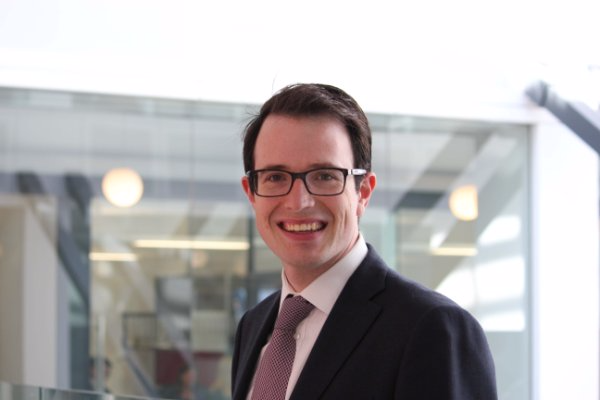
Name: Thomas Ickeringill
College: Christ Church
Scholarship: Field Court Tax Chambers, MSc in Taxation 2017-19
I graduated from the University of Melbourne in mid-2011 with Bachelors of Commerce and Laws (BCom/LLB), specializing in taxation, corporate law, financial accounting and economics. Following graduation, I decided to pursue a career in taxation in Melbourne at PwC, specializing in international taxation and transfer pricing. At PwC, I trained as both a lawyer (admitted in 2012) and an accountant (admitted in 2014).
In late 2015, I moved to London with PwC, continuing to work in international taxation and transfer pricing. My academic interest in tax law and economics, combined with my desire to learn from some of the most highly regarded practitioners and academics in my field, drew me to the Master of Science (MSc) in Taxation at the University of Oxford. Commencing in late 2017, I am now only one subject away from completion. I moved to KPMG in London in mid-2018 and have continued pursuing my career whilst juggling my Master’s degree.
What aspects of your law degree have proved to be the most useful in your career so far?
Undertaking the MSc has been enormously helpful not only in furthering my practical knowledge of taxation in my field of expertise (international taxation and transfer pricing), but my theoretical understanding of the policy underpinnings of domestic taxation systems and the existing international taxation framework. From a career perspective, the MSc has:
· Given me insight into issues faced in jurisdictions outside of those in which I have a first-hand experience (UK and Australia);
· Enabled me to think more broadly outside my specific areas of expertise and apply this to my work for the benefit of my clients;
· Provided me with the knowledge to take a leading policy role in digital taxation thought leadership and initiatives; and
· Informed me of the origins of the international tax framework, which I believe is essential to participation in the current debate on addressing the tax challenges associated with globalization and digitalization.
What do you enjoy the most about studying law in Oxford?
The aspect I have most enjoyed about studying law at Oxford is the University’s commitment to free academic thinking. Rather than teaching any ‘Oxford view’ of tax policy or practice, the University is more focused on fostering discussion and developing students’ understanding of a broad spectrum of opinions to help them form their own views. To me, and to many other students, this is something that feels uniquely ‘Oxford’. This can be seen in comprehensive reading lists covering a range of viewpoints as well as a diverse student body with experiences across a wide range of jurisdictions. It is very easy as a tax practitioner to fall into the trap of believing that there is only one ‘right’ way of thinking, when in reality there might be a range of approaches!
What do you find most rewarding about your programme?
The most rewarding aspect of the MSc has been its ability to make me think more broadly, more critically and more analytically about taxation. Through exposure to leading academics and practitioners at the forefront of major tax disputes and both domestic and international policy development, the programme has enormously enriched my career and piqued an academic interest in technical tax law.
Who was the biggest influence on you when you studied here?
My two greatest influences during my studies were Richard Collier and Philip Baker QC. As highly regarded tax practitioners with decades of practical experience, I have found their classes to be insightful and inspirational. These classes have sparked a further academic interest in certain areas of law and policy, particularly treaty negotiation, treaty interpretation, permanent establishments, profit attribution, transfer pricing and the future of the international taxation system.
What advice would you give to a new or prospective student?
The two main pieces of advice I would give to a prospective student are:
1. Not to underestimate the amount of work required, particularly if you have full-time work responsibilities. To get the most out of the course, you must throw yourself into the classes, the content and the assessments. You must be prepared for early morning, late evening and weekend study sessions, even during busy or unpredictable work commitments.
2. Not to let the amount of work put you off doing the MSc. It is a thoroughly rewarding course. If you want to expand your knowledge, satisfy your intellectual curiosity, enhance your career or build your networks, the more you put into the course, the more you get out of it!