
Meet the Price Moot Court Competition International Round Judges 2026
We are delighted to welcome our judges for the 2026 Rounds of the Price Moot Court Competition. The success of the competition depends on them giving their time and expertise for which we are deeply grateful.
Read more about our judges by clicking on their names below.
Final Bench Judges
Mariyam Kamil is a barrister practising in media and information law at Matrix Chambers. Her practice covers all aspects of this area, including defamation, privacy/misuse of private information, confidentiality, data protection and harassment. She acts for both claimants and defendants and has appeared as sole counsel — including in the High Court on several occasions — as well as part of larger counsel teams.
Before joining the bar, Mariyam read for the BCL, MPhil and DPhil at the University of Oxford. She was the General Editor of the Oxford University Commonwealth Law Journal and the Convenor of the South Asian Law Discussion Group at Oxford. Her research, which examines the constitutional right to privacy in India, has been cited with approval by the Supreme Court of India.
Mariyam has previously worked as a judicial assistant to the Chief Justice of India and interned at the office of the Attorney General of India. She was a Laureate Visiting Fellow in comparative constitutional law at the University of Melbourne and has served as visiting faculty at the NALSAR University of Law, India.

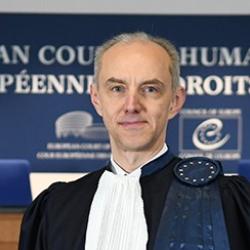
Judge Artūrs Kučs
Born on 9 December 1975, in Riga, Latvia
- Bachelor of Political Sciences, International Relations Programme, Faculty of History and Philosophy, University of Latvia, 1999
- Bachelor of Law, Faculty of Law, University of Latvia, 2001
- European Master’s Degree in Human Rights and Democratization, University of Padova and University of Lund, the Raoul Wallenberg Institute of Human Rights and Humanitarian Law, 2002
- Director and researcher of the Human Rights Institute of the University of Latvia, 2002-2006
- Lecturer, Faculty of Law, University of Latvia, 2004
- Doctor of Law, (Dr.iur), Faculty of Law, University of Latvia in co-operation with Aarhus University, Denmark, 2006
- National Director of the European Master’s Degree programme in Human Rights and Democratisation, 2006-2024
- Member of the Academic Arbitrage of the University of Latvia, 2007-2011
- Docent, Faculty of Law, University of Latvia, 2007-2012
- Head of the Department of International and European Law, Faculty of Law, University of Latvia, 2007-2017
- Member of the Examination Commission of the Council of Latvian Sworn Advocates, 2009-2017
- Lecturer at the Latvian Judicial Training Centre, 2009-2024
- Fulbright Visiting Scholar, University of Connecticut, School of Law, United States of America, 2010
- Coach of the Team of the University of Latvia for the ELSA European Human Rights Moot Court Competition and for the Monroe E. Price International Media Law Moot Court Competition, 2010-2024
- Member of the Board of Ethics of the Latvian Association of Journalists, 2011-2017
- Legal Adviser to the Ombudsman of the Republic of Latvia, 2012–2017
- Associate Professor, Department of International and European Law, Faculty of Law, University of Latvia, 2012-2024
- Listed by the Latvian Government as ad hoc Judge of the European Court of Human Rights, 2016-2024
- Judge, Constitutional Court of the Republic of Latvia, 2017-2024
- Deputy Member of the Venice Commission, 2021-2024
- Member of the Management Board of the Fundamental Rights Agency, 2022-2024
- Judge of the European Court of Human Rights as from 3 September 2024.
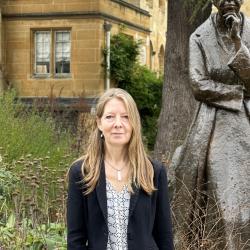
Rachel Murray is the Director of the Bonavero Institute of Human Rights and Professor of International Human Rights Law. She joined the Institute in October 2025 and prior to that was the Director of the Human Rights Implementation Centre at the University of Bristol which she co-founded with Professor Sir Malcolm Evans in 2009.
Rachel’s personal practitioner and academic work has developed in three inter-related areas: the African human rights system, monitoring of places of detention, and implementation of human rights decisions (ESRC funded, (http://www.bristol.ac.uk/law/hrlip/). For the latter, Rachel and her team were awarded the ESRC Outstanding International Impact Prize in 2023.
She has written widely in these areas for academic and scholarly audiences and also as a practitioner. She ran her own independent consultancy where she worked for, among others, the UN, OSCE, Open Society Justice Initiative, African Committee of Experts on the Rights and Welfare of the Child, NANRHI (Network of African National Human Rights Institutions), APCOF (African Policing Civilian Oversight Forum), the UK National Preventive Mechanism, and CEELI Institute.
Rachel advises and engages on a regular basis with national, regional and international organisations, including, in particular, the African Commission and Court on Human and Peoples’ Rights, the African Committee of Experts on the Rights and Welfare of the Child and the Pan-African Parliament. She has worked with governments, national human rights institutions, parliamentarians, the judiciary, civil society organisations and academics. She has acted as amicus including, currently, before the African Court, together with the Centre for Human Rights at the University of Pretoria, in App.006/2012, African Commission on Human and Peoples’ Rights v Republic of Kenya. She has held a number of grants, including a major grant from the UK Economic Social and Research Council on the implementation of human rights decisions which tracked decisions from the regional and UN treaty bodies to examine the extent to which the States have complied with them. She is Global Distinguished Professor of Law at the University of Notre Dame London Law School, a member of the Academic Expert Panel of Doughty Street Chambers and is also a magistrate. She has previously held trusteeship positions at INTERIGHTS, the Human Dignity Trust (HDT) and the Institute for Human Rights and Development in Africa (IHRDA), the latter of which she was also its Vice-Chair. She is a member of technical committees drafting standards and guidelines on rights and implementation of decisions, for instance, for the African Commission on Human and Peoples’ Rights, and currently engaged in developing a Model Law on the Implementation of African Human Rights Bodies with the Pan-African Parliament and Centre for Human Rights in Pretoria.
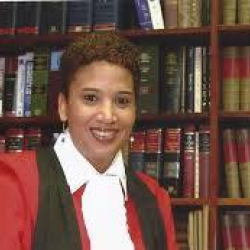
Justice Theron was born in Wentworth, a previously ‘coloured’ township, to a poor working class family. She attended Natal University from 1984 to 1988, which is now known as the University of KwaZulu-Natal, where she completed a Bachelor of Arts and Bachelor of Laws degrees. In 1989 she was awarded a Fullbright Scholarship by the American Government to study in the US. She obtained a Master of Laws degree from Georgetown University in Washington DC in 1990. Whilst she was in the States she worked for the International Labour Organisation in Washington DC and for a firm of attorneys in Los Angeles.
She practiced as an advocate from the end of 1990 and also lectured at the University of Natal. In 1995 she was appointed as a member of the Judge White Commission by the then President Mandela. In 1995 she was one of only two South Africans elected to represent South Africa as a Commonwealth Foundation Fellow. In this capacity, she met with the Queen at Buckingham Palace.
Justice Theron has smashed through glass ceilings during her career. When appointed to the KwaZulu-Natal division of the high court in 1999 Theron became its first black female judge and, at the age of 32, the youngest judge in the country. A 1995 profile in the General Council of the Bar magazine described her as “remarkable”, recounting how the 12-year-old Theron had started a sweet-making home industry so as to pay for schooling and music lessons. This led to a proficiency in the piano, organ and violin.
Justice Theron was one of the founding members of the SA Chapter of the International Association of Women Judges (IAWJ). Under her leadership, the SA Chapter of the IAWJ, in partnership with NADEL, the Black Lawyers Association and various other NGO’s, World Aids day was celebrated on the steps of the Durban High Court and the Pietermaritzburg High Court. This was a first in the legal fraternity and soon earned Justice Theron the title of ‘activist judge’.
In December 2010, Justice Theron was appointed as a Judge of the Supreme Court of Appeal. At the time, she was the youngest member of that Court. In July 2017, she was appointed as a Justice of the Constitutional Court, the highest court in the country. Justice Theron is one of the longest serving women judges in South Africa, having served 26 years on the bench. During this time, she has been actively involved in judicial education and training, sits on a number of boards, and has delivered papers at numerous conferences, both within South Africa and internationally. Justice Theron was the first women President of the Administrative Tribunal of the African Development Bank.
Justice Theron has a passion for writing poetry. But poetry is a mere pastime, it is the writing of judgments and the adjudication of legal cases where she has left her most indelible mark on the public sphere. Justice Theron’s jurisprudence spans a broad range of issues. She has consistently demonstrated a commitment to the advancement of women’s rights in her judgments. For example, in the case of Gumede, Justice Theron wrote a landmark judgment, ruling that women in customary marriages were, in effect, married in community of property, and so should accrue similar rights and benefits to women married under civil law.
Justice Theron is well-known for her leading judgments and, in particular, for her fierce defense of women’s rights. Justice Theron has consistently demonstrated an independent-mindedness and a hard-nosed attitude to rape and gender-based violence in South Africa. Whilst at the Supreme Court of Appeal, she wrote a powerful dissent in State v Nkomo, which emphasized the need for courts to be mindful of their duty to protect the equality, dignity and freedom of women. In 2012 Justice Theron, writing a unanimous judgment for a full Supreme Court of Appeal Bench, found that the head of the Free State education department could not unilaterally impose policy on school principals and governing bodies. This after two schools had decided to exclude pregnant learners from attending classes for stipulated periods.
She is also known for her remarkable work at the Constitutional Court involving administrative law, children’s rights, including the basic right to education. In AB v Pridwin Preparatory School Justice Theron held that where a learner is at an independent school, that learner’s education at the school cannot be terminated without an appropriate and substantively fair procedure.
Over the years, Justice Theron has received numerous awards for her contribution to the development of justice in South Africa. She is a sought after speaker internationally. Justice Theron is an avid hiker and she has summited Kilimanjaro, the highest mountain on the African continent.
Further information about Justice Theron can be found on the website of the Constitutional Court -
www.concourt.org.za/index.php/judges/current-judges/222-justice-theron-leona-valerie-2
Below is a link to an article written about Justice Theron on her appointment to the Constitutional Court of South Africa
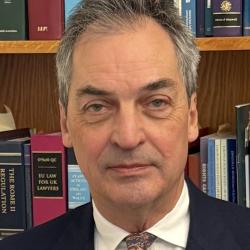
Sir Mark Warby is a judge of the Court of Appeal of England and Wales. In that role he is the supervising Lord Justice for defamation and media cases. He has given leading judgments in some notable defamation cases, such as Banks v Cadwalladr, Dyson v Channel Four, Iqbal v Geo TV and Blake v Fox as well as data protection cases such as R (Open Rights Group) v SSHD, R (Delo) v Information Commissioner and Farley v Paymaster.
From 2014-2021 Sir Mark was a High Court Judge, trying civil cases as well as homicide and other serious crime in the Crown Court. From 2017-2021 he was Judge in Charge of the High Court’s Media and Communications List. His notable High Court decisions include Lachaux v Independent Print, NT1 v Google, Lloyd v Google and Duchess of Sussex v Associated Newspapers.
Before joining the judiciary Sir Mark was a barrister in private practice, and from 2002 a QC, specialising in media and sports law and head of chambers at 5RB, the leading set. He has written and spoken extensively on media law topics. He was a contributor to and co-editor of the first three editions of the leading practitioner text, The Law of Privacy and the Media (Oxford University Press), a contributor to Blackstone’s Guide to the Defamation Act 2013, and Sport and The Law.
Preliminary Rounds Judges
A B M Imdadul Haque Khan is the Dean of the School of Law at Eastern University and an Advocate of the Appellate Division of the Supreme Court of Bangladesh. With over 15 years of legal experience and more than a decade in legal academia, he teaches International Human Rights Law and works extensively in constitutional law, corporate law, labour law, and human rights practice.
He has represented the Bangladesh Election Commission in constitutional and election-related matters, including cases involving freedom of expression, dual citizenship, and corporate loan default disputes. Mr. Khan also serves as a Country Legal Advisor for several INGOs and NGOs, including ActionAid Bangladesh, Islamic Relief Bangladesh, Danish Refugee Council, Norwegian Refugee Council, Justice and Care, and Qatar Charity, focusing on human rights, safeguarding, labour compliance, and institutional policy reform.
At the international level, he works as an International Consultant/Legal Expert with the United Nations Office on Drugs and Crime (UNODC) on maritime law enforcement training, environmental crime assessment, drug trafficking analysis, and mutual legal assistance across South Asia. He has coached Bangladesh teams in major international moot court competitions, including the Jessup International Law Moot Court Competition, Price Media Law Moot, Henry Dunant Moot, Stetson Environmental Moot, and Asia Cup Moot. He has also published 26 research articles on international law and constitutional issues.
Abdelrahman Yacoub is a Judge at the Egyptian Council of State and a lecturer and researcher in law. He brings over a decade of experience in mooting, where he appeared in different capacities. Most notably, he is the co-founder of Ain Shams University's Moot Court Model, the British University in Egypt (BUE)'s Information Technology Law Moot Court Competition—regional Middle East and Africa competition— as well as its Debate Society. Abdelrahman is co-founder and director of the Moot Court Unit at the BUE: an establishment of a unique nature whose mission was to promote mooting as a learning method in law that complements traditional curricular activities with the missing practical aspects of legal education.
Adriana Minovic is a lawyer specialized in data protection and AI compliance, currently holding a position of Director of Data Protection and AI Compliance in Clinical Research Organization (Life Science Sector) Adriana is an ex moot participant in 2012, and also judge last year and in 2019.
Adriana Winkelmeier works at the Department of Innovation and Digitalisation in Law at the University of Vienna. Her research explores the regulation of digital platforms, artificial intelligence, media law, and data protection, with a strong focus on how emerging technologies challenge traditional legal frameworks. She studied law at the University of Vienna and Stockholm University. She has been closely associated with the Price Media Law Moot Court for several years through her previous role as a coach. Adriana is a regular speaker at international conferences and an active legal scholar, contributing to debates in her field.
Ahmed F. Khalifa is an Assistant Professor of Law at Ain Shams University, Cairo, Egypt. Since 2014, he serves as the Deputy Secretary General of the International Association of Penal Law. Dr. Khalifa is the coordinator of the Middle East Rounds of Oxford Price Media Moot Court Competition.
Dr. Khalifa is an expert consultant with the ICRC in the MENA region, and he serves also as a consultant with several international organizations including the United Nations Office on Drugs and Crime (UNODC) in the MENA Region and the United Nations Children’s Fund (Unicef). Previously, he served as a full time in-house legal consultant with the United Nations Interregional Crime and Justice Research Institute (UNICRI), Torino, Italy.
Dr. Khalifa obtained his Phd in International Criminal Law from Poitiers University in France after finishing his LLM focusing on International Human Rights Law from Temple University, USA. His areas of research covers international criminal law, international humanitarian law and International human rights law.
Ahmed Rashwan works as a Senior Public Prosecutor at the Egyptian Public Prosecution. He is a former participant in the Price Media Law Moot Court and has been active in its community for a number of years. Rashwan is currently pursuing a Master of Arts in Philosophy at the American University in Cairo and holds an LL.B. from Ain Shams University in Cairo, as well as an LL.M. from the University of Cambridge. His academic and professional interests span constitutional law and theory, jurisprudence, public law, criminal law, and human rights law.
Aileen Editha is a Lecturer at Oxford Brookes University and PhD candidate at Queen's University in Canada, where she was a Robert Sutherland Fellow in Law and a Graduate Inclusivity Fellow. Aileen’s research interests are in health law, medical ethics, and critical legal theory, specifically on how current and future health policies affect racialized and ethnic minority communities.
Alex Willingham is a practising in-house Commercial Lawyer. He holds an undergraduate LLB degree and an LLM in Commercial and Corporate Law from Queen Mary, University of London which focused heavily on Media and Privacy Law. He was a member of the Queen Mary, University of London, Semi-Finalist team at the Monroe E. Price Media Law Moot Court Competition International Rounds ten years ago and has been a Judge in the competition since then.
Aly AbdelBary is a public prosecutor at the Egyptian Public Prosecution Office. He previously served as a teaching assistant of public international law at Ain Shams University, where he taught public international law and the law of international organizations. His professional experience includes work within the United Nations system as a research assistant at the International Law Commission and as a part-time consultant at the UN Institute for Disarmament Research (UNIDIR). He has regularly served as a judge in the International Rounds of the Price Media Law Moot Court Competition since 2019. Aly holds a Master of Laws (LL.M.) in International Humanitarian Law and Human Rights from the Geneva Academy and a Bachelor of Laws (LL.B.) from Ain Shams University. His research interests focus on international humanitarian law, international criminal law, and human rights law.
Anne Schäfer holds a German law degree (Erstes Juristisches Staatsexamen) with a specialization in Public International Law and International Human Rights Law. She studied at Humboldt University of Berlin, Trinity College Dublin, and Korea University. During her studies, she worked as a research assistant under Prof. Dr. Bachmann (LL.M. Michigan), where her research focused on civil and corporate law.
Since 2021, she has been teaching seminar-style classes in first- and second-year criminal law at Humboldt University of Berlin, supervising approximately 60 students per semester. Professionally, she currently works as a research assistant in the Foreign Trade Law team at Baker McKenzie in Berlin. In this role, she assists with advising on international sanctions, export controls, foreign investment screening, and business-and-human-rights compliance, including matters related to the EU Green Deal and the German Supply Chain Due Diligence Act. Her work places her at the intersection of international economic law, human rights protection, and comparative regulatory regimes.
She is fluent in German, English, and Spanish, with conversational proficiency in French and Korean, and has lived in multiple countries across Europe, Latin America, Africa, and Asia. She is also a former participant in the Price Moot Court Competition (2020/21) and was a member of the Humboldt University of Berlin team, which remains the most successful German team in the history of the competition.
Batoul Alanany is a Ph.D. candidate and practitioner qualified in French, European, and common-law systems, specializing in intellectual property, technology, and media law. She serves as a Lecturer at Université Paris 1 Panthéon-Sorbonne and as Legal Counsel at Partoo, a leading European SaaS company, where she advises on Intellectual Property matters, digital regulation, data protection, and AI governance. Her professional and academic work is grounded in a comparative approach, enriched by experience in international arbitration, media and freedom of expression law, and the legal architecture of the modern information society.
Clive Baldwin is the Senior Legal Advisor at Human Rights Watch, part of the team overseeing the organisation's work on international human rights law, international criminal law and international humanitarian law. He is the author of HRW's report on US and UK crimes against the Chagossian people.
Diana Kostina is an experienced tech regulatory professional working as a solicitor at the UK's data protection regulator, the Information Commissioner's Office. Previously, she worked in private practice in London and at an NGO specializing in European Court of Human Rights.
Diana Pysarenko is a Private Equity Associate at CMS | LSE graduate | Chevening Scholar
Elena Abrusci is a Senior Lecturer in Law at Brunel University of London. Her research focuses on regional human rights systems and on the impact of technology on human rights, with a particular focus on disinformation, hate speech and content moderation. She's the co-convener of the Interest Group on International Human Rights Law of the European Society of International Law and the co-leader of the research group on Human Rights, Society and Arts at Brunel University of London. Dr Abrusci served as a Policy Advisor on digital regulation for the UK government and provided consultancy for public and private actors on human rights compliance in the digital sector. She's the author of 'Judicial Convergence and Fragmentation in International Human Rights Law' (CUP, 2023).
Eliza Bechtold is the Programmes Manager and a Research Fellow at the Bonavero Institute of Human Rights, and a member of the Law Faculty at the University of Oxford. She researches in the area of freedom of expression.
Eslam Soliman is a Pre-Trial Judge (Judge-Rapporteur) at the Egyptian Council of State and is currently on leave to pursue the Advanced LL.M. in International and European Public Law at KU Leuven in Belgium (Academic Year 2025/2026). With over ten years of professional and academic experience in public law, he has previously served as a Research Fellow at the Max Planck Foundation for International Peace and the Rule of Law in Germany, a Prosecutor at the Egyptian Public Prosecution, and an Assistant Lecturer of Public Law at Mansoura University in Egypt.
He holds an LL.B. (First in Class with Honors) from Mansoura University’s Program of Legal Studies in the English Language, two Graduate Diplomas in Public Law and Administrative Sciences from Mansoura University, and a Graduate Diploma in Public Policy from the American University in Cairo.
He is a member of the Editorial Team of Constitutional Studies, a peer-reviewed journal published by the International Association of Constitutional Law and e-hosted by the University of Texas at Austin, and of the Yearbook of Antitrust and Regulatory Studies, a peer-reviewed journal published by the Centre for Antitrust and Regulatory Studies at the University of Warsaw.
Fatemeh Dabestani I have always been deeply interested in the field of human rights. I obtained a Master’s degree in European and Human Rights Law from Panthéon-Sorbonne University. Since then, I have been working as a paralegal in a French law firm, Sangue Roman, where I have gained valuable and enriching professional experience while continuously developing and refining my legal skills.
Gavin Phillipson has published widely in leading journals in the UK, US, Canada and Australia on issues and is co-author of Media Freedom under the UK Human Rights Act (2006, OUP), with Helen Fenwick. His work on privacy, freedom of speech and horizontality has been cited in judgments by the High Court, Court of Appeal and House of Lords in the UK, and by the New Zealand Court of Appeal and the Canadian Supreme Court. He has given oral and written evidence to multiple committees of the UK Parliament, was an Academic Parliamentary Fellow working in the House of Commons Library, and has participated in working groups for both the Ministry of Justice and Home Office on reform of the law relating to freedom of speech.
Gayatri Malhotra is currently reading for the Bachelor of Civil Law (BCL) at the University of Oxford. Before the BCL, she practiced law in India for three years and served as Litigation Counsel at the Internet Freedom Foundation. In this role, she appeared in landmark cases before various High Courts and the Supreme Court of India on issues relating to freedom of speech, internet shutdowns, online censorship, platform accountability, and the right to privacy.
Beyond litigation, Gayatri has been actively involved in policy advocacy on technology regulation and fundamental rights. Her work includes contributing to legislative consultations, drafting policy submissions on digital rights, and authoring reports presented to United Nations bodies.
Gemma Horton is an Impact Fellow for the Centre for Freedom of the Media in the School of Information, Journalism and Communication at the University of Sheffield. She researches on issues surrounding human rights, specifically how the law is being used to silence media freedom.
Gill Phillips is a freelance editorial legal consultant. She was the Guardian's director of editorial legal services between 2009 and 2023, during which time she advised on major investigations such as Wikileaks, Edward Snowden, phone hacking, the Panama, Paradise and Pandora Papers and the Uber Files. Before joining the Guardian, Gill was an in-house lawyer at the BBC and Times Newspapers. She is a visiting lecturer on the Journalism MA at City St Georges, University of London and co-editor of McNae's Essential Law for Journalists.
Gogisetti Venkata Narasimha Rao holds a doctorate in International investment law from the Osmania University, Hyderabad, Telangana, India, along with a masters degree in International law and constitutional law from University of Madras, India. They worked in the Bank of Baroda for more than 20 years as manager (Law), Senior Manager (law), Chief Manager (Law) & Assistant General Manager (Law). Gogisetti is Professor of Law in NIRMA Institute of Law and Gujrat Maritime Law and currently serving as a Professor of Law in NIRMA Institute of Law, NIRMA University.
Hawley Johnson is the Associate Director of Columbia Global Freedom of Expression. Since 2014, she has led the development of the Global Case Law Database, which features analyses of landmark freedom of expression rulings from over 130 countries. She regularly serves as a judge for the Price Media Law Moot Court and supports the MENA regional rounds organized by Ain Shams Law School in Cairo, Egypt. Her research focuses on disinformation, hate speech, and platform regulation.
Ibrahim Sabra is a legal expert in AI governance, platform regulation, and human rights. As a Research Associate at the University of Vienna’s Department of Innovation and Digitalisation in Law, Ibrahim focuses on the implementation of EU digital regulation, specifically the GDPR and the AI Act, specialising in compliance and fundamental rights impact assessments. He has engaged in research and policy initiatives with leading intellectual hubs, including Columbia’s Global Freedom of Expression, Harvard’s Berkman Klein Center, Oxford’s Media Policy Summer Institute, and Strathmore’s Centre for IP & IT Law. Ibrahim’s industry experience includes evaluating AI governance frameworks and prototype agentic AI systems in collaboration with the Stimson Center, Microsoft’s Responsible AI Office, and Meta.
Ilaria Fevola is an international human rights lawyer with a decade of experience in freedom of expression, media freedom, and access to information. She currently serves as Programme Officer at the Netherlands Helsinki Committee, where she leads EU-funded initiatives focused on strengthening the rule of law, supporting civil society, and enhancing resilience against disinformation across Europe and the Eastern Partnership region.
Previously, Ilaria worked with ARTICLE 19’s Law & Policy team in London, contributing to advocacy and standard-setting efforts on transparency, media and digital rights. Her work has included advancing legal and policy responses to Strategic Lawsuits Against Public Participation (SLAPPs) and analysing the impact of emerging technologies on journalists and civic actors.
She holds an LL.M. in International Human Rights Law from University College London (UCL) and a Juris Doctor in International and European Law from the University of Turin. She regularly engages in research, litigation support, and public speaking on media law and human rights.
Inioluwa Longe is a Commonwealth-trained lawyer, policy and public affairs professional, and doctoral researcher in Social Policy, with expertise in Gender, Health, and Technology policy. She is passionate about digital education and using technology to address violence against women and girls in marginalised communities. Her work spans policy development, legislative processes, stakeholder engagement, and public affairs. She has contributed to academic research on online safety and digital rights and authored a chapter in the African Book on Women and Cyberrights in Africa, focusing on digital technologies and intimate partner violence in Nigeria.
Iona Bonaventura is a UK Government civil servant with experience working on media-related legislation in the Ministry of Justice. She qualified as a solicitor in 2022 after completing a traineeship in the Government Legal Service for Scotland.
Jesse Bachir is a legal and political theorist whose primary research area is on the philosophy of freedom. He uses this lens to examine free expression jurisprudence, with special interest in hate speech laws. His most recent forthcoming work focuses on the First Amendment and deepfakes.
Jesse has held positions at Durham Law School, UCL Laws, University of Birmingham, and Aston Law School.
Joseph Aristotle has over 27 years of legal practice, including 20 years of exclusive practice in the Supreme Court of India. He has appeared in about 350 reported cases, including landmark Constitution Bench matters, contributing to binding precedents that continue to shape Indian jurisprudence. He is: Senior Advocate, Supreme Court of India | Former Standing Counsel, State Of Tamil Nadu | Former Secretary, Supreme Court Advocate On Record Association | Former Standing Counsel, State Of Karnataka | Advocate On Record, Supreme Court Of India.
Júlia Barreto Reis is a Brazilian lawyer and legal researcher specializing in international criminal law and humanitarian law. She holds a Bachelor of Laws from Universidade de São Paulo and a Licence en Droit from Université Jean Moulin Lyon 3. Julia works as a Legal Fellow at the international NGO Legal Action Worldwide, focusing on giving legal assistance to humanitarian workers. She is currently pursuing a Master in International Law (second year) at the Geneva Graduate Institute on a full scholarship, where she is also developing her master’s thesis on special intent, genocide, and the role of hate and hate speech in proving intent. She contributed as a Legal Researcher at the Geneva Academy to the IHL in Focus Report 2024/2025.
Julia attended summer courses on public and private international law at The Hague Academy and at Harvard University, focusing on international law, human rights, and international relations. Julia has also actively participated in various moot courts, including the Price Media Law Moot Court Competition, as an oralist, researcher, and coach, earning multiple awards
Juliana Mota is a lecturer in Law at the University of Kent. Prior to joining Kent, she was a Digital Policy Postdoctoral Researcher at the Center for Socio-Legal Studies of the University of Oxford, where she researched fact-checking in the age of algorithms. She conducted her DPhil (PhD) research at the University of Oxford, focusing on data protection and privacy rights. Juliana is a qualified lawyer in Brazil and holds an LLM degree from the University of Cambridge.
Kacper Kryk is a DPhil Candidate at Magdalen College, Oxford. His doctorate examines judicial reasoning in the context of scarce resources and austerity in administrative law. Aside from research, he teaches revision and legal skills classes to undergraduate students at St Hilda's College, Oxford.
Kacper previously completed the BA (First Class) and BCL (Distinction) at Oxford, winning various Faculty prizes for performance in examinations. As an undergraduate, he was champion of multiple mooting competitions and won several prizes for oral and written advocacy.
Kenneth Lenox Sseguya is Manager of Legal Compliance & Enforcement at the Uganda Communications Commission (UCC) in Uganda. The UCC is the Government body responsible for the regulation, control, supervision & licensing of all communication platforms (TV, radio, courier, telecom & internet service providers) in Uganda. He holds a Masters’ Degree in Law (Commercial & Corporate) from the London School of Economics & Political Science in the UK (2017), and a Bachelors’ Degree in Law (first class) from Makerere University, Kampala-Uganda. Kenneth has attended several professional courses from the International Law Institute - Washington DC, University of Florida-USA, and at the Florence School of Regulation in Italy. He has previously competed at several Moots, including the All-Africa Human Rights Moot Court Competition at the University of Western Cape in South Africa (2013), and at the Price Media Law Moot Court competition (both at the regional rounds in Nairobi-Kenya and international rounds at the University of Oxford in 2014). Kenneth has also participated as Judge at several Moot competitions.
Lara Ibrahim is a DPhil in Law student at the Faculty of Law and the recipient of the Faculty's BAME DPhil in Law Scholarship in conjunction with Oriel College. Her main research interests are in Public International Law, looking specifically at extraterritorial human rights obligations of States in relation to environmental harm and climate change. She is a former Judicial Fellow at the International Court of Justice.
Lautaro Furfaro is a senior legal researcher at Columbia Global Freedom of Expression. He is an international lawyer specializing in International Human Rights Law and International Law. He holds a Master of Laws in International Legal Studies from New York University Law School (2022), where he received the convocation award “Public Interest Law Prize” for demonstrating a clear commitment to public service and significant causes of public interest. He is a lawyer (J.D.) who graduated with honors from the University of Buenos Aires School of Law, specializing in International Law.
Lautaro is currently an Adjunct Professor at the University of Buenos Aires School of Law, where he teaches International Human Rights Law. He is also co-Professor in the course Philosophical Foundations of Human Rights in the Master of International Human Rights Law at the University of Buenos Aires. Furthermore, he is an Assistant Professor of International Law in the foreign relations program at the Universidad Torcuato Di Tella.
He is the Academic Coordinator of the online Equality and Non-Discrimination certification at the University of Buenos Aires and the Academic Coordinator of the teams representing the University of Buenos Aires in the Inter-American Human Rights Competition at American University’s Washington College of Law.
Lautaro has previously worked at the International Law Commission of the United Nations, was a Human Rights Scholar at the Human Rights Center and Global Justice at New York University, a law clerk in domestic public law courts in Argentina, and a Fulbright scholar in the United States. He was a recipient of the Arthur T. Vanderbilt Merit Scholarship for a Master’s Degree at New York University and was Director in Chief of the journal “Lecciones y Ensayos” at the Law School of the University of Buenos Aires.
He conducts numerous research projects related to human rights and international law, and has authored several publications
Lawrence McNamara is a lawyer at the Law Commission of England and Wales, where he is working on the Commission's contempt of court project. He was previously an academic in UK and Australian universities and Deputy Director of the Bingham Centre for the Rule of Law. He has published and presented widely on a range of media law issues, including defamation and the ways that counter-terrorism laws affect the media.
Leo Lee is a doctoral candidate and research associate at the Chair of Civil Law with a focus on Common Law at the University of Hamburg. His research examines personality rights in the context of social media, with a particular emphasis on comparative legal analysis between Civil and Common law. In addition to his research, Leo teaches private and administrative law at the University of Hamburg to undergraduate law students, as well as to future civil servants at the Federal University of Public Administration in Berlin. In 2019, he participated in the international rounds for Humboldt University Berlin, and in 2020, he coached the runner-up team in the European regional rounds, also for Humboldt University. Since 2025, Leo has served as a judge at the national and international Rounds for Price.
Lindsay Saligman holds a J.D. from the University of Chicago and a B.A. from Columbia University. She has passed the New York Bar and is currently an Advocacy Fellow at Human Rights Watch, where she works to advance rights–based approaches to foreign and domestic policy, including on freedom of expression and the right to protest. At the University of Chicago, she served as President of the International Law Society, and as Executive Online Editor of the Chicago Journal of International Law, which has published her comment on Inter-country Adoption. She is fluent in Russian and Spanish; proficient in Persian, French, and Hindi; and conversational in Mandarin and Arabic.
Luka Martin Tomažič is an Associate Professor and Vice-Rector for Research at Alma Mater Europaea University, a full member and Vice-President of the Slovenian Academy of Legal Sciences, a Lead Researcher at the Global Peace Offensive Center of the World Academy of Art and Science, and a Case Writer for Columbia Global Freedom of Expression.
He has served on the Slovenian National Council on Ethics and Integrity in Research and as an expert for the Constitutional Commission of the Slovenian Parliament. He was a research assistant to Ernest Petrič, former President of the UN International Law Commission, and a visiting researcher at the University of Zagreb. In 2023 and 2024, the IusInfo portal named him among Slovenia’s top ten most influential lawyers.
Lynn Pype is a lawyer at the Brussels Bar and work for the law firm Timelex, a firm specialised in IP/IT and media-related matters. I have regularly been involved in media law cases related to unlawful publications, the protection of the free press, the protection of private life, or the protection of journalistic sources. I am also a guest lecturer at AP College in Antwerp, where I teach classes on journalistic deontology.
Mahmoud Ezzat is an Associate at Matouk Bassiouny & Hennawy, one of Egypt's leading law firms, and a Teaching Assistant at the Faculty of Law, Ain Shams University. He advises on M&A transactions, venture capital investments, FinTech and financial services regulatory frameworks across the MENA region. Mahmoud holds an LLB (Ranked 2nd, Class of 2022 — Excellent with 97.5%) and an LLM in Private Law and International Trade Law, both from Ain Shams University. A former international rounds finalist in the Monroe E. Price Media Law Oxford Moot Court Competition and a national runner-up in the ICRC International Humanitarian Law Moot Court, and regularly engages in academic and professional initiatives related to media, technology, and international law.
Mariam Aboelmagd is an Egyptian academic and lawyer, specialising in International law. Mariam has participated in the Price Moot in different capacities over the past eight years, and she now heads the Moot Court Unit at The British University in Egypt. Mariam has a dual undergraduate degree in law from The British University in Egypt and London South Bank University, and she also holds two LLM degrees from the University of Cambridge and Ain Shams University. Since her undergraduate graduation in 2021, she has assumed different roles at the British University in Egypt, including teaching, administrative and leadership positions. During her time in Cambridge, Mariam founded the University of Cambridge Egyptian Society, and worked as an editor of the Cambridge International Law Journal (CILJ).
Mariana Scolaro is an international human rights lawyer and international affairs professional from Venezuela, with over a decade of experience spanning strategic litigation before the Inter-American and Universal Human Rights protection systems, interdisciplinary research, and the design and implementation of monitoring, evaluation, and learning (MEL) frameworks for international development programmes. Her work also includes policy analysis and multilateral engagement across the Americas, Europe, and sub-Saharan Africa, with demonstrated experience coordinating comparative legal research, and translating complex legal findings into policy-relevant analysis, and supporting donor coordination, and cooperation with multilateral institutions, governments, and civil-society partners.
Since February 2026, she joined Un Ponte Per as a Visiting Professional dedicated to the Shelter City Rome – a programme that offers human rights defenders at risk a space for rest, safety, and re-energising, as well as opportunities to strengthen their networks, wellbeing, and advocacy capacities while in temporary relocation.
From 2022 to March 2025, Mariana served as Human Rights Officer at the British Embassy in Caracas, where she led analysis and reporting on the human rights situation in Venezuela, informing both Embassy strategy and policy decisions in London, including contributions to statements before the UN Human Rights Council. In this role, she also designed and managed the Embassy’s human rights and rule-of-law programming, operating within a highly restricted civic-space environment.
Mariana has developed strong expertise in civil and political rights, with particular focus on civic space, political persecution and discrimination, LGBTQIA+ rights, and sexual and reproductive health rights. As a long-standing advocate of legal education and skills-building, she has participated in moot court competitions as both an oralist and coach, and continues to contribute through mentorship and volunteer judging.
She holds a Master of Laws (LL.M.) in International Human Rights Law from the Northwestern Pritzker School of Law in Chicago (Honours) and a Law Degree from the Universidad Católica Andrés Bello in Caracas (Cum Laude).
Marija Jovanovic is a human rights lawyer with a research interest in modern slavery and human trafficking, business and human rights, labour rights, migration and refugee law, and regional human rights regimes. She holds DPhil, MPhil, and Magister Juris degrees from the University of Oxford, and a law degree from Serbia.
Marija is currently a Research Fellow in Business and Human Rights at the Bonavero Institute of Human Rights, and a Co-Investigator on behalf of the Bonavero Institute to the AHRC-funded Modern Slavery and Human Rights Policy and Evidence Centre. She also holds a Senior Lectureship at the Essex Law School. She previously held a Research Fellowship at the Centre for International Law, the National University of Singapore, and a Lectureship in Law in Serbia.
She is the author of State Responsibility for ‘Modern Slavery’ in Human Rights Law (Oxford University Press, 2023) and her recent work has focused on the compatibility of the UK’s immigration legislation with its human rights obligations towards victims of modern slavery, the experiences of modern slavery survivors in the UK prisons, and the issue of child criminal exploitation in the UK. Marija is currently working on the programme of research that focuses on labour exploitation including the ways in which states approach this issue both domestically and through supply chain regulation.
Marija’s academic work seeks to contribute to both theory and practice of human rights law and is policy-oriented and impact-driven. Her legal consulting roles include collaborations with prominent international and civil society organisations in the human rights field.
Matthew Nuding is an associate in the Data & Technology team at Mason Hayes & Curran. Based in London, he advises leading technology companies on regulatory investigations and product counselling across data protection, privacy, AI and cybersecurity law. Matthew supports clients through all phases of regulatory engagement, including contentious matters. He regularly assists clients in navigating compliance with the GDPR, AI Act, NIS2, DORA, Cyber Resilience Act, Data Act, Data Governance Act, Digital Services Act and the UK’s Online Safety Act.
Matthew previous completed a legal secondment at the UK data protection regulator, the Information Commissioner’s Office (ICO). Matthew also worked at the Organisation for Economic Co-operation and Development (OECD) in Paris, where he advised member governments on privacy, AI and cybersecurity policy. Matthew regularly writes and speaks on developments in EU and UK technology regulation.
Matthew holds a Masters in Law degree from New York University School of Law and Bachelor in Law and Political Science from Trinity College Dublin.
Michael Patchett-Joyce is a barrister, arbitrator and mediator.
He practises in the courts of England & Wales and in international commercial courts, especially in the Gulf. He regularly acts as arbitrator in international commercial arbitrations. He is a long-standing CEDR-accredited mediator. He is a member of the International Court of the Organisation of Islamic Cooperation Arbitration Centre (OIC-AC, Istanbul) and of the International Advisory Committee of the Saudi Center for Commercial Arbitration (SCCA, Riyadh). He has published book chapters and many articles on legal topics and is a frequent and sought-after speaker at international law conferences and seminars. He is passionate about the value of legal education, particularly through moots. He has been instrumental in promoting the Willem C Vis International Commercial Arbitration Moot (the Vis Moot) in the Middle East for more than 15 years. He has acted as moot judge in Jessup moots and the FDI moot. He has just returned from being a moot arbitrator (general and elimination rounds) at the 33rd Vis Moot in Vienna.
Michael Skrein is a partner in Reed Smith's Entertainment and Media Industry Group. He leads the firm’s Responsible Business programme, EMEA. His practice is mainly in litigation, but he also advises about conflict and potential conflict situations, including crisis scenarios. Michael specialises in intellectual property and media law and in public and regulatory law, both domestic and international.Michael has a very broad and notably international practice, including advertising, aviation, insurance, leisure and travel. He has considerable experience of multi-jurisdictional disputes and is well used to the role of lead lawyer for clients in countries other than England. Michael is also part of the firm’s global environmental, social and governance (ESG) practice. Michael has been consulted over the formulation of statutory tribunal codes and made submissions concerning parliamentary drafting and law reform in the UK and abroad.
Milena Cotrim Novaes Rodrigues Silva is a Master’s candidate in International Law at the Geneva Graduate Institute, specializing in International Human Rights Law, Migration, and International Humanitarian Law. I have participated in international moot court competitions and served as a judge in the Nelson Mandela World Human Rights Moot Court. In 2023, I assisted in the organization of the Philip C. Jessup International Law Moot Court Competition during the international rounds. My professional and volunteer experience also includes work with UNHCR governance processes and legal practice in Brazil, with a focus on civil litigation, environmental law, and criminal justice. My academic interests center on forced migration, environmental displacement, non-refoulement, and international responsibility, and I have published research in peer-reviewed journals. I work in Portuguese, English and French.
Milica Janačković is an employment policy expert and legal researcher based in Serbia. She is a graduate of the Faculty of Law, University of Belgrade, specializing in International Law, and has over a decade of experience in legislative reform and EU-aligned policy frameworks. Her professional work includes integrating data protection principles into policy monitoring tools and leveraging digital solutions to improve transparency, accountability, and efficiency in public service delivery.
A proud alumna of the Monroe E. Price Media Law Moot Court Competition, Milica was a member of the Serbian debut team in 2011, which won First Place in the Oral Rounds and the Award for Best Written Memorials.
Mohab Said holds an LL.M. from the University of Hamburg and works at the intersection of law, economics, and international business structuring. He has extensive experience in establishing offshore structures and advising on regulatory and governance frameworks within international financial centres. He has also worked with Juristax Group in Mauritius on cross-border structuring and international corporate solutions.
In addition to his professional practice, Mohab teaches Media Behavioral Economics and policy at MSA University, bringing an interdisciplinary perspective that integrates legal reasoning, economic analysis, and institutional design. He is honored to serve as a judge at the Oxford Moot Court Competition.
Nour Gabr participated as an organizer in the Middle East rounds the past two years. Nour holds a Masters in International Law from Liverpool John Moores University and currently works as an Associate in a law firm based in Egypt.
Paolo Cavaliere is a Senior Lecturer in Digital Media and IT Law at the University of Edinburgh Law School, where he teaches courses on media law, freedom of expression, and digital human rights at both undergraduate and postgraduate levels.
From 2022 to 2025 he co-directed SCRIPT, a law and technology research centre based within the University of Edinburgh School of Law, and since 2014 he has been a Research Associate at the University of Oxford’s Programme in Comparative Media Law and Policy.
Alongside his academic work, he regularly provides expertise on media law and human rights to a range of NGOs and international organisations, including the Council of Europe and the OSCE.
Petar Radosavljev is a Intellectual property lawyer practicing in Serbia, with international experience in trademark and copyright issues. I am an alumni of Price Media law moot and was part of the overall winning team, as well as the winner for written memorials for the year 2011. I have been marking memorials for this moot competition for the last 9 years and judged of regional rounds for this period.
Peter Carter KC advises individuals, NGOs, companies and governments on matters of domestic and international criminal and humanitarian law, in particular human trafficking and terrorism. He has appeared before the Inter-American Court of Human Rights, the UN Human Rights Council and the EU Social Justice Committee. He has taught advocacy in several jurisdictions, including at the ICC.
Prashanta Bhushon Barua is educated and trained in the UK and Bangladesh and currently practising in both jurisdiction. He has been serving price moot as judge in regional and international rounds since 2011. Alongside Price, Mr. Barua served Jessup, Oxford IV, Cambridge IV, Worlds Universities Debating Championship and several regional and national rounds in Asia, Africa and the Europe. A media and human rights lawyer for two decades, Mr. Barua's practising expertise and experience includes Constitutional law, corporate law, arbitration & mediation- he is also a member with CIArb. Barrister Barua is also a guest professorial faculty in several Asian, African, Middle Eastern higher institutions. He is currently serving Commonwealth Legal Education ( CLEA), as Asian Co- Vice President.
Raquel Soto Sanchez is a young professional qualified lawyer in Mexico and researcher with a high sense of learnability, multidisciplinary research experience, problem-solving, decision-making, and negotiation with professionals of different backgrounds and nationalities in a multicultural scenario. Attention to detail and excellent interpersonal skills. Authored the book “The Right of Innocent Passage in Mexico” (in Spanish), published in 2015 by the Legal Research Institute of the National Autonomous University of Mexico (UNAM). Since 2024, Academic Advisor at the Master of Laws by research Degree Program of the Postgraduate Studies Division of the Faculty of Law at UNAM.
Richard Danbury teaches journalism and is an academic lawyer. He practiced — briefly — as a criminal barrister before joining the BBC, where he worked for about a decade specializing in interviews and investigations, winning awards for his work. He now runs an MA in investigative journalism at City, University of London, and has consulted internationally on the teaching of both media law and investigative journalism for a variety of NGOs. He is an expert at Columbia University’s Global Freedom of Expression project, has coordinated Channel 4’s investigative journalism training scheme, and has been the BBC’s Advanced Law trainer. He is a member of the Scott Trust Review Panel, the organization that deals with editorial complaints in relation to the Guardian’s content. His doctorate in media law is from Oxford University, and his post-doctoral research into copyright and news was at Cambridge.
Ricki-Lee Gerbrandt is an experienced international lawyer and legal scholar. She is currently Fellow in Law & Platform Governance at University College London's Digital Speech Lab. Her scholarly work concerns platform governance, the regulation of social media, digital freedom & digital safety, and media freedom. An experienced barrister, Ricki-Lee recently represented a global social media platform in a novel intermediary liability case, the Canadian Broadcasting Corporation in defamation, SLAPP-suit, and publication ban cases, and successfully represented the leading Canadian ISPs and telecoms in a constitutional challenge concerning telecommunications regulation, which won a national case impact award. She regularly provides advice to government departments, corporations, and individuals concerning access to information and freedom of expression matters.
Sava Pavlović is a partner at Živković Samardžić and is heading the Corporate/M&A, Banking& Finance, and Capital Markets Practice Group. Sava has vast experience in corporate, banking & finance transactions, as well as in venture capital and regulatory matters. His track record includes some of the most valuable, complex, and significant transactions on the Serbian market in the last ten years.
By merging his legal skills gained in traditional industries and legal fields with a deep understanding of media and tech businesses, Sava has become one of the pioneers in the local market with expertise in tech, blockchain, and e-commerce matters, as well as in providing legal support to start-ups, their founders and investors, through all stages of the company lifecycle, from angel/seed stage funding through to the exit.
Scarlett Swain is an Assistant Professor of Law at Northeastern University. Her research specialisms include Intellectual Property Law and Constitutional Law. Her teaching experience includes serving as LLB module leader and judge for an undergraduates with assessments in mooting and skeleton arguments
Shagun Kanodia is an Advanced LL.M. candidate in Public International Law at Leiden University. She serves as an assistant editor at the International Organization Law Review and as a research assistant at the Kalshoven Gieskes Forum, IHL Clinic at Leiden University. She has previously worked as a research assistant to the United Nations International Law Commission under Prof. (Dr.) Bimal Patel on State succession with respect to State responsibility. Shagun received distinction in Media Law and Human Rights during her Bachelor of Laws at Hidayatullah National Law University. An avid mooting enthusiast, she has participated in several moot court competitions, including the 13th Nelson Mandela World Human Rights Moot Court Competition, the 9th IBA ICC Moot Court Competition, and the 66th Philip C. Jessup International Law Moot Court Competition. She has also assisted in judging the 15th Nelson Mandela World Human Rights Moot Court Competition at the United Nations. In 2024, she was awarded the Swiss Foundation Scholarship to attend the Lucerne Academy for Human Rights Implementation.
Simona Veleva is a lawyer and a PhD in the field of Constitutional law. She is currently holding the position of President of the Council for electronic media – the Bulgarian media regulator. The focus of her work is the constitutional law, right to freedom of expression, human rights in the digital sphere, copyright, media law and ethics, data protection. Simona is an expert with the Centre for Freedom and Media. She also contributes to the data base of Global Freedom of Expression at Columbia University. Simona teaches Media Law and Ethics, Human Rights, Intellectual Property Law and Introduction to Constitutional Law at the American University in Bulgaria. She participates in numerous working groups, related to the transposition of the EU legislation in the field of media and media regulation in Bulgaria. She is also a member of the newly found Media Board under the European Media Freedom Act.
Chen Siyuan is one of the associate deans at SMU Yong Pung How School of Law. He has more than 150 publications, including texts and articles regularly cited by the Singapore courts. As Director of Moots he has overseen teams that have won the Jessup, Vis East, ICC, Price, Frankfurt, and Lachs competitions.
Smita Shah is the Legal Adviser to the Chancellor of the High Court, at the Judicial Office. She is a barrister and door tenant at Garden Court Chambers, London where she practised family law, human rights and humanitarian law for over 10 years.
Taras Shevchenko is a founder and development director of Centre for Democracy and Rule of Law - lead organization in Ukraine in Media, Civil Society and Rule of Law reforms in Ukraine. He has more that 20 years of experience in media law area including drafting legislation, lecturing and litigation. He served as a Deputy Minister at the Ministry of Culture and Information Policy of Ukraine from 2020 to 2024. As a Deputy Minister was responsible for drafting Information Security Strategy of Ukraine, creating Centre for Strategic Communication and Information Security and also for launching ministerial project in Media Literacy Filter.
Tatiana Zubareva Tatiana is a London-based product and regulatory lawyer at a gaming company, working at the intersection of technology, regulation, and user experience. She has extensive experience in EU data protection and technology regulation, with a focus on embedding a lawful, responsible, and human-rights-aware approach into digital products and services.
Earlier in her career, Tatiana was closely involved in the Price Moot Court Competition, participating as a team captain in the 2017/18 season and subsequently spending three and a half years coaching a team at her alma mater, where she taught and mentored students on human rights standards and organised educational events on these topics.
Tom Broderick is a PhD candidate at the University of Edinburgh, researching the use of artificial intelligence in newsrooms, and the viability of existing legal and regulatory frameworks responsible for governing this new form of journalism. He also teaches Media Law to Journalism students as a Visiting Lecturer at City St. Georges, University of London, and the University of Westminster.
Wan Mohd Asnur bin Wan Jantan is currently Head of Civil Law Unit at Law Revision and Law Reform Division of the Attorney General’s Chambers (AGC), Malaysia. Prior to that, he was a Deputy Registrar cum Senior Research Officer at Research Division of the Chief Justice’s Office at Palace of Justice in Putrajaya, Malaysia. Before that, he was a Deputy Registrar at the Court of Appeal at the Palace of Justice. Prior to his career in the judicial service, he served as Head of Corporate and Legal Branch of the Prosecution and Legal Division at the Malaysian Anti-Corruption Commission in Putrajaya. Previous to that, Dr. Asnur was Head of Muamalat and Inspectorate Unit at the Syariah and Harmonisation of Law Division of the AGC, Malaysia. During his stint at the AGC, Dr. Asnur has dealt with multifarious issues on international law, particularly on international trade, investment and investor-State-disputes, international dispute resolution and international arbitration matters when he was a Senior Federal Counsel at the International Affairs Division of AGC. Dr. Asnur has wide experience judging various international moot court competitions. He has served as judge/arbitrator/panellist at the Phillip C. Jessup International Moot Court Competition, FDI Skadden Moot Court Competition, Oxford Monroe Price Media Law Moot Court Competition, the Law Asia International Moot Court, John H. Jackson WTO Moot Court Competition, Tun Zaki Moot Court Competition, etc. Dr. Asnur received his Ph.D in International Framework for Islamic Finance from University of Leeds (UK), an LL.M and a Wharton Business and Law Certificate from University of Pennsylvania (USA) where he studied as J.William Fulbright Scholar, and LL.B (Hons) from International Islamic University Malaysia.