Riot cities: On theater, play and affect in protest policing training

Speaker(s):

Andrea Kretschmann, Leuphana University of Lüneburg

Series:

All Souls Criminology Seminar Series

Associated with:

Centre for Criminology

Notes & Changes

Please note that this event will be recorded, if you do not wish to be part of the recording, please feel free to turn your cameras off once the talk begins. The talk will be made available on the Criminology website and YouTube channel at a later date.


Registration closes at midday on Wednesday 27 May. The Teams link will be sent to you that afternoon.

Plus roundal icon Add to calendar

Abstract

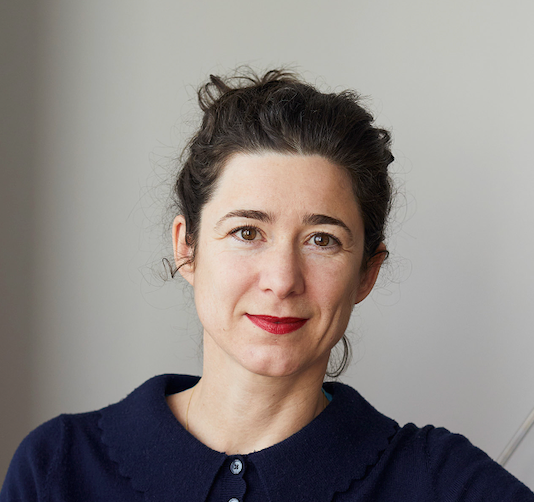
A headshot image of the speaker: Andrea Kretschmann

The simulation of protest policing (e.g., demonstrations and rallies) in mock urban environments has emerged as a late-modern phenomenon observable worldwide, including in Europe. In partly their own, partly in military purpose-built quasi-urban training sites, police forces rehearse what they anticipate as future challenges in protest policing. To this end, they construct worst-case scenarios, enacted through extensive staging, material artifacts, and the coordinated deployment of police personnel. Drawing on ethnographic research on police simulations in Germany, France, England, and Northern Ireland, I analyze the imaginative power of these exercises as an effect of their theatricality, playfulness, and affective intensity. I argue that within these simulations, policing does not merely prepare for future events but actively brings into being the objects it claims to police—an enactment with consequential effects for policing practices beyond the simulated environment.

Bio:

Prof. Dr. Andrea Kretschmann is Professor of Cultural Sociology at the School of Cultural Studies at Leuphana University. She is also an Associate Researcher at the Centre Marc Bloch in Berlin. 

She studied Sociology and International Criminology at the University of Hamburg, received her PhD from Bielefeld University, and completed her habilitation at Ludwig Maximilian University of Munich. She has held visiting professorships, research appointments, and fellowships at several international institutions, including the École des hautes études en sciences sociales (EHESS) in Paris, the International Research Center for Cultural Studies (IFK) at the University of Art and Design Linz in Vienna, the Centre de recherches sociologiques sur le droit et les institutions pénales (CESDIP) in Versailles, Johns Hopkins University in Baltimore, the Institute for Advanced Studies (IHS) in Vienna, and the Institute for the Sociology of Law and Crime in Vienna. 

Her research is situated at the intersection of socio-legal studies, criminology, and cultural and social theory. It focuses in particular on criminological theory, policing—especially in relation to activism and protest—as well as socio-legal theory and the role of laypersons in law. She is currently working on a socio-legal research project on the Reichsbürger movement in Germany.