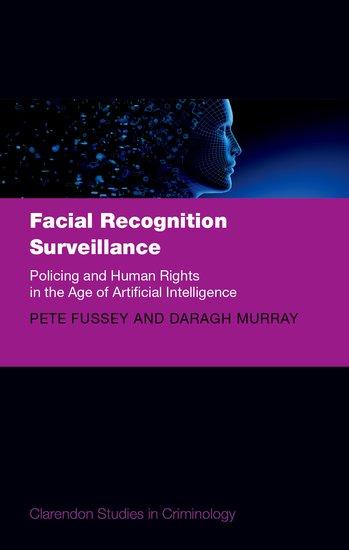
Grounded in ethnographic research of live surveillance operations, and of wider digital policing initiatives, this seminar explores how recent developments in AI and other emerging technologies have impacted the form and impact of surveillance activities today. The paper builds on analysis presented in a recent book, 'Facial Recognition Surveillance: Policing and Human Rights in the Age of Artificial Intelligence' (2025, OUP). Drawing on perspectives from criminology, sociology, science and technology studies, and human rights analysis, advanced AI-driven surveillance tools are argued to be driving a fundamentally shift in policing. Identified changes include how police discretion and suspicion become formulated, the nature of police-citizen encounters, and a range of human rights and social justice implications.
Professor Pete Fussey works on the criminological and human rights implications of advanced surveillance and other policing technologies. Other research analyses digital sociology, algorithmic justice and urban studies. His most recent book Facial Recognition Surveillance: Policing and human rights in the age of Artificial Intelligence (with Daragh Murray) was published by Oxford University Press in July 2025 and draws on ethnographic research of live police surveillance operations. An additional book The Empty Watchtower: Counterterrorism after 9/11 (with Mark Maguire) is in production for New York University Press and due for publication mid-2026. Other monographs focus on urban security and, separately, child trafficking. Professor Fussey has co-authored UN human rights standards on law enforcement uses of technology at protests, worked with UNHCR on human rights and digital asylum determinations, and written national policy on the regulation of digital surveillance. He has authored work laid before the UN General Assembly and his work has been debated in the House of Lords. His research has featured on the front pages of The Guardian and Financial Times, and additionally covered by BBC Newsnight, and US equivalent PBS Newshour, The New York Times, Washington Post, BBC Radio 4 (File on 4, PM, World at One), and others.


 Add to calendar