

CSLS hosts a workshop on the Future of Fact-Checking in the Algorithmic Society



As part of the EU-funded Resilient Media for Democracy in the Digital Age (ReMeD) project, the Centre for Socio-Legal Studies organized a workshop on the Future of Fact-checking in the Algorithmic Society. Held on 27–28 November 2025, at Exeter College, the workshop brought together more than two dozen researchers some of whom had submitted papers for a special issue of Harvard’s journal, the HKS Misinformation Review. With participation from fact-checking organisations from around the world, along with researchers studying the impact, governance, and future of fact-checking, the workshop convened a unique group of contributors. While our focus was on research from Europe, we took the opportunity to work with researchers and factcheckers working on these issues from Brazil, South Africa, Turkey, Hong Kong, among others.
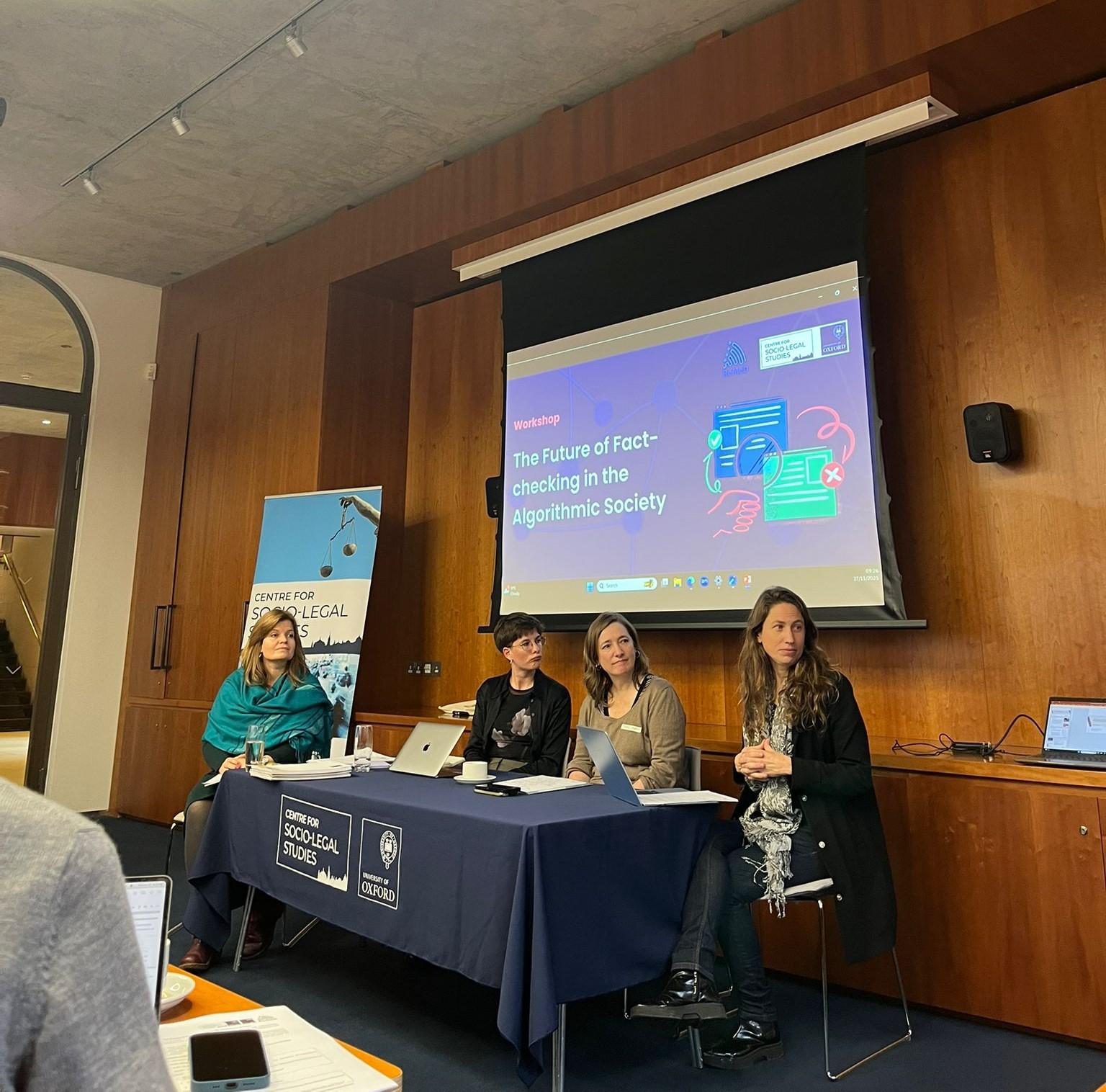
The workshop came at a critical moment as fact-checking is under pressure from reductions in funding from social media platforms (the third party factchecking programmes), increasing political polarisation, and rapid advances in artificial intelligence. In their presentations, participants discussed how recent political and technological developments, including AI, are reshaping the fact-checking ecosystem and the implications of new regulatory frameworks emerging in different jurisdictions. Generative AI both complicates efforts to detect and counter misinformation while at the same time offers new tools that might be harnessed by fact-checkers themselves, such as Full Facts AI.
The two-day programme brought together academics from law, political science, communication studies and computer science alongside practitioners from fact-checking organisations, journalists, civil society actors and policy-makers. In addition to offering an opportunity to present draft articles, the workshop sought to strengthen collaborations beyond academia. Contributors reflected on opportunities for common standards, particularly in response to regulatory developments affecting the visibility, funding and independence of fact-checking initiatives.