
Professor Leila Ullrich to explore women’s labour in counterterrorism efforts
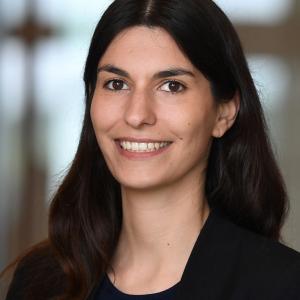
Professor Leila Ullrich, Associate Professor of Criminology, has been awarded a Leverhulme Trust Research Fellowship to explore counterterrorism and gender.
‘The Labour of Prevention: Counterterrorism, Gender, and the Participation Agenda’ will examine how feminised ‘security work’ reconfigures both everyday caring relations and global inequality through a multi-sited ethnography of Preventing and Countering Violent Extremism (P/CVE) programmes in Britain, Kenya and Lebanon.
Counterterrorism involves a range of activities implemented by the government, police, courts, public institutions and civil society, including preventing people being drawn into terrorism, deterring perpetrators, and investigating and prosecuting terrorist incidents, as well as measures to support, safeguard and empower so-called ‘communities at risk’.
Professor Ullrich says: “There have been interesting developments in the counterterrorism sphere since 9/11. Terrorism has historically been associated with men, but the feminist literature that has developed in the last 20 years has shown that women are involved in terrorism too, and that the gender dynamics of this are complex. We cannot reduce women in terrorism to jihadi brides or groomed, ignorant women. Feminist scholars and advocates have thus called on governments and other researchers to pay more attention to gender.”
To date, says Professor Ullrich, efforts to foreground gender dynamics and integrate women into counterterrorism have ended up “securitising and instrumentalising” women for the police and state. She adds: “What has not been looked at is that the issue is also about labour. These women effectively work for the police or the state in a hidden and unpaid form.”
Building on her previous work, including her book Victims and the Labour of Justice at the International Criminal Court: The Blame Cascade, Professor Ullrich will spend around 16 months examining terrorism prevention through a labour lens. She will uncover how it mediates and genders relations between the Global North and the Global South, between states, civil society and families, and between those gendered as men and women. By reconceptualising security as an increasingly female enterprise that depends on caring labour, she aims to better understand the new politics of terrorism prevention and its embeddedness in the unequal political economy of global capitalism.
As part of the Leverhulme fellowship, of which only 100 were awarded across the UK, Professor Ullrich will travel to Kenya to carry out fieldwork including interviews and ethnographic observations of P/CVE projects. She has already begun liaising with senior police officers in the UK to understand counterterrorism domestically, and will continue to study Lebanon in terms of its developmental and security relationship with the UK.
Professor Ullrich intends to publish a book on the topic of the labour of prevention, and hopes that the Leverhulme project will help to raise awareness of the “hidden, invisible, emotional, feminised forms of labour”. She adds: “I want to make that labour politically more visible as something that needs to be better understood, better paid and better distributed so that not only women end up doing the work.”
‘The Labour of Prevention: Counterterrorism, Gender, and the Participation Agenda’ began in September 2025, and updates on the research will be posted to the Faculty of Law website.