
Law in historic Tibet: translating the Dalai Lamas' legal texts

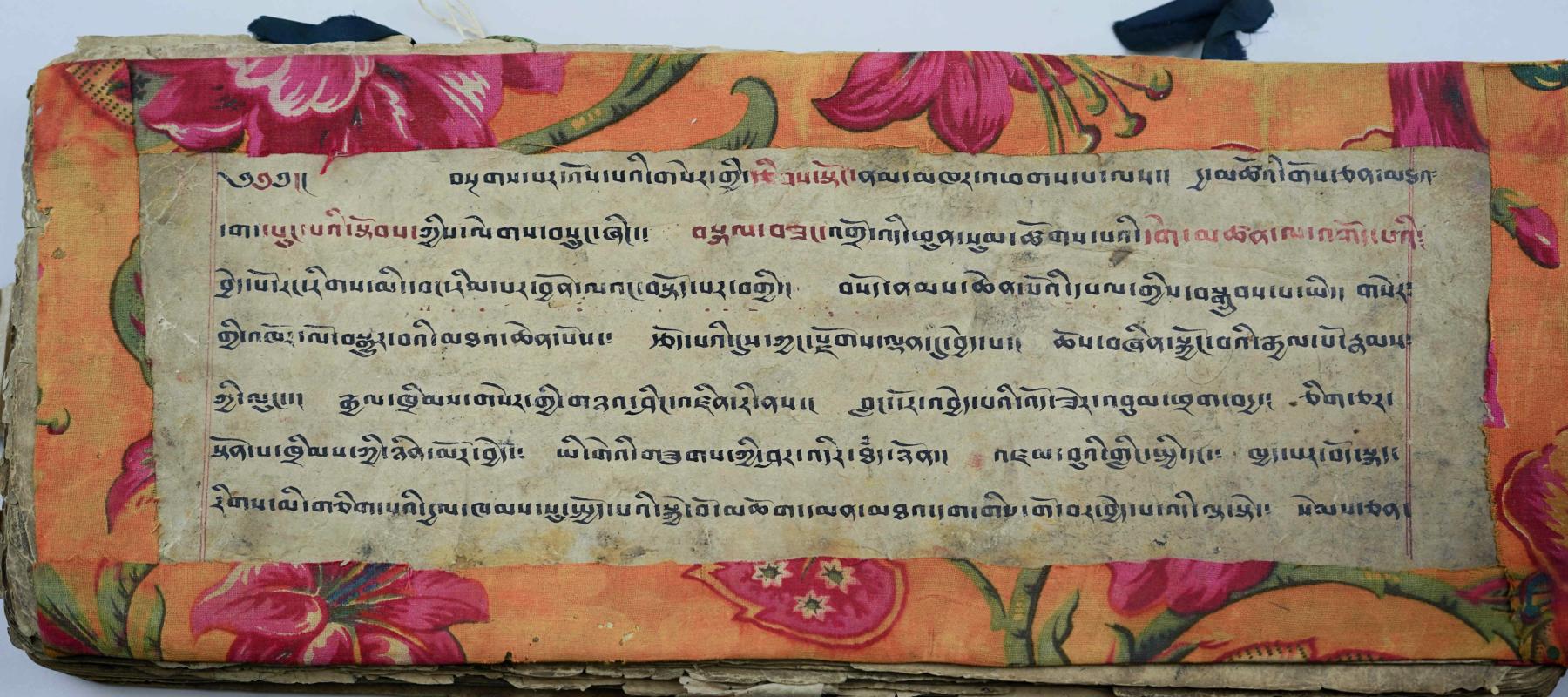
Bailey manuscript

Project Overview


For over a thousand years, Tibetan rulers made remarkably few laws. They had a script, a centralised government, and a bureaucracy, yet they never developed anything like the elaborate legal codes of their Chinese or Indian neighbours. Even the Dalai Lamas, after coming to power in the 1640s, produced only a handful of legal texts and showed little interest in spelling out detailed rules for the general population.

What, then, did law mean in Tibet? And why did rulers bother making legal texts at all?

This project sets out to answer those questions. At its centre is a body of texts known as the zhal lce (pronounced zhé ché), first commissioned in the seventeenth century and reproduced, with variations, across the centuries that followed. At least 31 copies survive, scattered across archives in Liverpool, Dharamsala, Kathmandu, Tokyo, and Leiden. Some are held digitally by the Buddhist Digital Resources Centre. No one has yet produced a full translation, a systematic comparison, or a critical edition of these texts.

We are doing that work now. A preliminary project funded by Oxford's John Fell Fund (2024-25) has allowed us to begin collecting, transcribing, and translating a core selection of these manuscripts. The Leverhulme Trust is funding a three-year project (2025-28) that will extend this to the full corpus.

Our project has four strands

What we are doing

The texts. We are examining, transcribing, and comparing all known versions of the zhal lce, working from both physical manuscripts and digital copies. We use the AI-powered platform Transkribus to help transcribe handwritten documents, with manual proofreading. Differences between versions — in wording, in how they are bound, in handwritten notes and tables added by their users — give us evidence of when and by whom each copy was made, and how it was used.

Creation and influences. The first zhal lce was commissioned during the reign of Karma Tenkyong Wangpo (r. 1621–1642), leader of the Tsang regime, and drew on earlier legal texts. When the Fifth Dalai Lama together with the Mongol ruler Gushri Khan (1582–1655) defeated the Tsang, he adopted much of his rival's legal text. We are investigating why, and what role Mongol administrators and legal ideas played in shaping these texts.

The Ganden Podrang period. The Dalai Lamas' government lasted over four centuries. We are tracing how the zhal lce were reproduced, revised, and distributed during that time, and what role (if any) they played in actual court proceedings. Intriguingly, documents recording the resolution of disputes never refer to the zhal lce, and at the Sakya court the copies were reportedly kept out of public view. We are looking into why.

A monograph. The project will result in a book tracing the history of Tibetan law from the earliest records in the seventh century through to the mid-twentieth. It will ask why Tibetans made law at all, what they hoped to achieve, and how they drew on Chinese, Indian, and Mongol traditions while producing something quite different from any of them.

Bell 16
Bound legal manuscript (Bell 16)

Significance

Tibet was one of the most uniformly Buddhist civilisations the world has known. Its legal texts begin with summaries of legal history grounded in Buddhist ideals, yet their actual prescriptions are thoroughly secular. This tension between religious ideology and practical governance runs through the whole history of Tibetan law and makes it a distinctive case in the global history of legal systems.

Much of the existing scholarship on Tibetan law is piecemeal, confined to particular texts or periods. The only overview, Rebecca French's The Golden Yoke (1995), relies heavily on the accounts of Tibetan elites then living in exile. A full historical account, drawing on the primary texts themselves, does not yet exist.

This project will fill that gap. It will also make these texts available — in Tibetan script, transliteration, and English translation — to scholars and to Tibetans interested in their own legal and political history.

Tibetan turquoise dragon

Digital Resources

Translations, critical editions, and a searchable glossary of Tibetan legal texts are published on our companion website.


Tibetan Law Online