

Ekin Genç
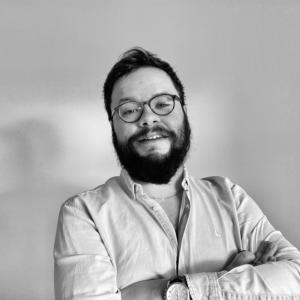
Biography
Ekin researches decentralised finance (DeFi) through the lens of legal pluralism. His doctoral project examines how blockchain-based protocols and the surrounding communities give rise to what scholars call ‘private ordering’, how this decentralised industry-cum-community intersects with state regulation, responds to adversarial threats from hostile actors, integrates artificial intelligence, and what this all means for the law.
He holds an MSc in Social Science of the Internet from the University of Oxford, where he graduated with Distinction, and in Philosophy and Public Policy from the London School of Economics as a Jean Monnet Scholar.
He is also a Research Affiliate of the Oxford Internet Institute (OII), currently preparing a journal manuscript on the public-law limits on state interference with decentralised blockchains. His co-authored paper with the OII faculty on the digital euro is forthcoming in Capital Markets Law Journal. In addition to research, he undertakes teaching for Oxford and Stanford, most recently undergraduate tutorial in International Law.
Alongside academia, Ekin has been involved in DeFi in various capacities since its rapid expansion in 2020, including development, governance and investment. In 2022, he built the independent editorial arm of DeFi analytics platform DefiLlama, DL News, and led it as its editor-in-chief until its acquisition in 2026. Previously, he covered the digital assets industry for outlets such as Fortune and VICE.
Before digital assets, he worked in public policy in Brussels, London, and Washington, D.C. and directed a consulting practice advising government and private clients on political risk, regulatory due diligence, and policy reform. He also spearheaded a judicial review against the UK government over a retrospective policy change, which was heard by the Court of Appeal.
His research at Oxford is supported through a grant from Kleros, a decentralised arbitration platform built on the Ethereum blockchain. He is also a recipient of a fellowship in political economy from George Mason University.