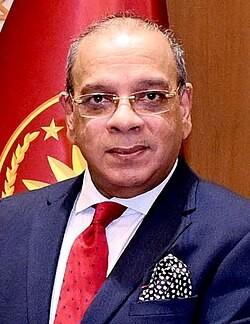
OPAL Seminar: Judiciary in the Constitutional Order: Independence, Reform and Access to Justice, by Syed Refaat Ahmed, the 25th Chief Justice of Bangladesh.
Speaker(s):
Associated with:
 Add to calendar
Assuming office as the 25th Chief Justice of Bangladesh in the immediate aftermath of the July–August 2024 uprising, I found myself leading the judiciary through an unprecedented period of political flux, heightened public expectation and constitutional reimagining. Drawing on that experience, this talk examines judicial independence beyond the conventional understanding of decisional autonomy and introduces the idea of functional institutional independence. I consider how constitutional responsibility must be supported by workable institutional arrangements in judicial administration, appointments, professional capacity and access to justice, as well as by the practical conditions necessary for the judiciary to perform its functions effectively. I situate these reflections within the continuing relationship between constitutional legitimacy and the constituent authority of the people, particularly during periods of transition. At its core, the talk reflects on my experience of seeking to translate constitutional guarantees of judicial independence into an institutional framework capable of meaningful autonomy while remaining within the discipline of constitutional government.
Speaker:
Dr. Justice Syed Refaat Ahmed is a preeminent jurist and the 25th Chief Justice of Bangladesh (Retd.). Currently serving as Partner Emeritus at Syed Ishtiaq Ahmed & Associates (SIA&A), he returns to the firm where he previously spent nearly twenty years as a Partner (1984–2003) building a career-defining practice in constitutional, commercial, company, and fiscal law. His legacy is one of profound institutional impact, seamlessly bridging high-level private practice, international humanitarian service, and over two decades of transformative leadership within the Bangladeshi judiciary. Today, the firm continues to rely on his unparalleled guidance and expertise to navigate complex legal landscapes.
Dr. Ahmed’s elevation from the High Court Division to the highest judicial office in August 2024 occurred during a historic period of national crisis following the July Revolution. In a move widely seen as a cornerstone for restoring public trust and judicial integrity, he was appointed Chief Justice and immediately spearheaded a comprehensive roadmap for judicial reform. This included landmark initiatives to establish a separate Secretariat for the Judiciary to ensure its institutional independence from executive influence. Before his tenure as Chief Justice, Dr. Ahmed served for over 20 years in the High Court Division, where he authored a prolific body of landmark jurisprudence. His judgments have been regularly reported in the most prominent law journals in Bangladesh, including the Dhaka Law Reports (DLR), Bangladesh Legal Decisions (BLD), and Bangladesh Law Chronicles (BLC). His significant rulings include the Chittagong Hill Tracts (CHT) Case, which addressed the judicial reviewability of political accords, and the groundbreaking BELA vs. Bangladesh shipbreaking case, which established a constitutional mandate for environmental protection based on inter-generational obligations. His commercial and corporate expertise was further demonstrated in the UCBL Case, ensuring the protection of small-time shareholders, and the Axiata (Robi) Case, which defined the statutory taxation powers of regulatory bodies. In the realm of labor and administrative law, cases such as Md. Mehdi Hassan vs. Government of Bangladesh provided a landmark enunciation of the definition of a 'worker,' while the Odhikar Case and Moulana Md. Abdul Hakim Case extended the frontiers of judicial review for private bodies operating in the public domain. In the Appellate Division, he presided over critical constitutional reviews, including the historic restoration of the Non-Partisan Caretaker Government system.
Beyond the bench, Dr. Ahmed is a globally recognized scholar who has contributed extensively to international discourse on refugee law and human rights, drawing from his service as a legal consultant for the UNHCR in Washington, D.C. and Hong Kong. An alumnus of the University of Dhaka and Wadham College, Oxford, he also holds a Ph.D. from the Fletcher School of Law and Diplomacy. His academic and speaking engagements have taken him to prestigious forums worldwide, including keynote addresses at the World Governments Summit in Dubai, the UN Rule of Law and Human Rights Annual Meeting in New York, and the Global Judicial Institute on the Environment. In 2025, in recognition of his lifelong devotion to jurisprudence, he was named an Honorary Fellow for Life of Wadham College, Oxford