
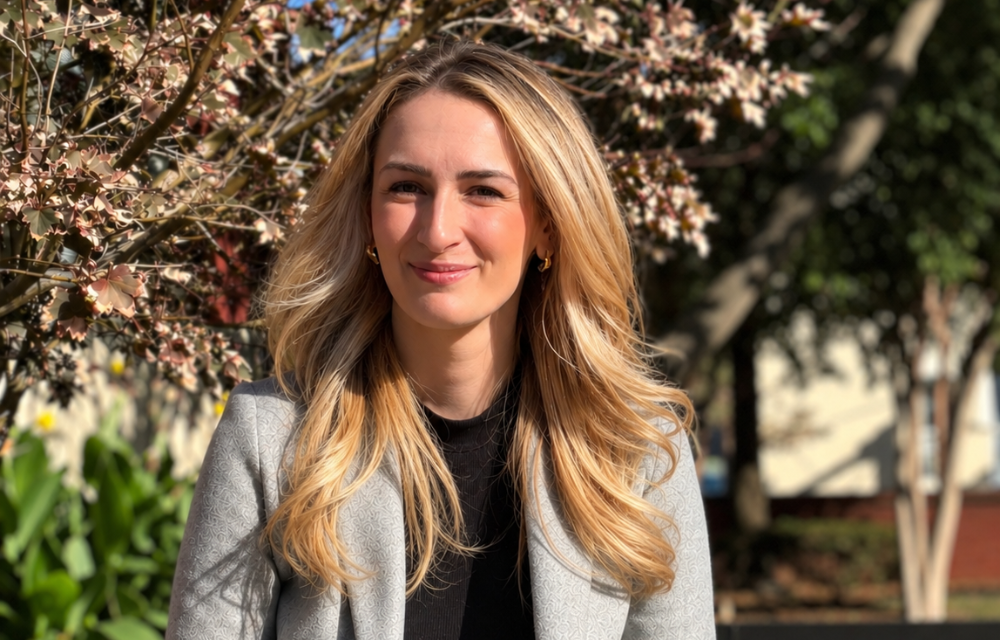
Alexandra Gandara Kraemer
What attracted you to your postgraduate programme at Oxford?
I am an immigration attorney located in Washington D.C. in the United States, where I primarily represent asylum seekers and other individuals seeking humanitarian based protection through the U.S. immigration system. In my work, I sit across from people who have experienced unimaginable things, listen to their stories, and try to help them find safety in a system that is becoming increasingly difficult to navigate. It is incredibly rewarding work, but also frustrating to see how quickly protections that are supposed to be fundamental can be weakened, particularly as changes in U.S. immigration policy have made access to protection increasingly uncertain. I found myself wanting to understand not just how to advocate for my clients within the existing system, but why that system so often falls short of the principles it is supposed to uphold.
That is what drew me to Oxford's MSc in International Human Rights Law. I wanted to step outside the U.S. immigration law framework and explore the bigger questions behind the work I do every day. I was particularly interested in the programme's combination of human rights theory and practice, and the opportunity to engage with people from different countries, professions, and backgrounds. As lawyers, we can become so focused on finding solutions within the law as it exists that we sometimes forget to question the assumptions behind it. I wanted to have those conversations, especially with people whose experiences and perspectives might challenge my own.
The part-time structure also meant I could continue representing my clients while pursuing my studies, which was important to me. Ultimately, I applied because I love the work I do, but I also recognize its limitations. At a time when longstanding protections are being challenged and the future of asylum and humanitarian immigration relief in the United States feels increasingly uncertain, I wanted to better understand how human rights protections can be defended and strengthened, not just in individual cases, but more broadly.
Before applying, did you have any concerns or reservations about studying at Oxford?
My first concern was whether I would actually get in! Oxford had always been one of those dreams I kept in the back of my mind, but never quite believed would become a reality. After earning my Juris Doctor and beginning my career as an attorney, I had more or less assumed that my days as a student were behind me. The idea of returning to academia, especially at Oxford, felt a little ambitious at this stage of my life. But the more I thought about it, the more I realized that I wasn't quite ready to close that chapter. I knew I would regret not at least trying, even if I wasn't entirely convinced I had a chance. Receiving an offer was genuinely one of those moments when I had to read the email more than once.
My other concern was how I would balance the demands of the programme with my career as a full-time immigration attorney. My work involves significant responsibilities to my clients, many of whom are navigating difficult and time-sensitive situations, and I knew that being away for the summer residential sessions would require careful planning. I wanted to pursue this opportunity without compromising my commitments to the people I represent.
Fortunately, my firm have been incredibly encouraging and supportive of my decision to pursue the MSc. They have been flexible in helping me plan around the residential sessions and my academic commitments. I am also very fortunate to work with colleagues who are willing to take on additional responsibilities while I am away, and I am genuinely grateful for their support. I know balancing everything will still be challenging, and I will certainly owe my team a great deal by the time I finish, but having that encouragement has made it possible for me to pursue something I once thought might remain just a dream.
What has your experience in the Faculty been like?
My experience so far has been incredibly positive. I think I expected Oxford to feel a little intimidating, especially coming into the programme as a working professional who had been out of academia for several years. Instead, everyone I have interacted with has been welcoming, approachable, and genuinely enthusiastic about helping us succeed.
One thing that has particularly surprised me is how connected I already feel to the programme, even though we have not yet met in person. I initially worried that it would be difficult to build relationships or feel part of the Oxford community until the summer residential sessions. However, our Discussion Leader has been wonderful at making the virtual sessions engaging and creating an environment where everyone feels comfortable contributing. He also seems to enjoy stirring the pot a little during discussions, challenging our assumptions and pushing us to defend our positions rather than simply agreeing with one another. It has also reminded me how much I missed being a student. I genuinely enjoy having the time and space to read, question things, and engage with ideas that I don't always get to explore in my day-to-day work.
What has been the most valuable aspect of your Oxford Law experience so far?
One of the most valuable parts of my Oxford experience so far has been returning to the theoretical questions behind the issues I encounter in my legal practice. I came into the programme particularly interested in how governments can weaken human rights protections while maintaining the appearance of legal compliance. What I have enjoyed about our discussions is discovering just how many layers there are to that question, from how we define human rights in the first place to the role of political and institutional pressures in determining which rights are actually protected.
I have especially appreciated being pushed to reconsider my own assumptions and engage with perspectives outside the legal profession. It has been a wonderful reminder of why I enjoyed academia in the first place. I came to Oxford with specific questions I wanted to explore, and I am already finding that the programme is helping me ask better, more difficult questions about them.
What are your next steps after the programme?
I plan to continue practicing immigration law, particularly representing asylum seekers and others seeking humanitarian protection. My work has been central to shaping my academic interests, and I want to build on that experience by developing a deeper understanding of the international legal principles that underpin the protections I advocate for every day.
One of the questions I want to explore through my dissertation is how governments can gradually weaken asylum protections without actually changing the laws that establish them. I have seen how procedural barriers, increasingly restrictive interpretations, and political pressure can make rights that exist on paper almost impossible to exercise in practice. I want to better understand how international human rights law can be used to challenge those developments, but also what can be done to make those protections more resilient in the first place..
Oxford is giving me the opportunity to examine questions that have been developing throughout my career, but from perspectives I don't always encounter in my day-to-day practice. I want to use that experience not only to strengthen my own advocacy, but also to contribute to the legal arguments and broader conversations that will shape how these protections are interpreted and applied in the future.
What advice would you give to other women who are considering applying to your programme?
My advice would be to apply! I had plenty of practical questions about returning to academia while working full-time, and I certainly wasn't sure I would get into Oxford. But it was something I really wanted to do, and I figured I owed it to myself to at least try.
I think it's worth remembering that applying doesn't mean you have to have everything figured out already. There are plenty of things to consider when taking on a programme like this, particularly alongside an established career, but you can work through those questions as you go. I wouldn't let the uncertainty of it all stop you from exploring an opportunity you're genuinely interested in. No one else is going to take that first step for you, so sometimes you just have to go for it.